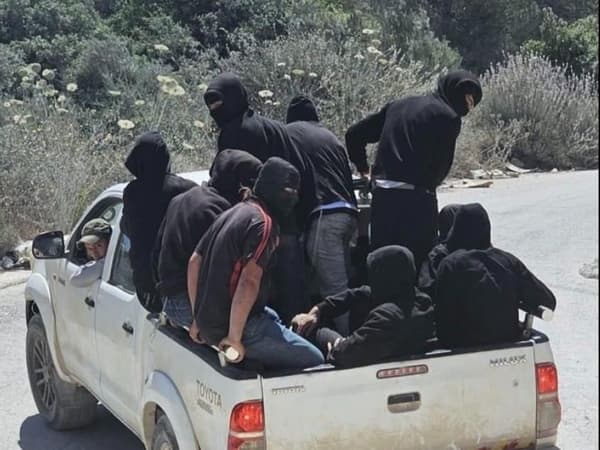


The government has approved the establishment of 103 new settlements in the occupied West Bank during its current term. Together with existing authorized settlements, illegal outposts, and agricultural farms, these communities are intended to prevent the implementation of a two-state solution. The positions of the parties that aspire to form Israel's next government indicate, at least for now, that they are ignoring the creation of irreversible facts on the ground that undermine any possibility of a political settlement.
An investigative report published last week by Matan Golan in Haaretz shows that from 1967 until the current government took office, Israel established 127 settlements in the West Bank. Under the Netanyahu–Smotrich government, the number of approved settlements has nearly doubled, although many still exist only on paper. In addition, more than 300 outposts are currently undergoing legalization procedures. Together with illegal farms and outposts, there are now more than 470 Israeli settlement points scattered across the West Bank. Since the October 7 war, their expansion has accelerated, and many have been established alongside the ethnic displacement of Palestinian farming communities from their homes and lands.
In Golan's report, Hagit Ofran of Peace Now explains the implications of this settlement expansion: "The new settlements will create an enormous burden on the security establishment, which will not only have to protect them but also cope with their consequences—namely, the absence of a political horizon, growing despair and pressure among Palestinians, and the weakening of Israel's international standing."
Many people, including within Israel's peace camp, expect change after the elections. Experience suggests they may be disappointed. According to Ofran: "The crucial question is not only how much power those who oppose the settlements will have, but what they will actually do with it. If they choose not to rock the boat for the sake of coalition unity, as has happened over the past twenty years, nothing will change."
According to Dr. Shaul Arieli, head of the research group Tamrur-Politography, which studies the Israeli-Palestinian conflict, dismantling many settlements would not be technically difficult, but he too doubts that such a decision will be made. He notes that: "Over the past twenty years there has been a gradual decline in net migration to the settlements, and during the current government's term the balance has become negative—more people are leaving than arriving."
As a result, many settlements are quite small. "From a military perspective, the smaller a settlement is, the easier it is to evacuate. The real issue is political decision-making and a comprehensive governmental effort to implement such a decision. That requires a very different political system from the current one... The widespread belief that a political solution is no longer realistic represents a psychological victory for the settlement movement over Israeli society."
Dror Etkes of the organization Kerem Navot is equally pessimistic: "What has happened in the West Bank over the past three and a half years cannot realistically be reversed. A state that cannot—or will not—evacuate illegal outposts built inside areas under Palestinian Authority control, and cannot—or will not—discipline its own soldiers, is certainly not going to dismantle more than 200 outposts established during the current government. It is difficult to imagine former Yesha (The west Bank) Council CEO Naftali Bennett confronting his friends and political allies over this issue. The same applies to Eisenkot, who only a few months ago posed for photographs at one of the most violent outposts in the West Bank."
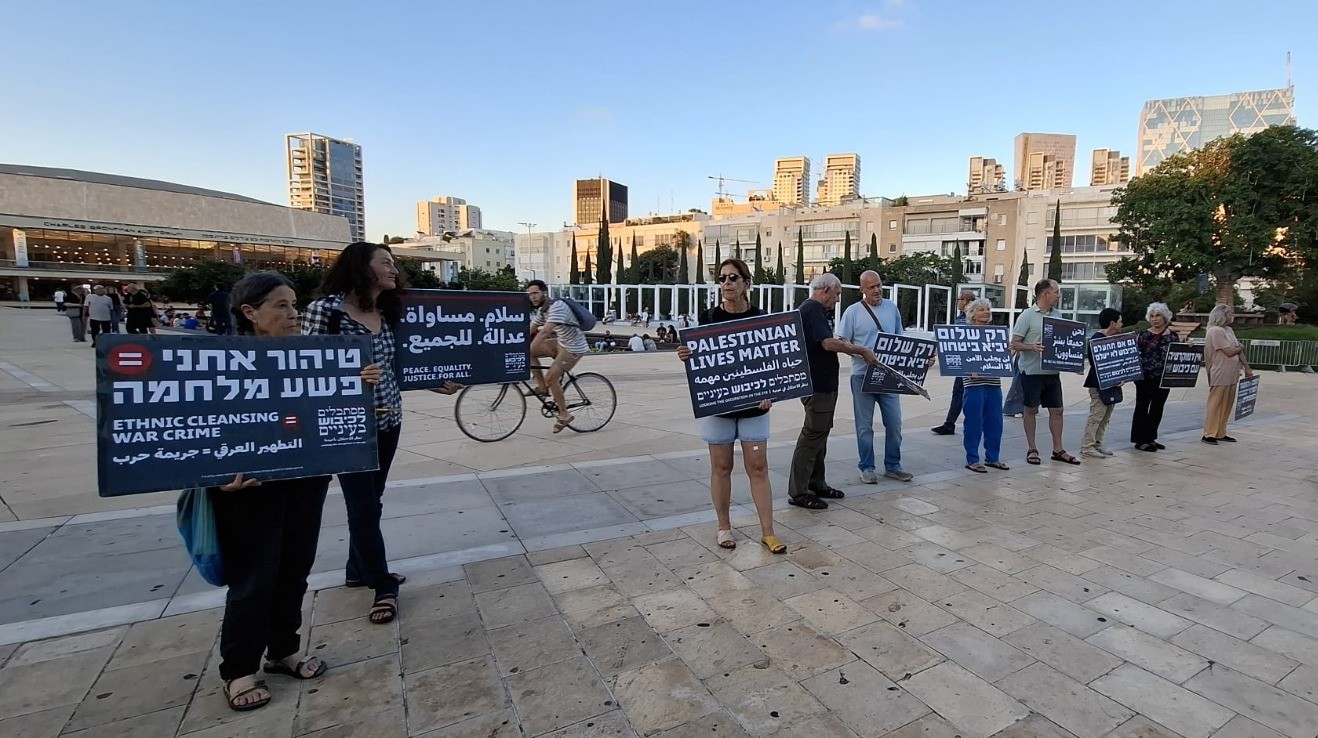
The parties presenting themselves as an alternative to the Netanyahu–Smotrich government have not proposed any political program for resolving the conflict, nor have they adopted a clear position regarding the settlements. Israel's peace camp must therefore focus on changing public consciousness. Opposition to settlement expansion and annexation policies should form the foundation of meaningful political change—a path that could ultimately lead Israel out of its cycle of wars and toward a negotiated settlement acceptable to both Israelis and Palestinians.
Sunday
Captain David Hazut, 21, from Ashkelon, was killed overnight near Deir Siran in southern Lebanon. Hazut commanded a platoon in the Golani Brigade.
Settlers attacked and injured an elderly Palestinian security guard in the industrial zone of the village of Beita.
Monday
A detailed plan prepared by settlement organizations in the West Bank—including the Farm Association and the "Habayta" Forum—and published for the first time by Hayom proposes a dramatic transformation of the region. The plan calls for establishing approximately 100 strategic settlement points deep inside Area A, territory that under the Oslo Accords is under full Palestinian civil and security control.
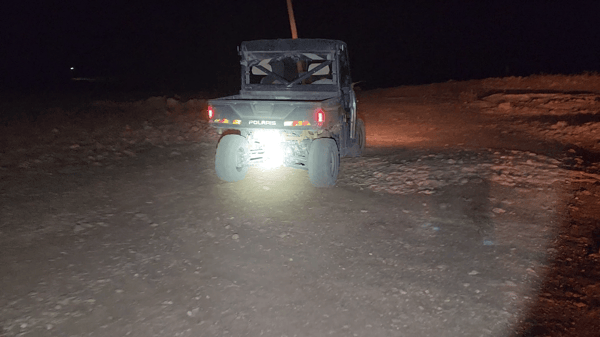
Settlers from the Tel Talpiot–Jabal Eina outpost near Qusra cut the village's main electricity cable during the night, plunging the community into darkness. The settlers had recently seized the spring used by Qusra's farmers. The outpost has been dismantled several times by Israeli security forces, only to be rebuilt each time. It was also the base from which the settler who killed a Palestinian resident departed, and from which the ATV carrying four club-wielding settlers who assaulted three Mistaclim activists set out.
Tuesday – Morning at Khirbet a-Tawil
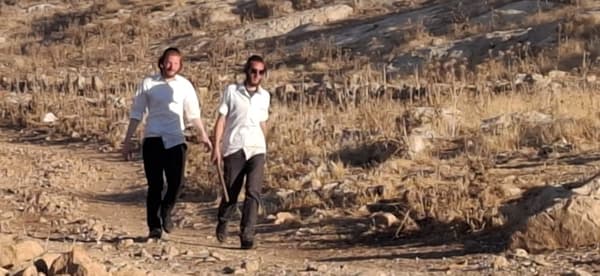
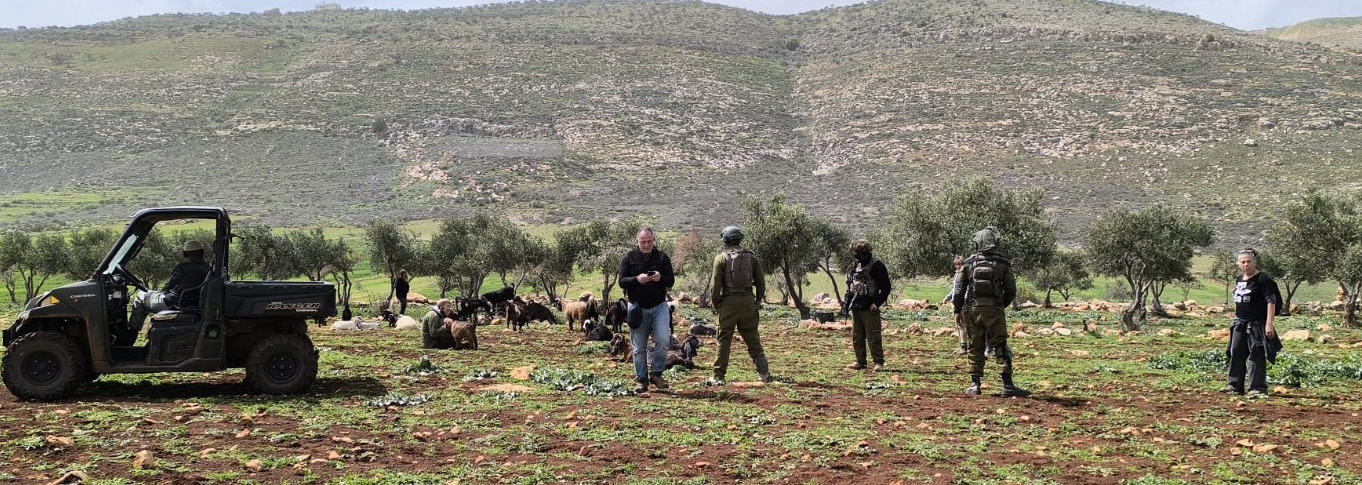
Khirbet a-Tawil, where activists from Looking the Occupation in the Eye maintain a protective presence four days a week: Two teenage boys arrived with a flock of goats and sat inside the local Madafe (Mistaclims` Guest room). They said they were cousins from Yitzhar settlement and admitted to smoking cannabis as well as tobacco. They expressed extremist ideological and religious views, stating that they did not recognize Israel's legal system as a legitimate source of authority.
Throughout the encounter they repeatedly sought to provoke confrontation. They first attempted unsuccessfully to drive their goats into the residents' living area. Shortly afterward, two additional young men arrived in a utility vehicle carrying iron bars or clubs. They verbally abused those present, searched for opportunities to damage property, insisted the land belonged to them, and refused to leave.
At one point, while an activist briefly set his mobile phone aside to adjust a shade canopy, one of the youths grabbed the phone. The pair fled in their vehicle with the stolen device. Activists repeatedly called the police throughout the incident. They were told that soldiers had been dispatched, but no security forces arrived.
Later that day, Amir Jaber, a 15-year-old from East Jerusalem, was shot and killed in al-Bireh near Ramallah. He was struck in the head and chest by Israeli military fire during an army operation.
The Israeli military demolished the sports field of the boys' school in Battir, west of Bethlehem. Palestinians maintain that the field had existed before Israel occupied the West Bank in 1967.
The "Kokhav Yehuda" outpost in Gush Etzion was dismantled once again after repeated evacuation attempts. Settlers alleged police violence and reported that two settlers were injured. In March, a resident of East Jerusalem—the son of the owner of the land on which the outpost was built—was shot and killed by settlers.
The Civil Administration demolished a residential compound in the Ein al-Hilweh community in the northern Jordan Valley just two days after Israel's High Court ordered a temporary freeze on the demolition. Masked settlers, accompanied by Israeli soldiers, destroyed structures, livestock pens, and water tanks.
Wednesday – 1,000 Days Since the October 7 War
Prime Minister Netanyahu appeared on the television program The Patriots on Channel 14 on the eve of the 1,000th day since the outbreak of the October 7 war. Channel 14, which portrays the prime minister as both the father of the nation and its savior, remained true to form, providing applause from a supportive studio audience at the "right moments" and asking questions that allowed him to deliver prepared messages.
Viewers who do not watch the pro-Netanyahu channel saw highlights elsewhere, including Netanyahu's remark that the main change he had undergone since October 7 was that he had "lost a little weight."
Eyal Eshel, whose daughter Roni—a surveillance soldier—was murdered at the Nahal Oz military post, responded: "I've lost weight too. You lose your appetite when you're raising a dead daughter."
Thursday
Yaakov Gudo, who had previously volunteered with Looking the Occupation in the Eye in the Jordan Valley, lost his son Tom, who was murdered at his home in Kibbutz Kissufim.
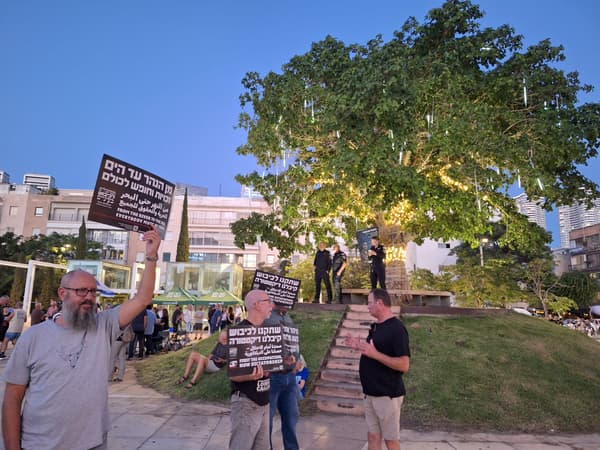
In a public post he wrote: "One thousand days since Tom is gone. He was murdered on the morning of October 8 at around 7:30 a.m. It is the dry chronology of a family that has lost one of its limbs, yet the phantom pain of that missing limb continues to strike every day and every hour. This milestone—1,000 days since the massacre—should have been marked under entirely different circumstances, not while facing a government of Jewish jihad that has not only refused to take responsibility for the events of October 7, 2023, but continues to remain in power while systematically destroying the fabric of Israeli society.
I continue my struggle from the protest tent opposite the Knesset, established on the thirtieth day after the massacre and maintained there through uninterrupted daily protest for the past 970 days. We will fight for a profound change in the character and soul of the State of Israel in the coming elections—Jews and Arabs alike, proud Israelis who have no other choice and no other country. Change will come. It is already at the doorstep."
Also on Thursday, Israeli soldiers arrested a young Palestinian from Umm al-Khair in Masafer Yatta after settlers placed Israeli flags at the entrance to his home and assaulted him.
Early that morning, several Israelis fleeing police after a traffic violation drove into the Palestinian village of Mukhmas. They later called the military claiming they feared for their safety. The army launched a large-scale search operation, surrounded the village, and established roadblocks until the Israelis reported that they had left the area. They were subsequently detained for questioning.
"I'll Put a Bullet in Every One of Your Heads"
Shaked Green Arava, an economic correspondent for Calcalist and an Israeli reserve officer who recently served in the West Bank, published a detailed account of his experience. The following are excerpts from his article:
"We all remembered what service in the West Bank used to mean: patrols, checkpoints, raids into villages, frequent encounters with Palestinians, and difficult moral dilemmas. But once we arrived, it quickly became clear that things had changed. In the past we only had to determine which Palestinians might pose a threat. Now we had to make the same assessment regarding the Jewish population. 'I no longer know who the enemy is' became a sentence I heard repeatedly from fellow soldiers, most of whom had voted for parties that make up the current government."
"Euphemistic language has become one of the principal weapons in the area. A report saying, 'Settlers arrived at the location, friction developed with Palestinians, and the anarchists pulled out cameras,' actually means that Jewish rioters attacked Palestinians while Israeli human rights activists documented the assault. Terrorists attack innocent people and violate the law, yet the 'anarchists' are the people filming them. Language distorts reality."
"'Why don't we arrest them?' That question came up again and again among my team. During our two and a half months in the area there were dozens of settler raids on Palestinian communities: they burned property, vandalized homes, threw stones, and carried out violent attacks. Our orders authorized us to use any non-lethal means available, but those who tried to make arrests realized they would eventually have to use live ammunition, so they gave up. In one operation, conducted together with other military units, two rioters were arrested—but within a few days they had been released."
He concludes on a somber note: "During our deployment we faced threats and constant looks of hatred and anger. Even so, we remained trapped in the assumption—which has yet to be disproved—that they would never actually attack us. That was probably naïve. Two and a half months on the ground made it clear to me that the threat uttered by that teenager—'I'll put a bullet in every one of your heads'—may yet become reality."
Friday
International human rights activists and Palestinian residents were attacked by settlers in Khirbet Abu Falah, near Turmus Ayya in the Ramallah area. Five people sustained minor injuries after being sprayed with pepper spray, beaten with clubs, and pelted with stones.
Settlers assaulted a Palestinian resident attempting to reach his farmland near Zarqa in the Ramallah district. He was beaten on the head, sprayed with tear gas, and his mobile phone was stolen.
A young Palestinian was attacked and his vehicle was stoned on the outskirts of Salfit, near Ariel.
Settlers uprooted approximately 500 olive trees on land belonging to the village of Qusra, near Nablus.
Settlers also clashed with Palestinian residents in Umm al-Khair in Masafer Yatta, south of Hebron. Two residents were evacuated to hospital.
In Khirbet Abu Nujaym, in the Bethlehem district, Israeli forces dispersed Palestinian demonstrators protesting settler violence and the seizure of their land, using stun grenades and tear gas.
Saturday
During the night, settlers from the settlement of Carmel attacked a family in Umm al-Khair. The assailants entered the family's property, took control of the backyard and the area surrounding the outdoor toilets, and several members of the family were injured during the incident.