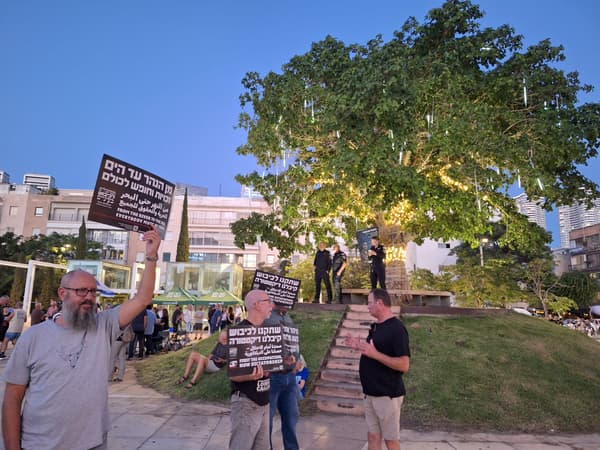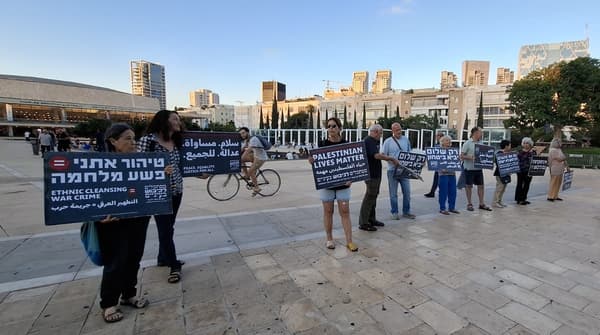


The results of The Democrats' primary elections indicate that the movement's most outspoken opponents of the occupation were overshadowed by the best-known leaders of the anti-government protest movement. The absence of Mossi Raz and Yariv Oppenheimer from the party's top twenty candidates, contrasted with the election of Moshe Radman, Yaya Fink, and Omri Ronen into the top ten, illustrates this trend.
This week, The Democrats launched their election campaign with the slogan "Zero Criminal Defendants in Government." But is this truly the country's most urgent issue? And is it a position unique to this party? While The Democrats have become the political home of the protest movement, that alone does not make the list unworthy. Nevertheless, the task of those who oppose the occupation and support a negotiated political solution is far from complete. They must continue working tirelessly to ensure that ending the occupation—the foundation, in their view, of the country's broader political and moral crisis—becomes a central pillar of the party's agenda in both the Knesset and any future government.
The statement "There is no democracy with occupation" has become more relevant than ever. The events of the weekend in the Nablus area suggest that state authorities are allowing or encouraging developments that could escalate into a widespread armed confrontation—something akin to a third intifada. Such an escalation could then be used to justify overwhelming military force, the destruction of villages "as in Gaza," the dismantling of the Palestinian Authority, and possibly even influence the outcome of the coming elections.
Supreme Court Justice Alex Stein—appointed during Ayelet Shaked's tenure as Minister of Justice—said this week that "Anyone who calls Israel an apartheid state has no place setting foot in it." This raises an obvious question: how should one describe a state that has ruled another people for 59 years under two separate legal systems—one for the occupying population and another for the occupied? What term should be used for a state whose current government and military are carrying out ethnic cleansing? And did the justice mean to imply that those who voice this long-standing criticism deserve to be excluded from the country, or even sent to "re-education camps"?
This week, Looking the Occupation in the Eye, together with the Social Workers for Democracy group, launched a public campaign entitled "Nobody's Children." The campaign seeks to draw attention to what the organizers describe as the exploitation, neglect, and abandonment of Israeli children and teenagers living in West Bank outposts. It calls on welfare professionals, social services, and elected officials to intervene immediately and remove these children from those environments.
Sunday – "Summer Camps" in Illegal Outposts: Harassing Palestinians and Human Rights Activists
As schools are closed for the summer vacation, human rights activists report a significant increase in the number of Israeli minors arriving in Palestinian communities with the apparent aim of provoking and harassing residents. Incidents in which activists attempt to prevent youths from forcing their way into Palestinian homes are filmed and later presented, they say misleadingly, as violence by the activists.
The shepherd outposts established throughout the occupied West Bank over the past year function as bases for intimidating Palestinians and driving them from their land as part of a broader campaign of displacement. During the year, these outposts are generally occupied by one family and a handful of troubled teenagers who have left their homes. During the summer, however, additional youths join them for one or two weeks—or longer. Unlike the permanent residents, these teenagers normally live with their parents and attend regular Israeli schools. During the vacation, with the knowledge and encouragement of their families, they come to experience harassment and humiliation of Palestinians firsthand—a kind of "summer camp."
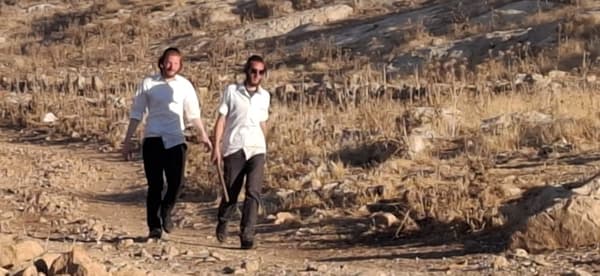
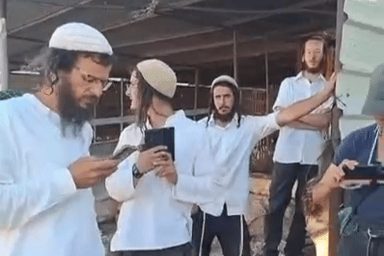
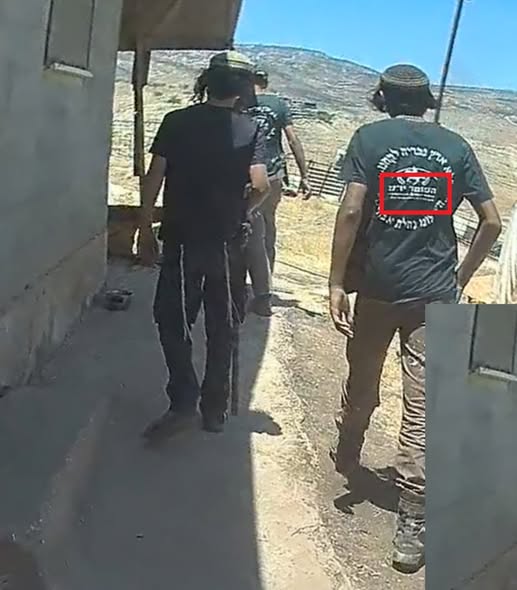
Activists from Looking the Occupation in the Eye encountered such youths in Khirbet a-Tawil, some wearing shirts bearing the logos of Hashomer Yehuda and Samaria and the Jewish National Fund (JNF). Humen rights activist photographed them inside the yard of a privately owned Palestinian home built on privately owned Palestinian land. Unlike during ordinary days, they were not accompanied by flocks of sheep that might serve as a pretext for their presence. Appeals to Israeli security personnel reportedly met with indifference.
Settlers threw stones at a Palestinian flock in a-Tawil, and one settler sprayed a local teenager with pepper spray.
Dozens of settlers entered the village of a-Tuwani in the South Hebron Hills at night, setting fire to buildings, burning vehicles, and spraying graffiti on the mosque reading "House Arrest," "Revenge," and "Havat Gilad."
Monday
Two Palestinians were shot dead by Israeli soldiers overnight in the village of Deir Jarir near Ramallah. The victims were Ahmad Abu Mahou, 26, and Odeh Farhana, 53. Another person was wounded. Soldiers were accompanying settlers who had entered the village claiming that livestock had been stolen. According to the IDF, Palestinians threw stones and concrete blocks at the forces while they were securing Israelis searching for their animals. Palestinian residents alleged that settlers had themselves stolen approximately 70 sheep from the village.
In a-Tawil, children attending the outpost's summer camp, wearing shirts of Hashomer, entered the compound where activists from Looking the Occupation in the Eye were staying.
Settlers set fire to Palestinian agricultural fields near the village of Beit Dajan.
The Israeli military demolished the home of an eight-member Palestinian family in Beit Awwa, south of Hebron, citing construction without a permit.
Tuesday
Settlers attacked a home in the village of Jalud, south of Nablus, injuring several residents. The army and Border Police secured infrastructure work and the opening of an access road by settlers leading to the home of the Tobasi family, which had been under siege for two weeks, with settlers preventing people and supplies from reaching it. Additional settlers from nearby outposts arrived and set fires in the village. Clashes broke out with local residents, and by the following day the last members of the family had abandoned the house.
Settlers broke into sheep pens in the villages of Ein Arik and Deir Ibzi', stealing more than 220 goats. When the owners attempted to stop the theft, they were assaulted, beaten, and sprayed with pepper spray. Soldiers present reportedly neither arrested the settlers nor intervened, but instead protected them and confiscated mobile phones that contained footage of the incident. One Palestinian resident was arrested, and for more than twenty-four hours his family was not informed where he was being held.
Settlers also set fire to farmland near Turmus Ayya and opened fire toward village residents.
In a-Tawil, four minors wearing Hashomer Yehuda and Samaria–JNF shirts attempted to force their way into a family courtyard while shouting insults.
Lod District Court Judge Ron Solkin rejected a prosecution appeal and eased the release conditions of Uriya Cohen, owner of a settlement farm near Nablus who is charged with involvement in the Huwara riots. The judge wrote that settlers' actions should be viewed "in light of the harsh, almost unbearable reality" in which they live, rather than "under laboratory conditions, beneath air-conditioning and fluorescent lights." According to the ruling, life in the area requires settlers "to remain suspicious and to act with determination."
Wednesday
At Khirbet a-Tawil, in what activists dubbed "Jackson Summer Camp," more than ten children attempted to force their way into Palestinian homes while attacking activists.
The detention of several settlers suspected of robbing a Palestinian and stealing cash in June was extended. Police said they had recovered large sums of money from the suspects.
Thursday
Sixteen suspects were arrested following vandalism and disturbances at the Muslim cemetery near Lions' Gate in Jerusalem.
An indictment was filed against a young Jerusalem resident accused of attacking a CNN news crew in the West Bank. Prosecutors allege that he blocked the vehicles, climbed onto one while carrying a stick and a stone, smashed its windshield, and attempted to puncture its tires with a knife. Three additional suspects remain under investigation.
In Beit Furik, settlers set fire to Palestinian fields. Dozens of Palestinians rushed to prevent the flames from reaching the village, leading to clashes between settlers and residents. During the confrontation, Israeli settler Itamar Cohen, from the Itamar Farm outpost, was stabbed and seriously wounded. Two Palestinians were shot dead, including the alleged attacker.
In a separate stabbing incident near Jenin, close to the Ganim outpost, an Israeli was lightly wounded and the Palestinian assailant was shot dead by soldiers.
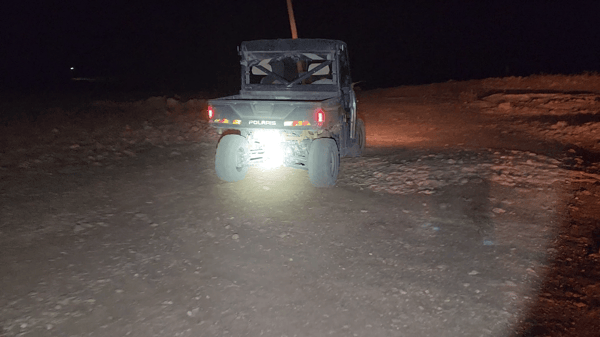
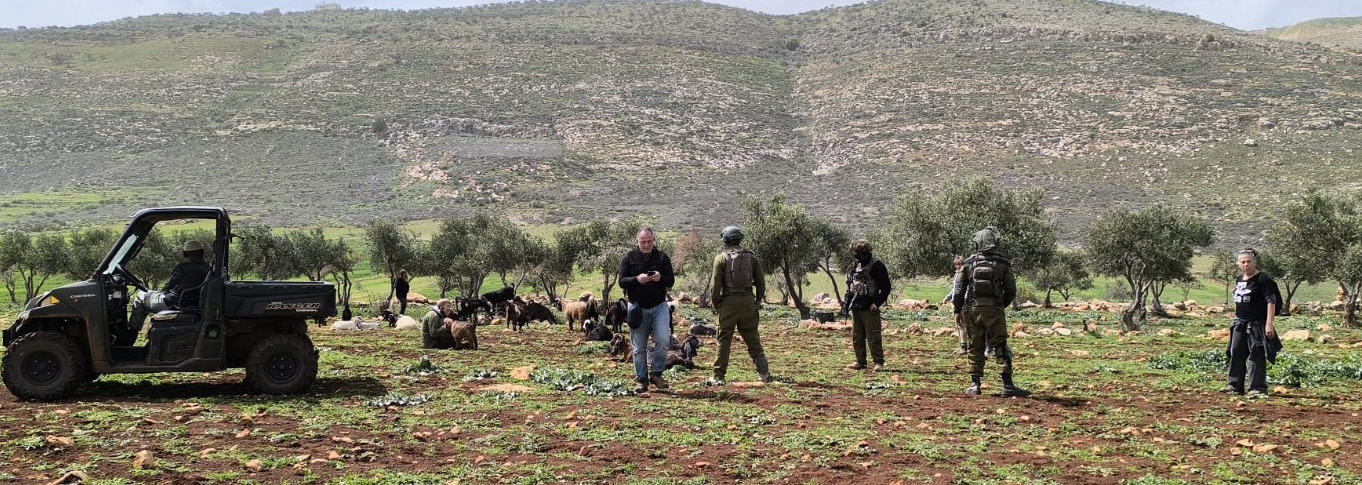
In Khirbet a-Tawil, minors driving a Ranger utility vehicle crossed through the Palestinian community. Settlers from a nearby outpost drove a herd of goats into a Palestinian family's olive grove, and one was filmed bending tree branches to feed the animals.
Friday – Settler Violence Pushes the West Bank Toward Explosion
Major Yuval Ezra, 27, from Herzliya, and Binyahu Melet, 32, a member of the emergency squad at Havat Gilad, were killed in a shooting incident in the village of Tel near Nablus. Another Israeli was seriously wounded, while four Palestinians were killed in the exchange of fire.
The incident reportedly began after armed settlers, accompanied by children, entered the village on an unauthorized hike in Area A without IDF approval. Near the village mosque they encountered Palestinian residents. According to Haaretz, during the confrontation one Palestinian succeeded in seizing an Israeli weapon and used it to shoot Binyahu Melet before being killed.
In response, settlers attacked several Palestinian villages throughout the West Bank. Dozens entered Fara'ata near Qalqilya, setting homes on fire and throwing stones. Similar attacks were reported in Jit and Burin near Nablus. In the al-Mu'arrajat area, Palestinians reported that settlers stabbed a motorist. Settlers temporarily blocked the entrance to Aqraba. Palestinians reported dozens of injuries in the various incidents.
Following the violence, the IDF surrounded Nablus and imposed curfews on the villages of Tel and Burin. Overnight, soldiers raided numerous Palestinian towns and villages, conducted searches, interrogations, and arrests, and detained twenty residents of Tel.
Saturday
Settlers twice attacked the village of Urif, near the settlement of Yitzhar.
During the night, settlers set fire to two mosques—one in Qusra, south of Nablus, and another in Kafr Sur, southeast of Tulkarm. Graffiti reading "Jewish blood is not ownerless" was sprayed on the wall of the mosque in Kafr Sur.
The army closed the villages of Salfit, Qarawat Bani Zeid, Bruqin, Kafr ad-Dik, Jama'in, Qabalan, as-Sawiya, Jit, Beita, Burin, Awarta, Deir Sharaf, Sira, Anabta, Beit Furik, Tel, Tayasir, and Ein Shibli. Settlers again entered the village of Tel.
Four new illegal outposts were reportedly established overnight in the northern West Bank, near the villages of Tel, Awarta, Asira al-Qibliya, and Mount Ebal. According to reports, some were built in Area C and others in Area B.
A 20-year-old Israeli was struck in the head by a stone near Susya during clashes between Israelis and Palestinians. His weapon was seized by a Palestinian who fled to a nearby village before the rifle was recovered by the military.
Settlers blocked the entrance to the town of Aqraba twice during the day, once in the morning and again in the afternoon.