

How many assassinations of Hezbollah leaders and rank-and-file fighters are required before residents of the Upper Galilee can spend a full day without running to bomb shelters? Apparently, not enough killings have tipped the balance, and the supposed alternative has emerged in the form of capturing Beaufort Castle in south Lebanon. For those who have forgotten—or never knew—it is worth recalling that in 1982, when the Golani Brigade captured Beaufort, six of its soldiers were killed there. This was during the First Lebanon War, when explosive devices planted by Hezbollah militants and ambushes they set up caused hundreds of casualties among Israeli soldiers in the so-called “security zone.”
Now, 44 years later, Israeli flags have once again been raised over the fortress in southern Lebanon. There is no reason for governmental and media celebration, and it is wrong to push aside questions about the strategy—or more precisely, the lack of a practical strategy—regarding the current war in the north. Nevertheless, on Thursday Prime Minister Netanyahu told northern local authority leaders that Israel does not intend to withdraw from southern Lebanon in the foreseeable future. In contrast, Hezbollah''s Secretary-General rejected the ceasefire agreement announced by President Trump and accepted by Israel, declaring on Thursday that “as long as our villages are being bombed, northern Israel will not be safe.”
The death toll on the Lebanese front has reached 34, including four civilians, most of them killed by explosive drones. There is still no effective answer to the drone threat and residents of the Galilee continue to run to shelters. Almost no one asks what Israel has gained there, and few mention how this ended the last time. At the same time, no significant public figure dares to say that the ultimate solution to wars is a political solution. For those who prefer to ignore it—including leaders of opposition parties—it is worth recalling that the various arenas in which Israel is engaged—Lebanon, Gaza, and Iran—are closely linked to the occupation of the West Bank.
A political process whose ultimate goal is a two-state solution could help neutralize conflict in the other arenas. This would require assistance from the international community, which is increasingly turning its back on Israel. Unfortunately, this is unlikely to happen before elections, because Netanyahu needs this war, especially after Trump decided to change direction regarding Iran. One can only hope that opposition leaders will open their eyes, turn their backs on the forceful, nationalist, and messianic policies that led to October 7 and continue today. If they do not, the nations of the world will. The red-haired man in the White House proved this week that he can.
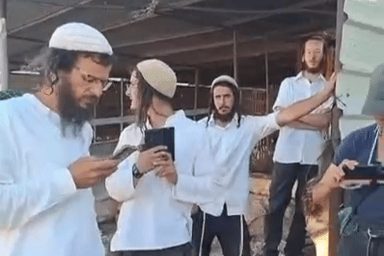
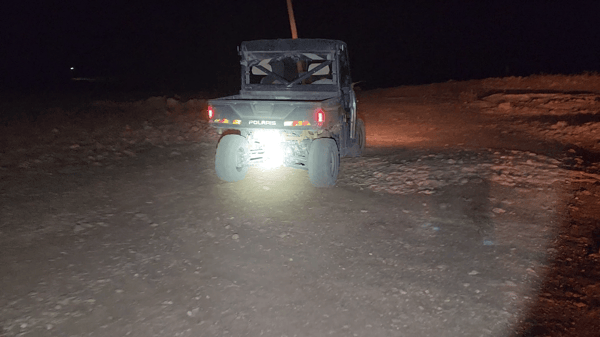
Sunday – Three reserve battalions were assigned to secure MK Tzvi Sukkot’s visit to Joseph’s Tomb in Nablus because he insisted on holding it during daylight hours, contrary to standing procedures. The visit would not have taken place without official approval. Defense Minister Israel Katz, Chief of Staff Eyal Zamir, and Central Command chief Avi Bluth approved it. Yaniv Kubovich reported in Haaretz that a reserve battalion left its assigned sector and that 26 armored vehicles and heavy engineering vehicles were deployed along the route into Nablus. Combat engineers, bomb-disposal teams, an Air Force drone, and large security forces were also assigned. Samaria Regional Council head Yossi Dagan joined Sukkot. Other invitees chose not to attend.
Monday – Two soldiers were killed by explosive drones in southern Lebanon in two separate incidents. In the evening, the military announced the death of Captain Uri Yosef Silvester, a 30-year-old military doctor from Tel Aviv serving in the Givati Brigade. Two officers and another soldier were seriously wounded, and an additional soldier sustained moderate injuries.
Earlier that morning, it was reported that Sergeant Adam Tsarfati, 20, from Rosh HaAyin, a soldier in the Maglan reconnaissance unit, had been killed overnight by an explosive drone. Three other soldiers were wounded alongside him, one seriously and two lightly.
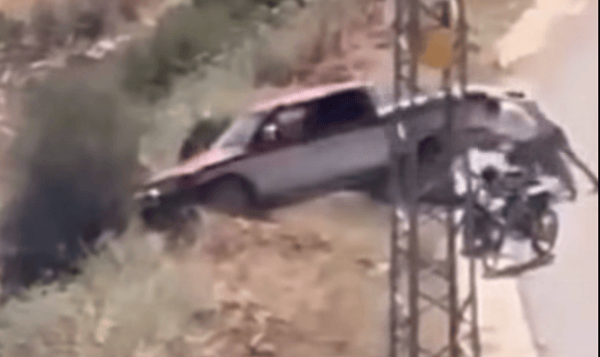
After the military informed Palestinian farmers from Burin that they could access their fields for plowing and agricultural work, they went out in the morning. Within minutes, settlers from nearby Yitzhar arrived and drove them away. They then entered the village and set vehicles on fire.
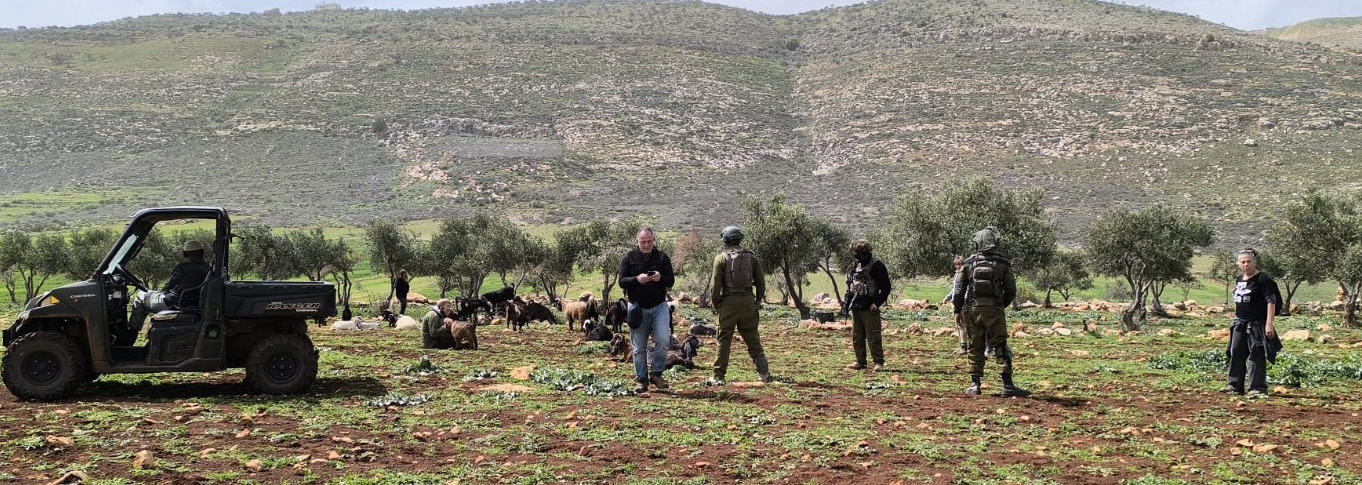
Tuesday – The army confiscated the vehicle of municipal electrical workers from Aqraba who had come to repair a malfunction in Khirbet al-Tawil. This was no ordinary malfunction but damage allegedly caused by settlers. The stated reason for the confiscation was “illegal construction in Area C.” A polite officer confiscated the Aqraba municipality vehicle. “This is illegal construction,” he explained. “But there is no construction,” responded activists from Looking the Occupation in the Eye. “They are carrying out maintenance, construction—it’s not my decision,” he replied. The workers and their vehicle were taken to the settlement of Migdalim.
It was a day of arson attacks. Settlers burned wheat fields in the village of Issawiya. Near Yitzhar, masked settlers set fire to an olive grove in the village of Madama. Footage from the incident showed settlers throwing stones at homes in the village. Additional fires were reported in Jalameh in the northern West Bank, Idhna west of Hebron, and Luban al-Sharqiya near Shilo.
The military removed the security coordinator of the settlement of Yitzhar from his position due to “repeated incidents of exceeding his authority and repeated warnings.”
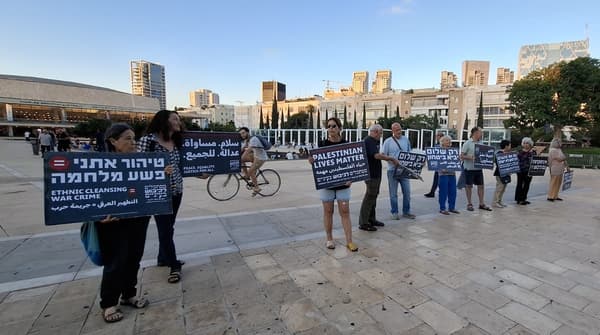
A special Knesset conference entitled “This Is How Transfer Is Carried Out: Communities Under Attack”, organized by MK Ofer Cassif and MK Aida Touma-Sliman (Hadash party), was disrupted by coalition lawmakers, led by Limor Son Har-Melech, Tally Gotliv, Almog Cohen, and Nissim Vaturi.
Cassif summarized the event as follows:
“The violence and fascist thuggery that erupted today in the Knesset testify to the depth of cooperation between the settlers’ terror arm and the government. Today they tried to import the policy of ethnic cleansing in the occupied territories into the Knesset—and failed. They failed because we succeeded in holding the conference on government transfer policies and settler terror despite the threats and violence. I thank Looking the Occupation in the Eye, the human rights organizations and activists, the brave protective presence volunteers, the conference participants, and our Palestinian partners. Together we will continue exposing the ugly truth about the crimes of the occupation and settlement terror until we eradicate them.”
See and hear Danny Danieli, a member of Looking the Occupation in the Eye, speaking at the conference: https://www.facebook.com/reel/880234051017702
Thursday – Captain Eitan Shmuel Lamberg, 21, from Mishmar HaShiv''a, was killed when an anti-tank missile struck the tank in which he was stationed north of the Litani River in southern Lebanon. Lamberg served in the 7th Armored Brigade.
Masked settlers entered and moved among homes in the village of Qusra. Border Police forces arrived, whereupon dozens of settlers began throwing stones directly at them. One Border Police officer was injured and treated at the scene. The settlers fled. No arrests were reported.
Friday – A 7-month-old Palestinian baby was shot dead by a soldier in Hebron. The infant’s mother and father were moderately wounded. The father told Haaretz that he stopped driving his vehicle at soldiers’ request and that only afterward did the troops open fire.
“The soldier signaled for me to stop. I brought the vehicle to a complete halt and raised my hands onto the steering wheel. Immediately afterward, they opened fire on the car.”
The IDF spokesperson stated that the soldier who fired believed he was in danger.
Three Palestinians were wounded by settler gunfire near the town of Idhna west of Hebron, one of them seriously. Settlers had entered privately owned agricultural land for the second consecutive day, and when Palestinians attempted to return to their land, a confrontation developed and shots were fired.
Saturday – Captain Shahar Gamla, 23, from Natur in the Golan Heights, died of wounds sustained on Thursday in an explosive-drone attack.
Sergeant Ohad Yaari, 21, from Rehovot, was killed in an accidental shooting. He served in the Givati Brigade.
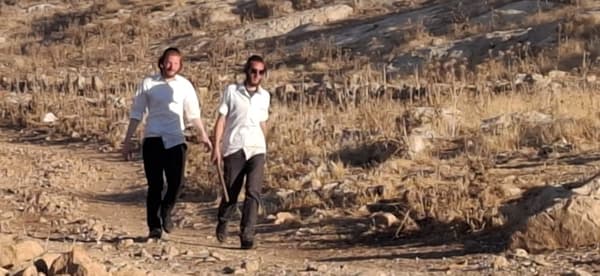
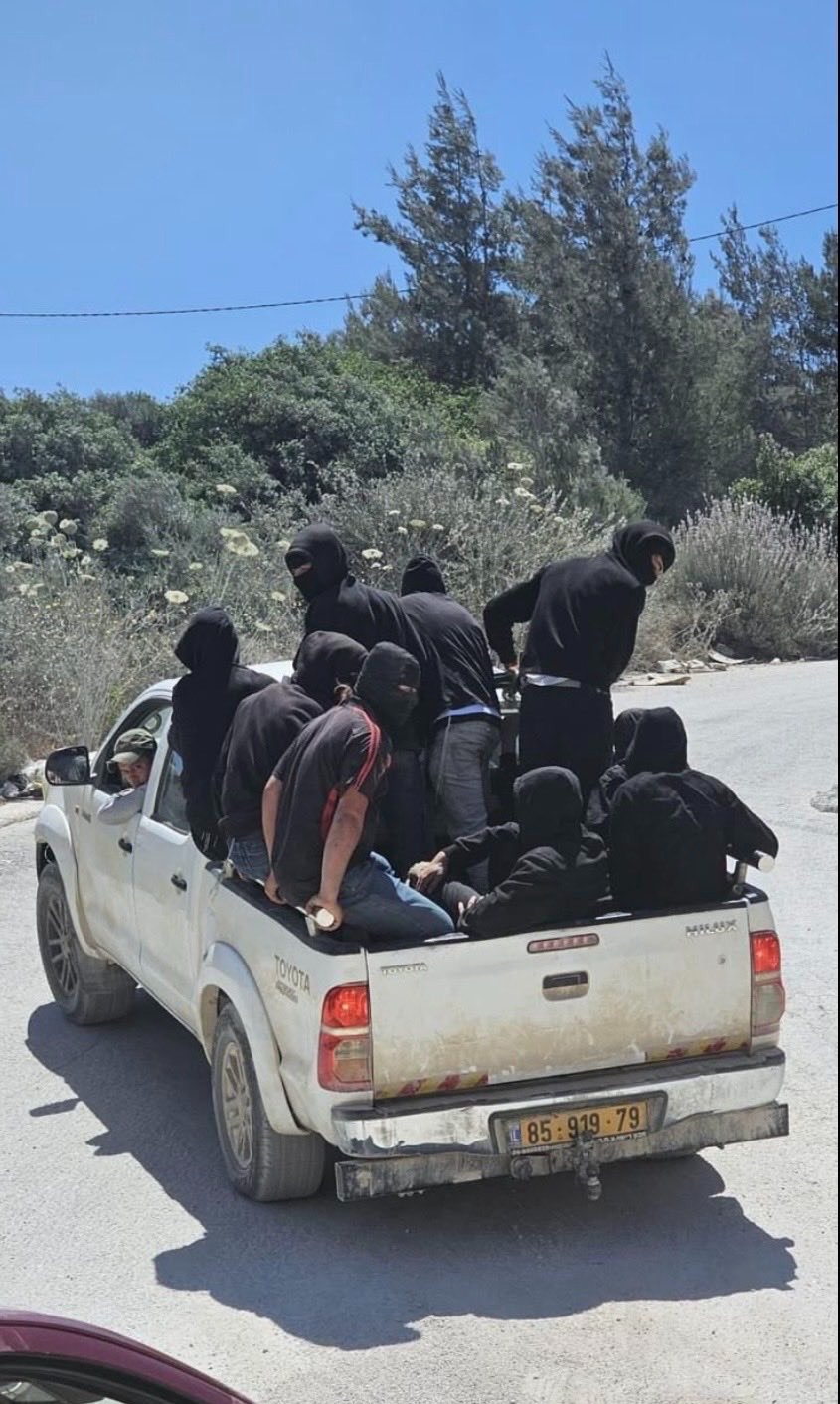
Settlers attacked Huwara. Nine Palestinians were injured, one of them seriously after being struck in the head with a club. Video footage from the event shows a group of settlers and a soldier knocking two Palestinians to the ground and beating them with clubs. Images circulated online show the attackers arriving in the town in a pickup truck, their faces covered by masks. Uri Misgav wrote: “Jewish Nukhbas produced in the hilltops.”
The disturbances in Huwara, near Yitzhar, and in three nearby villages including Burin, involved smashing vehicle windows, stone-throwing in Huwara, and the theft of a flock of sheep. The army arrived only two hours later. No arrests were reported.