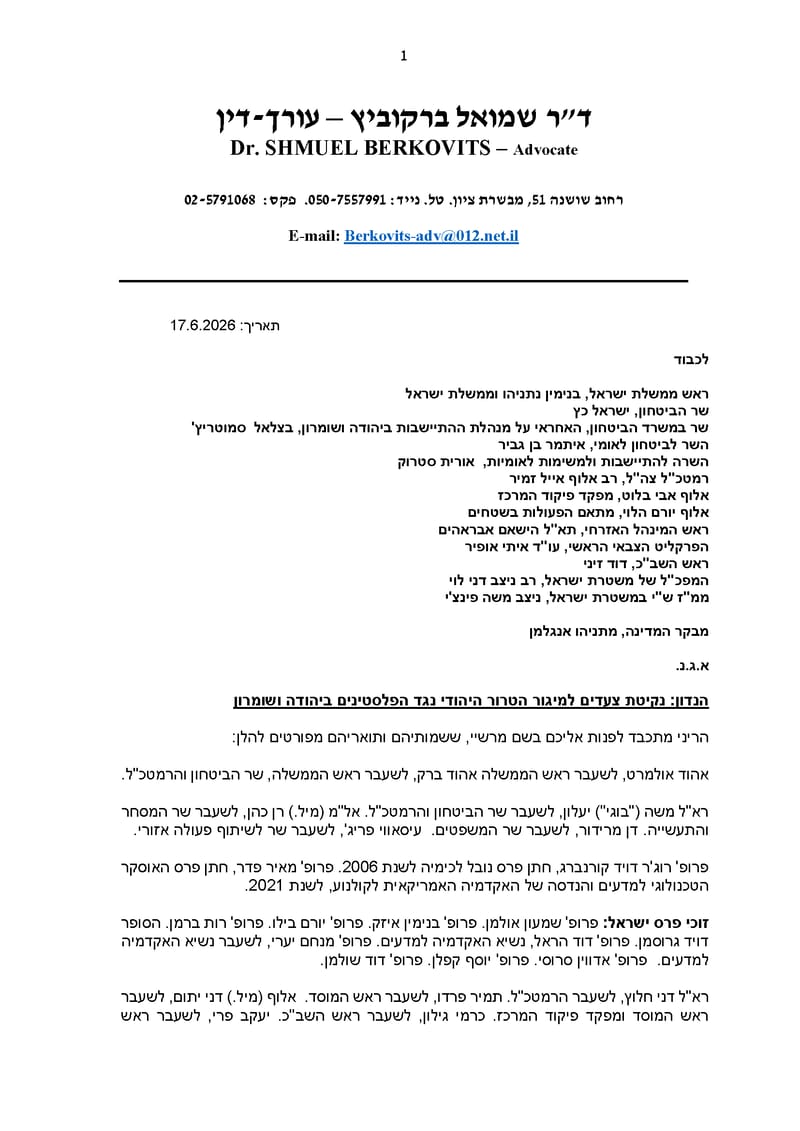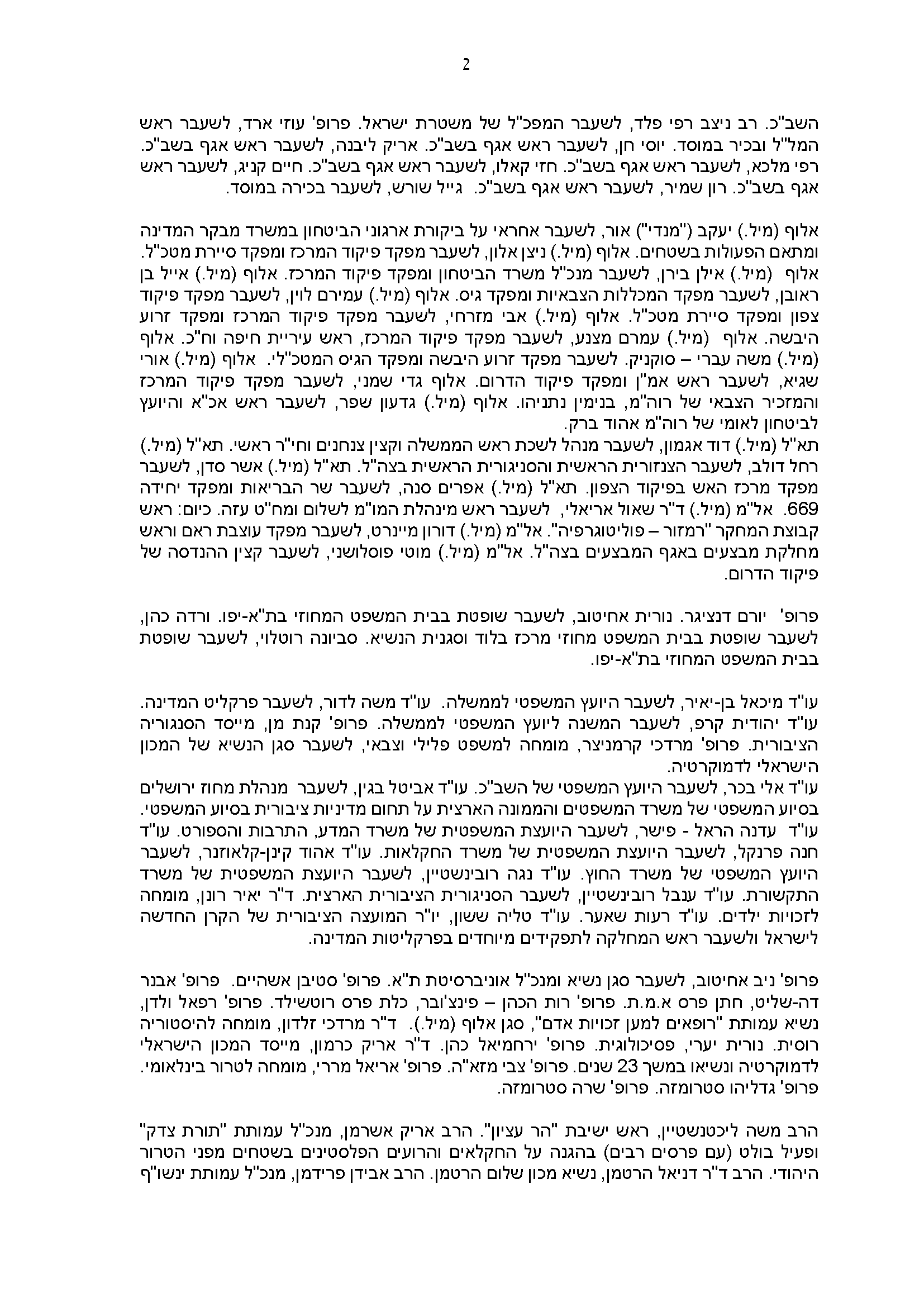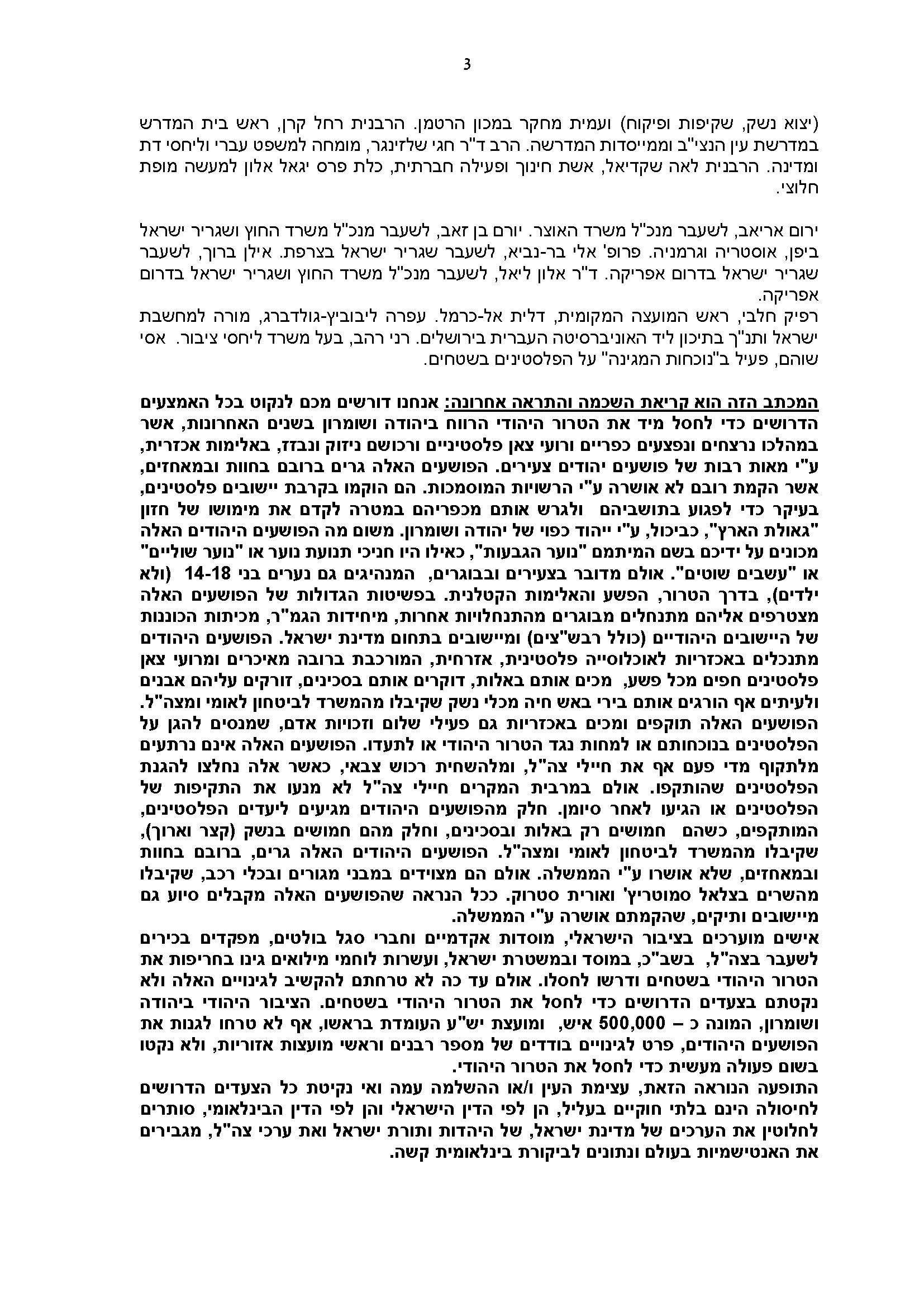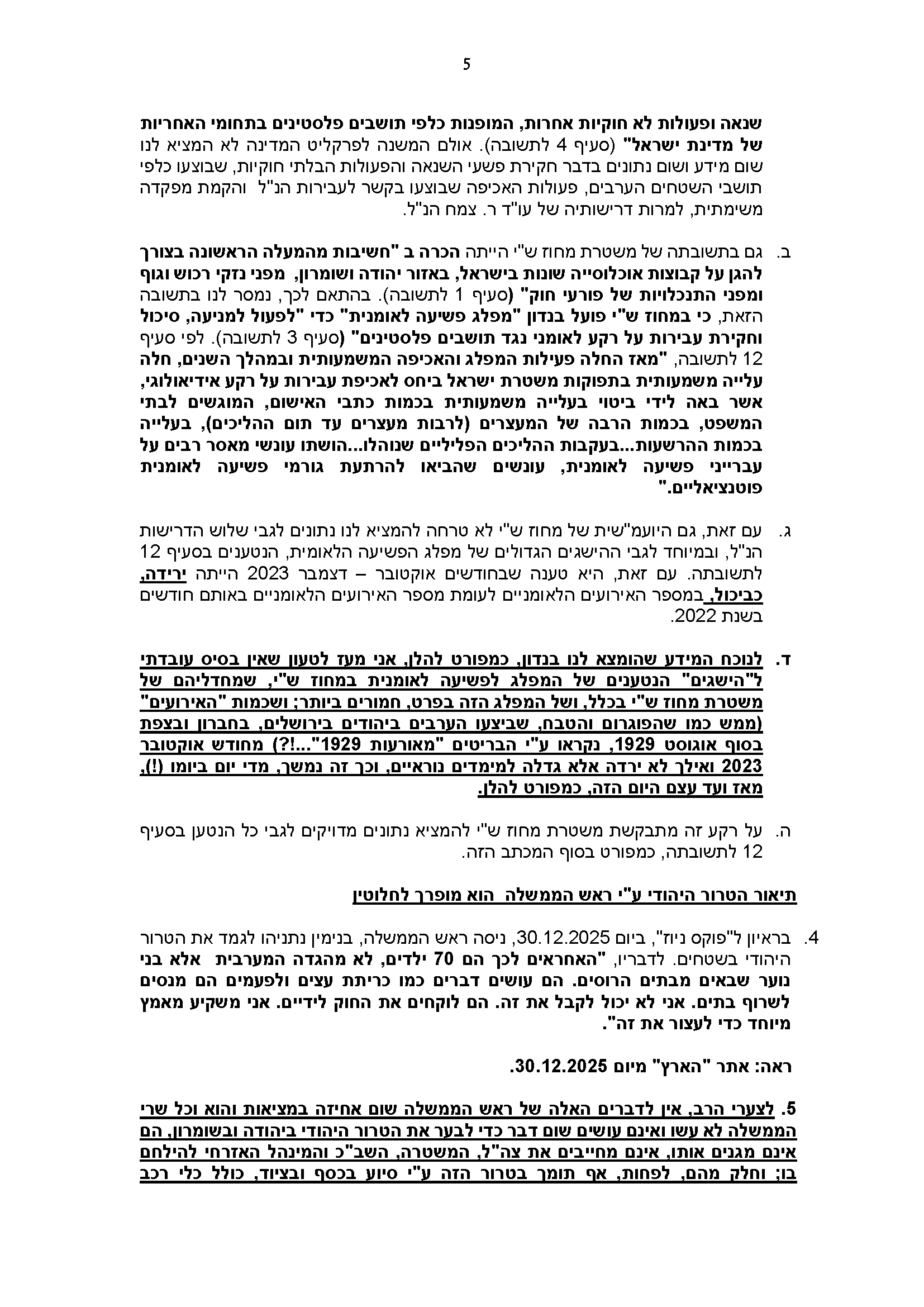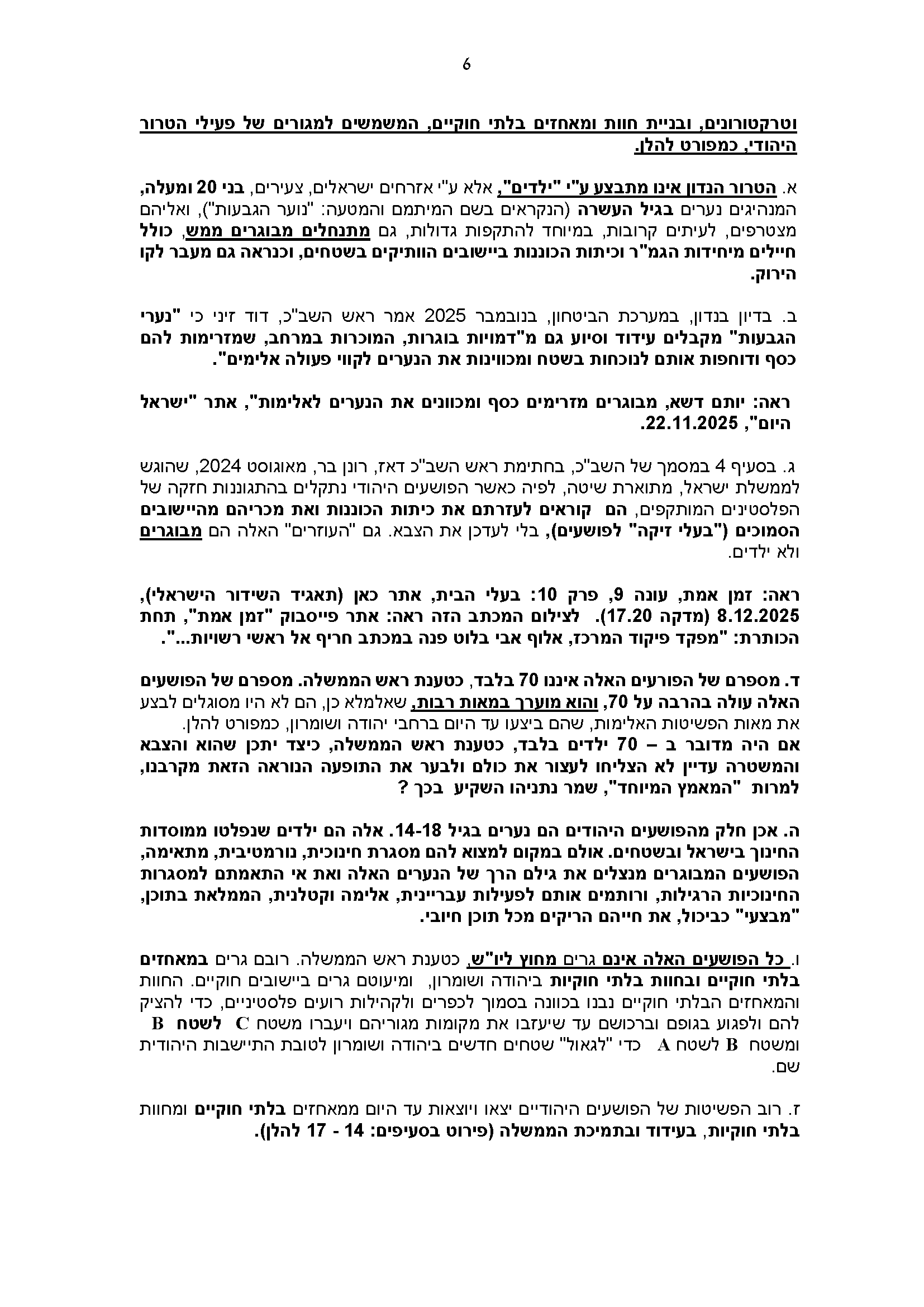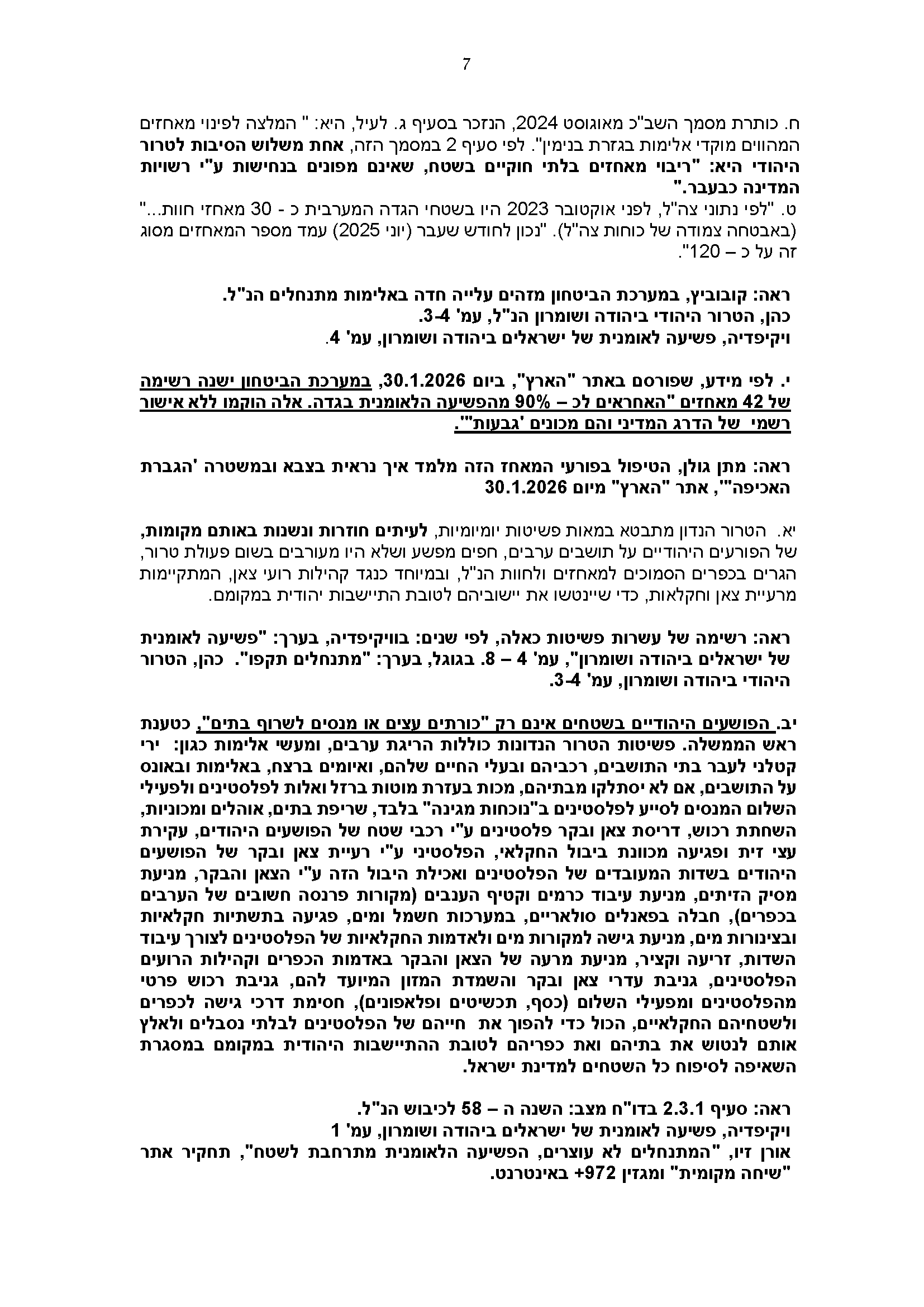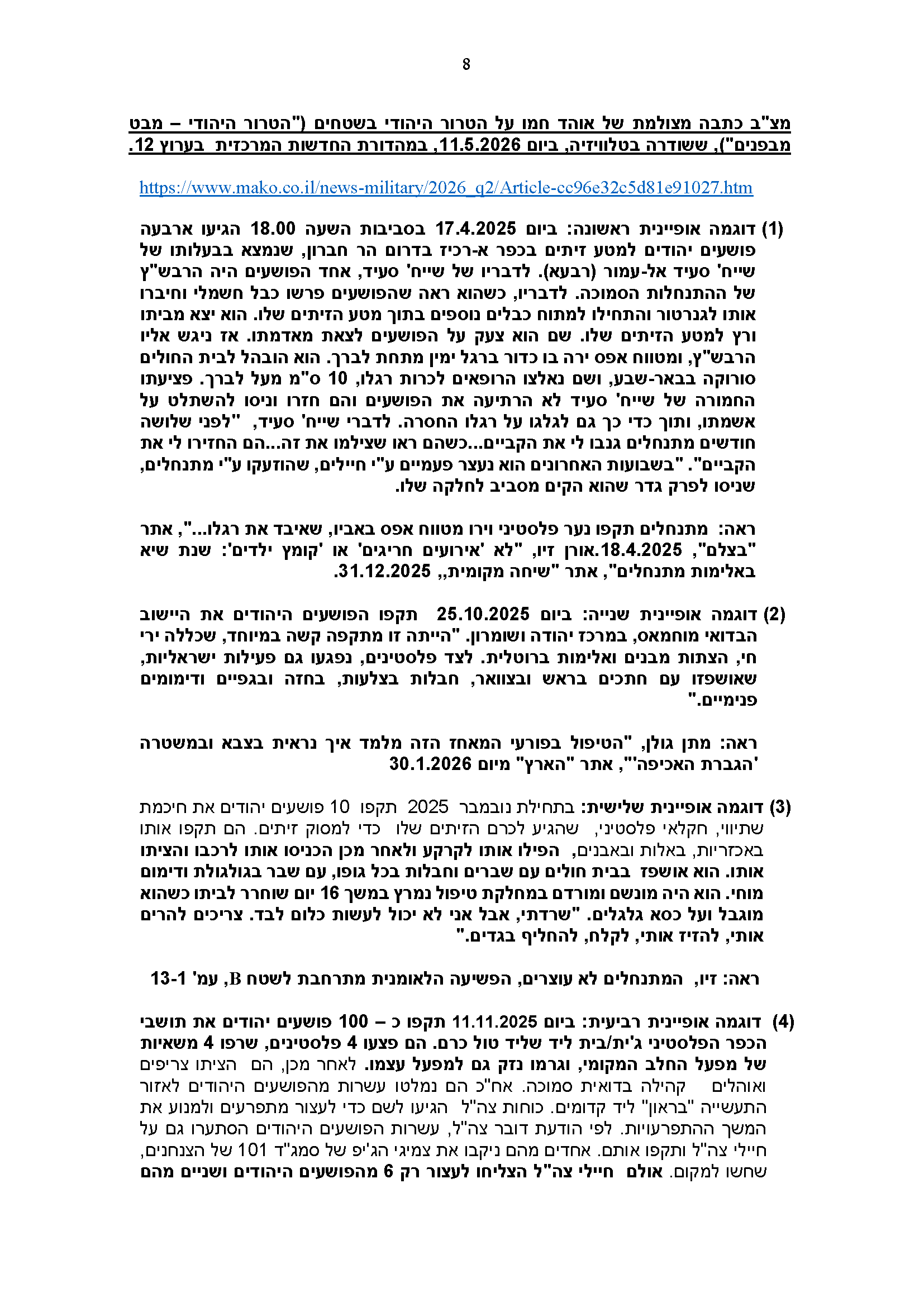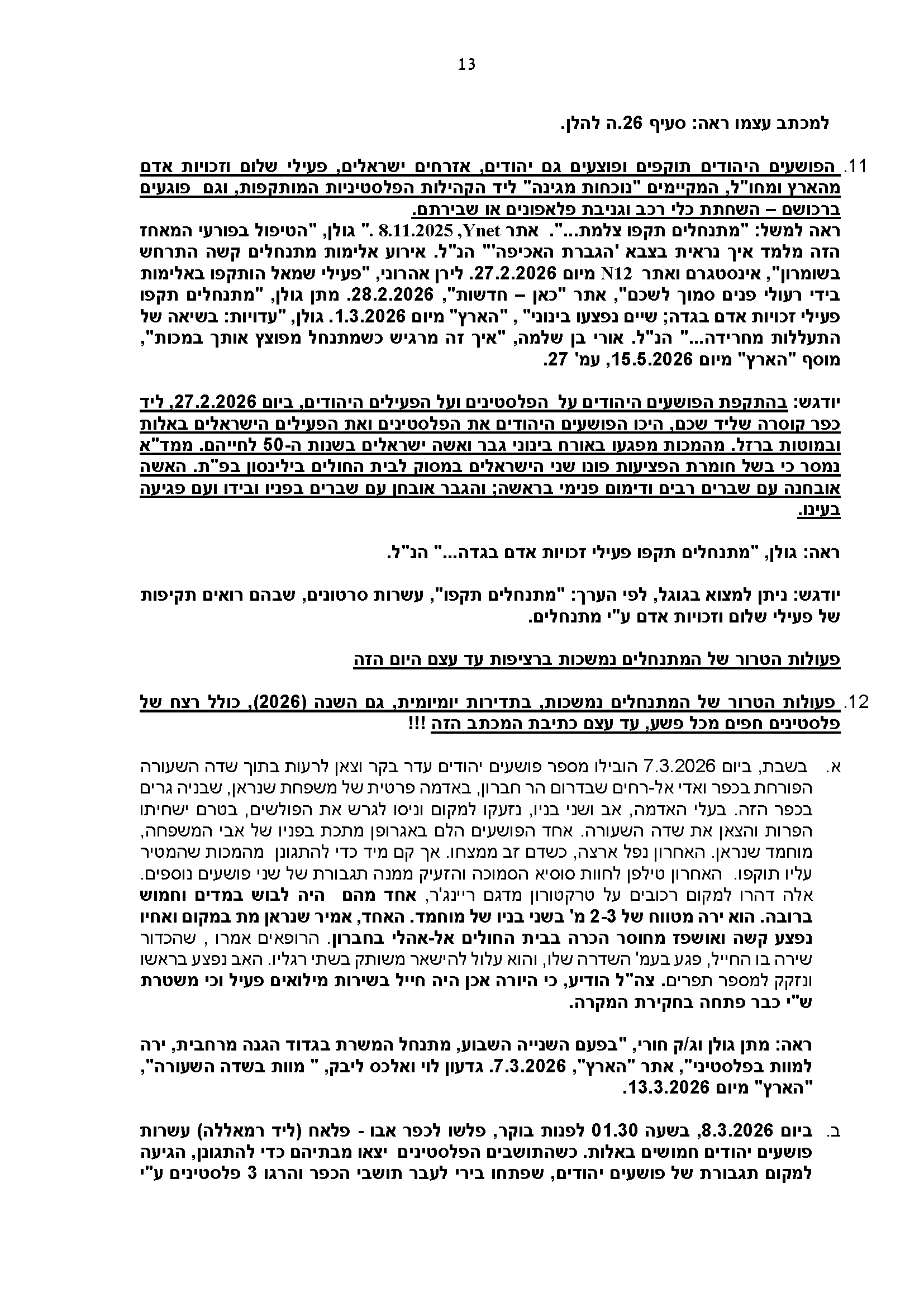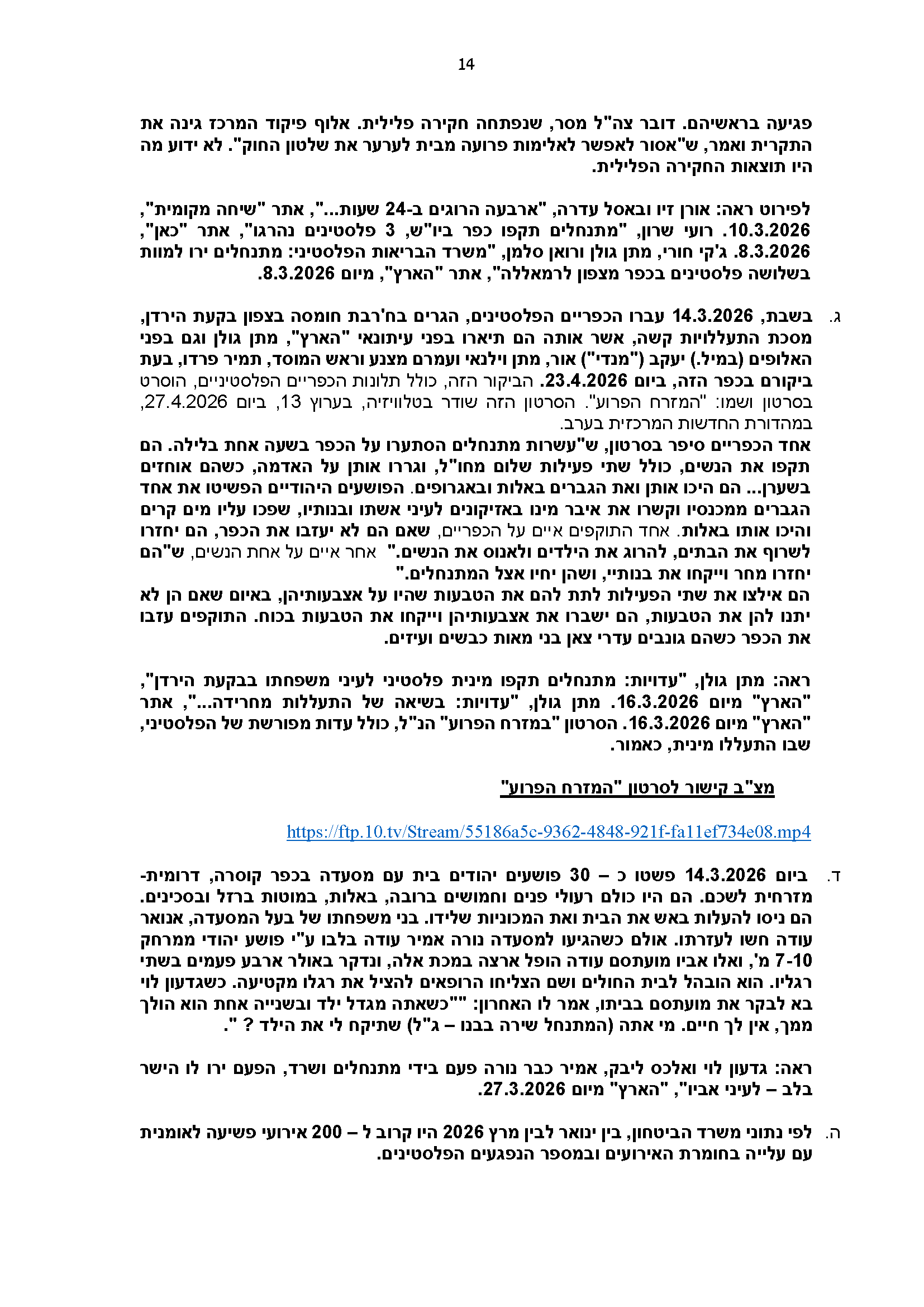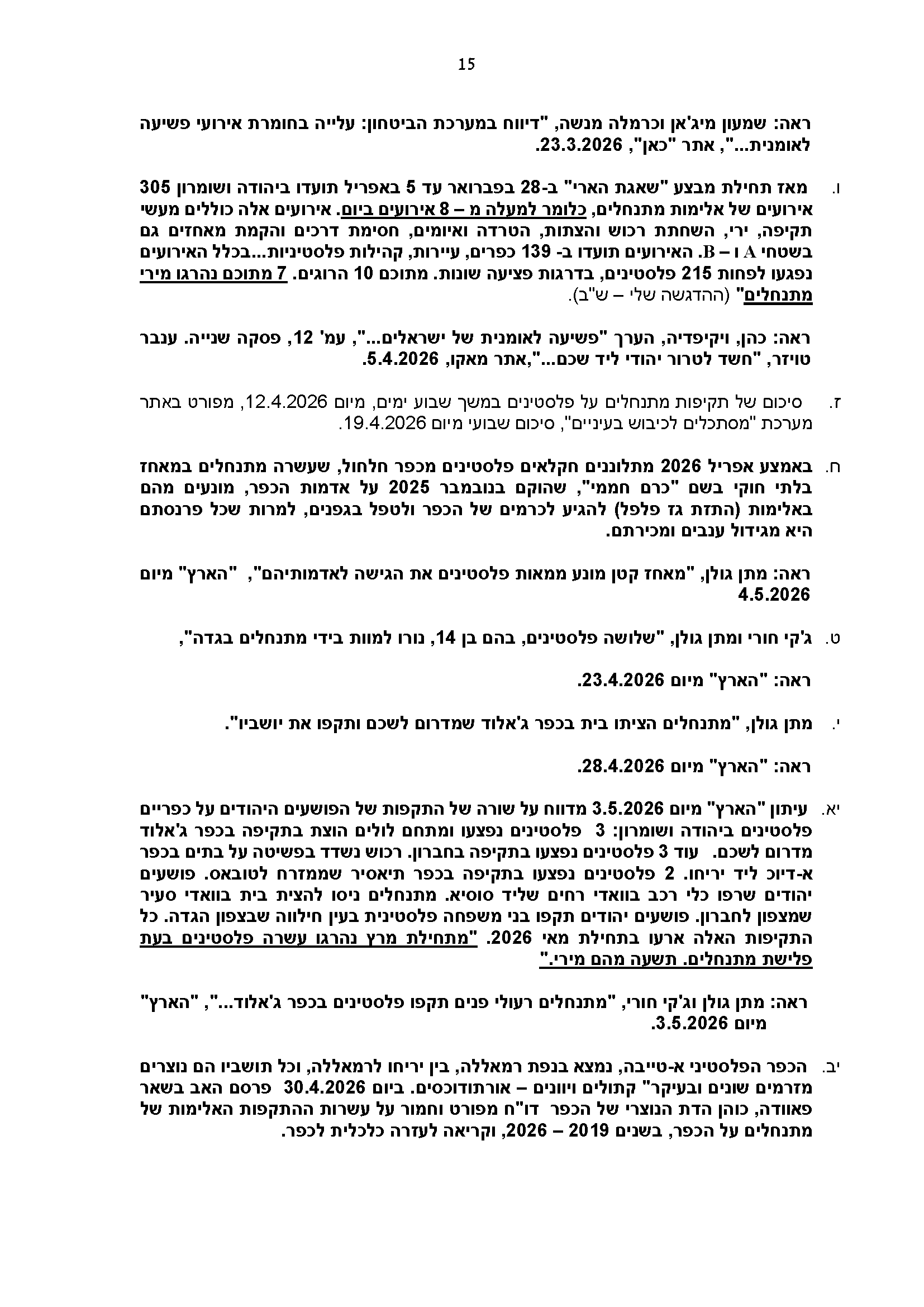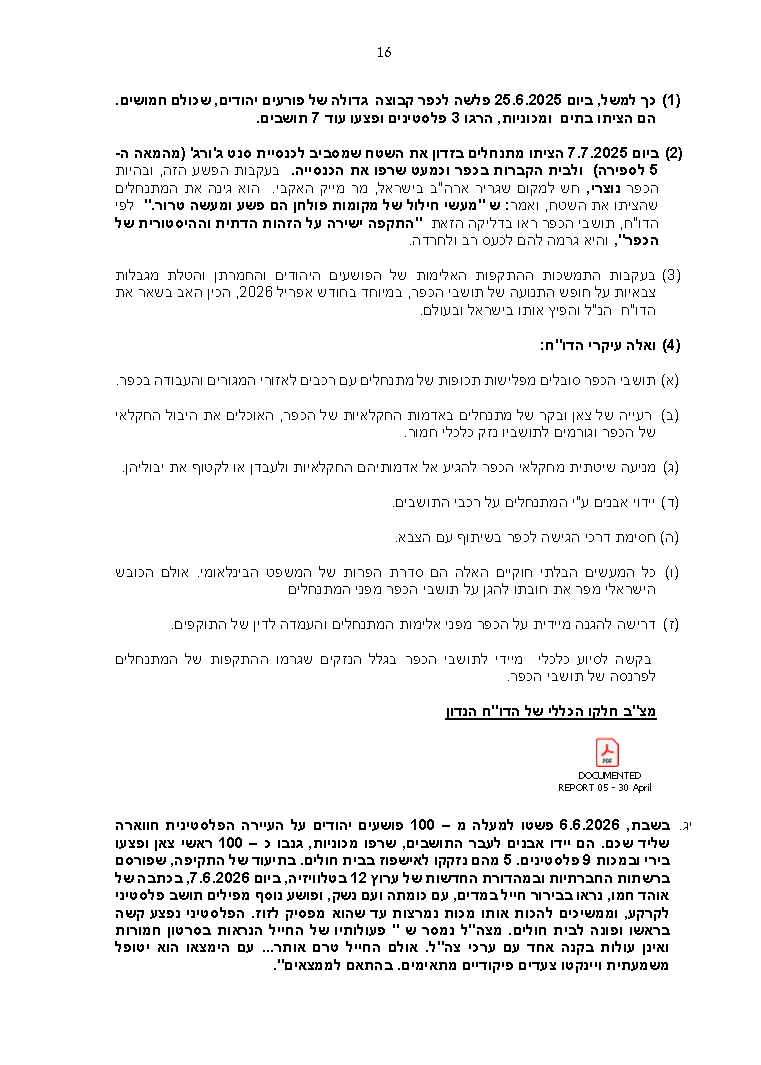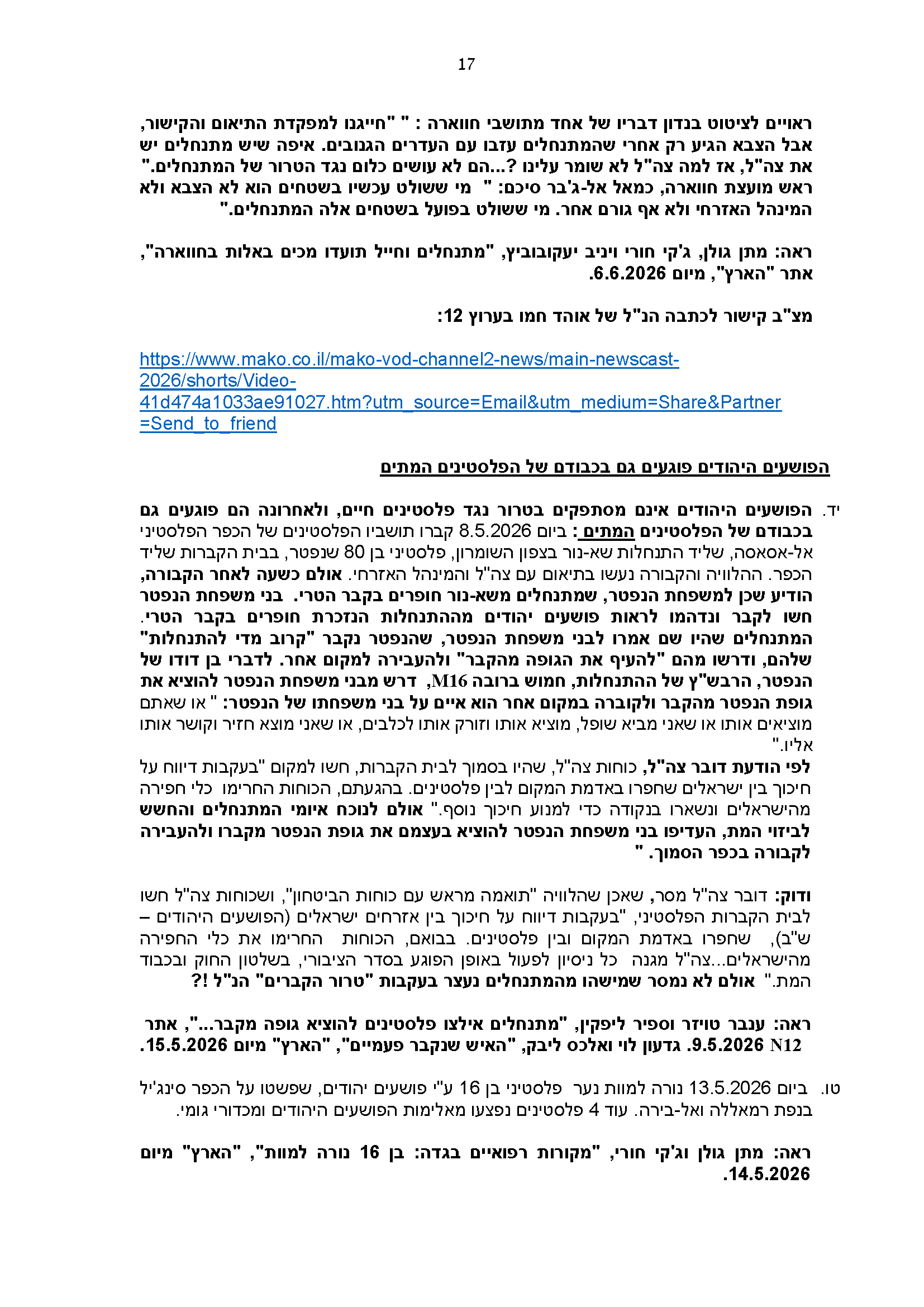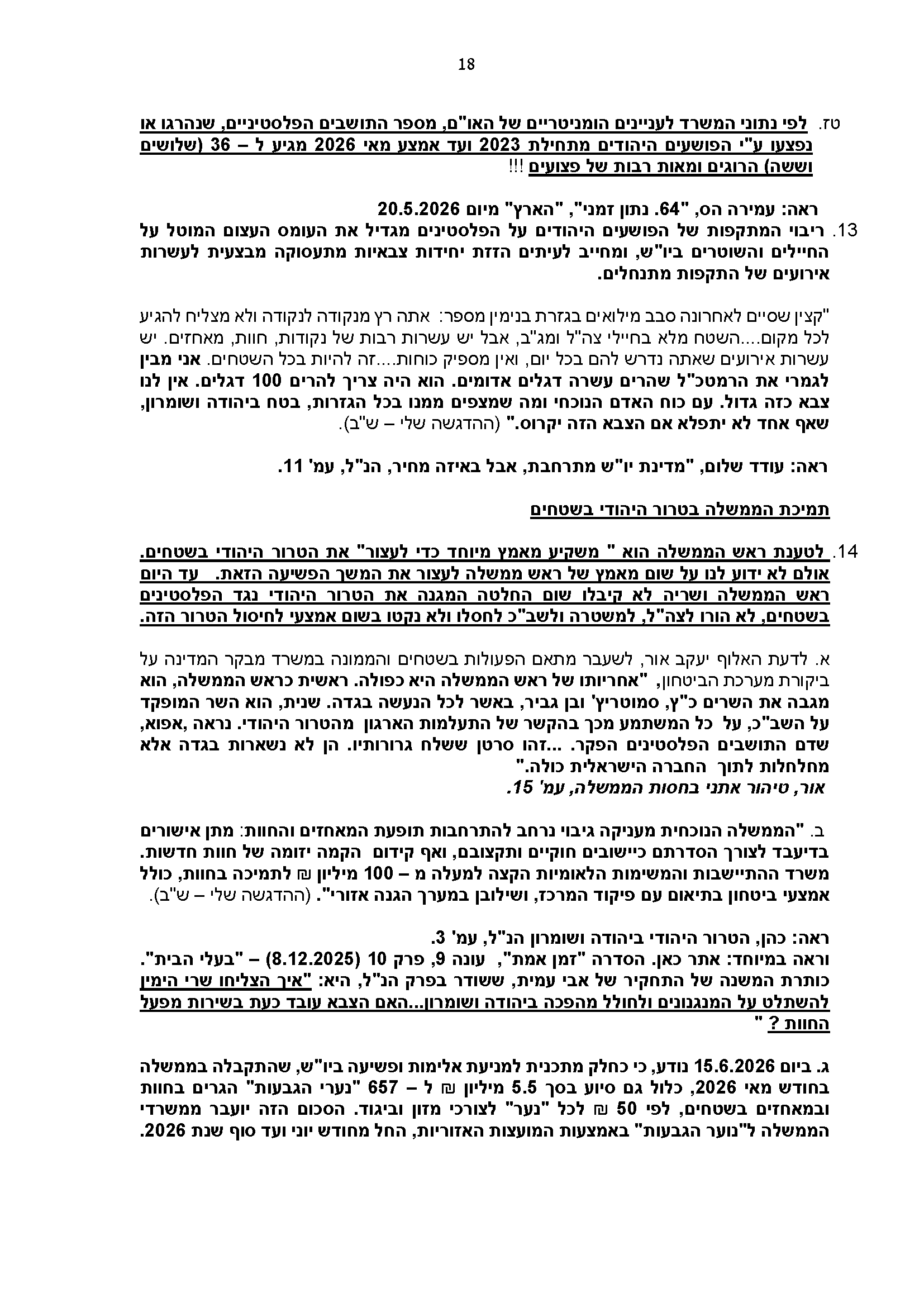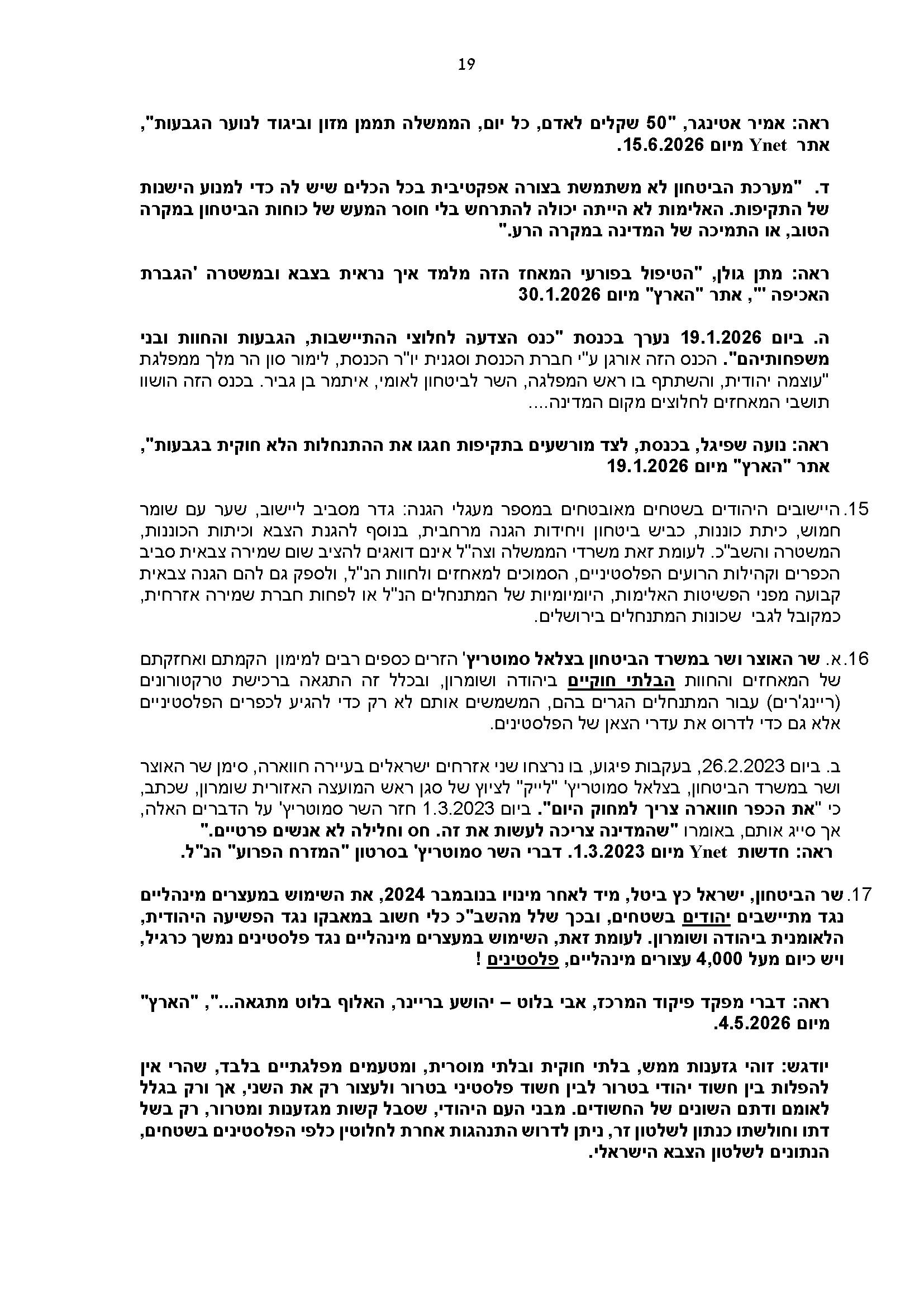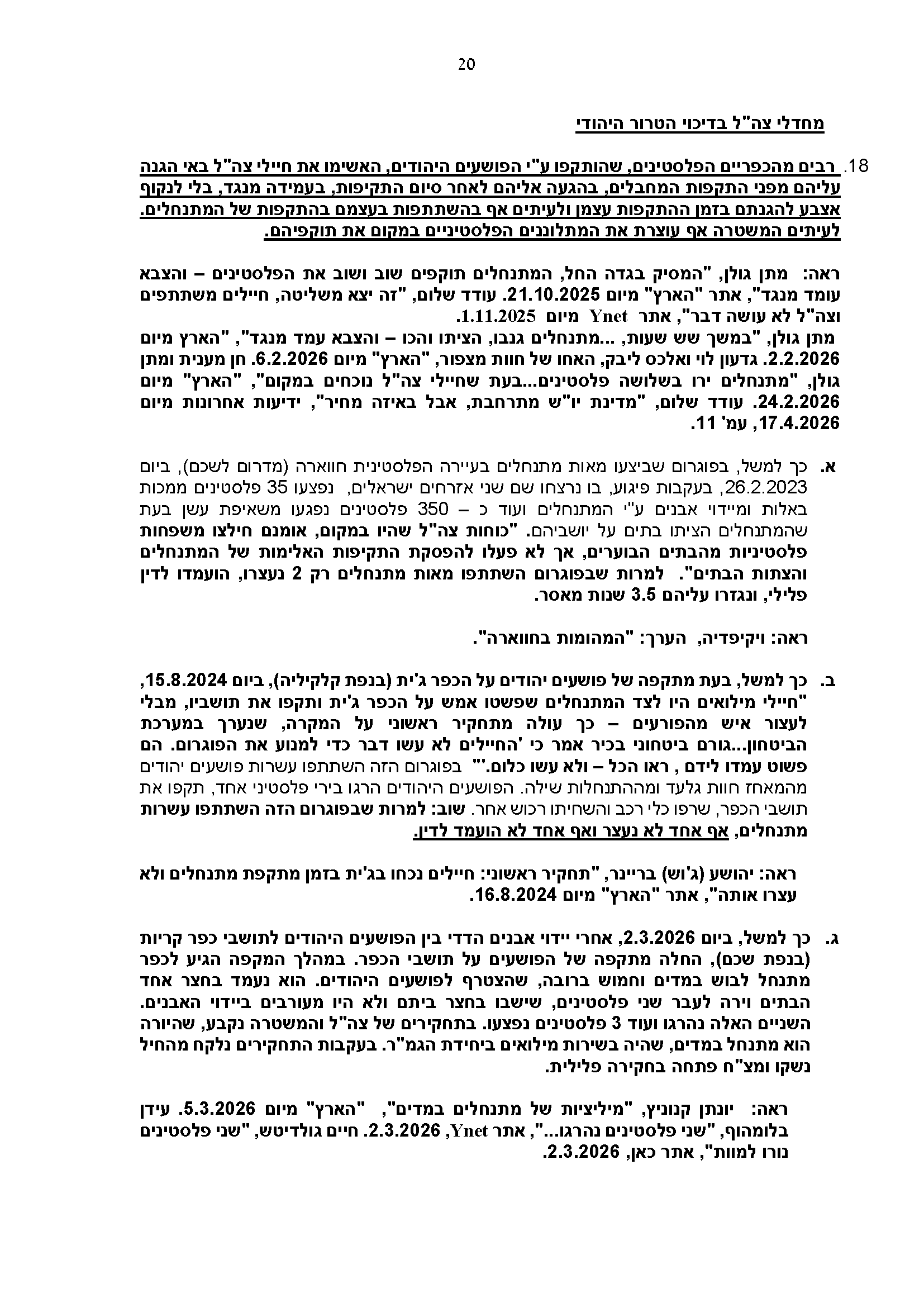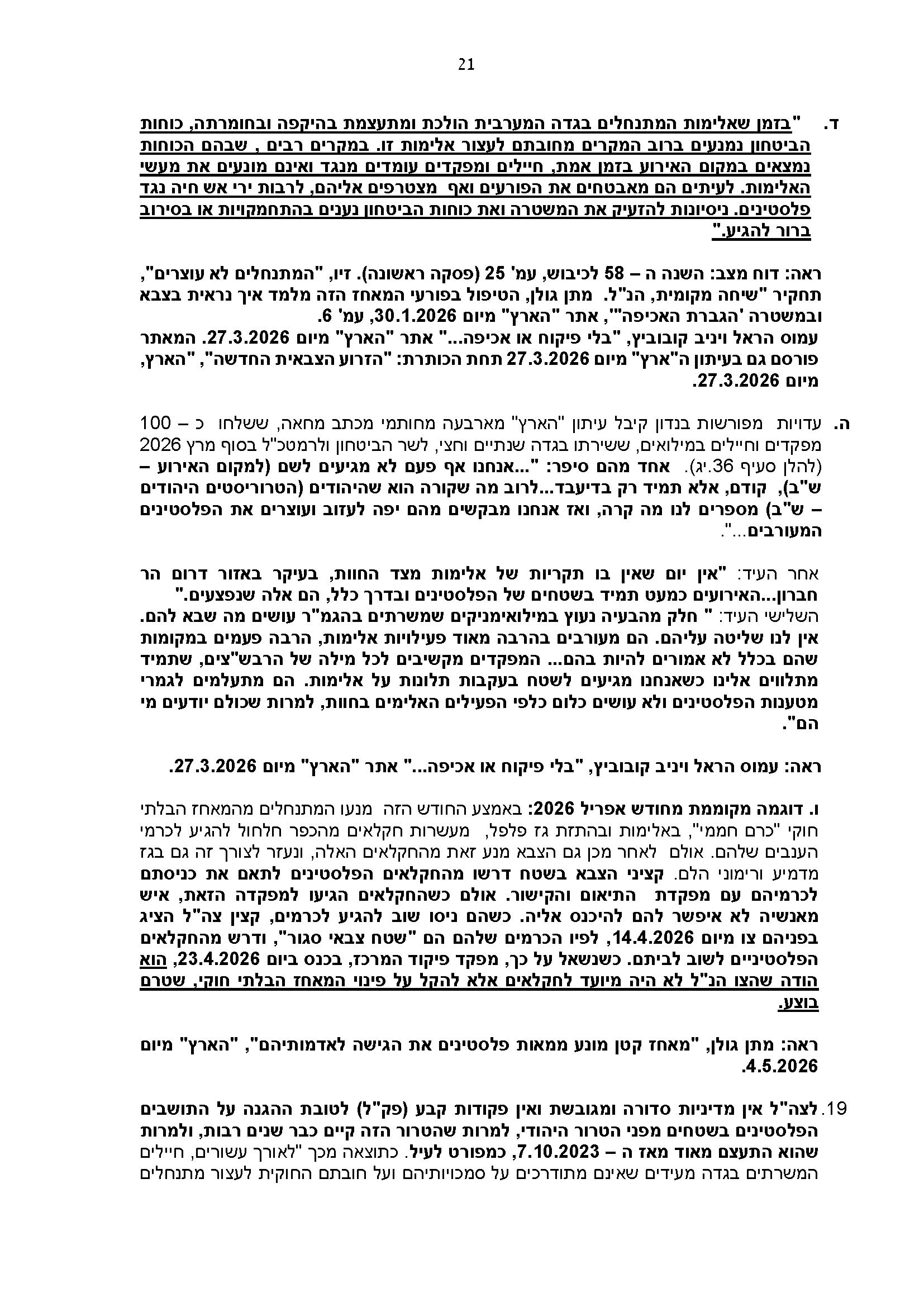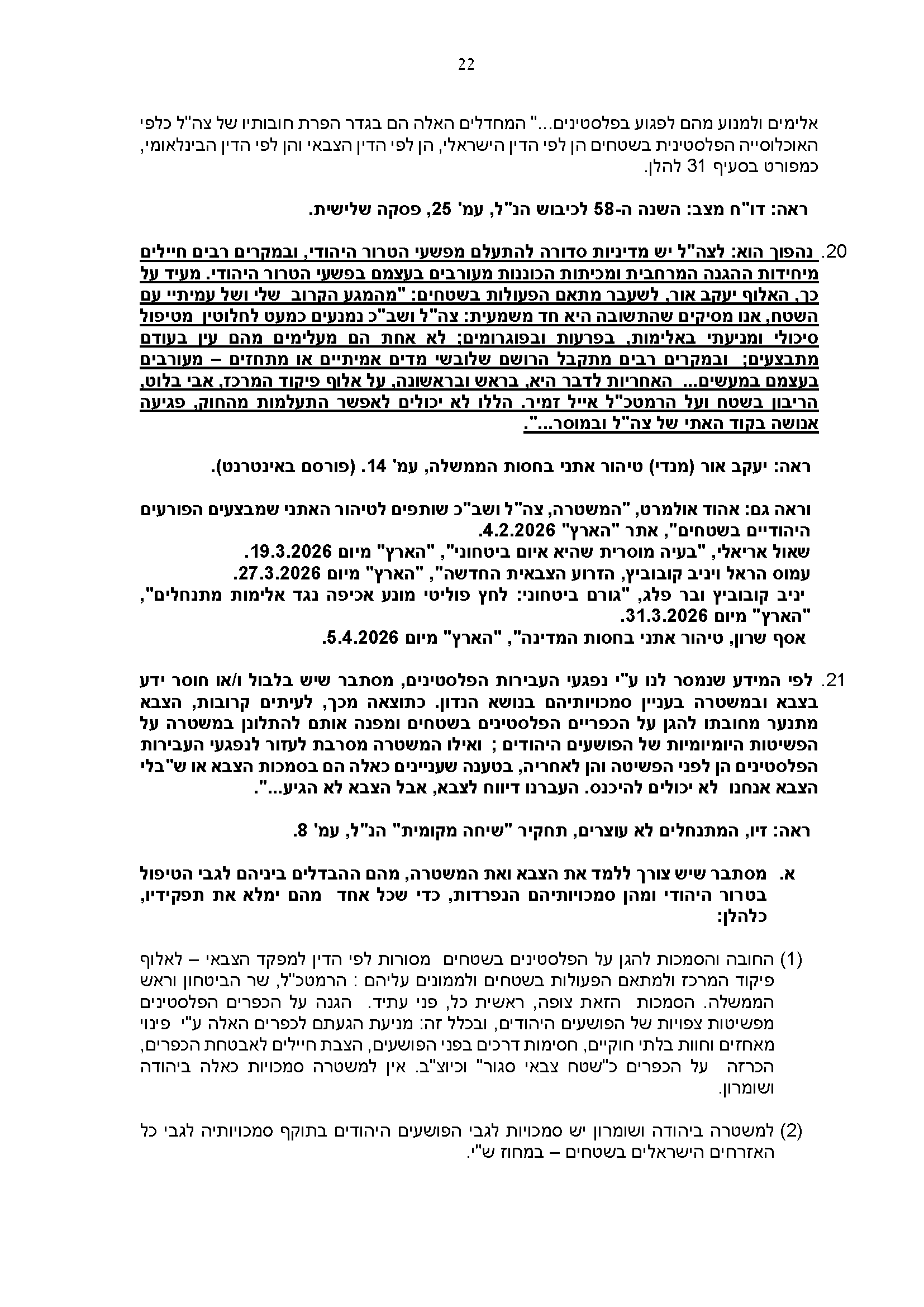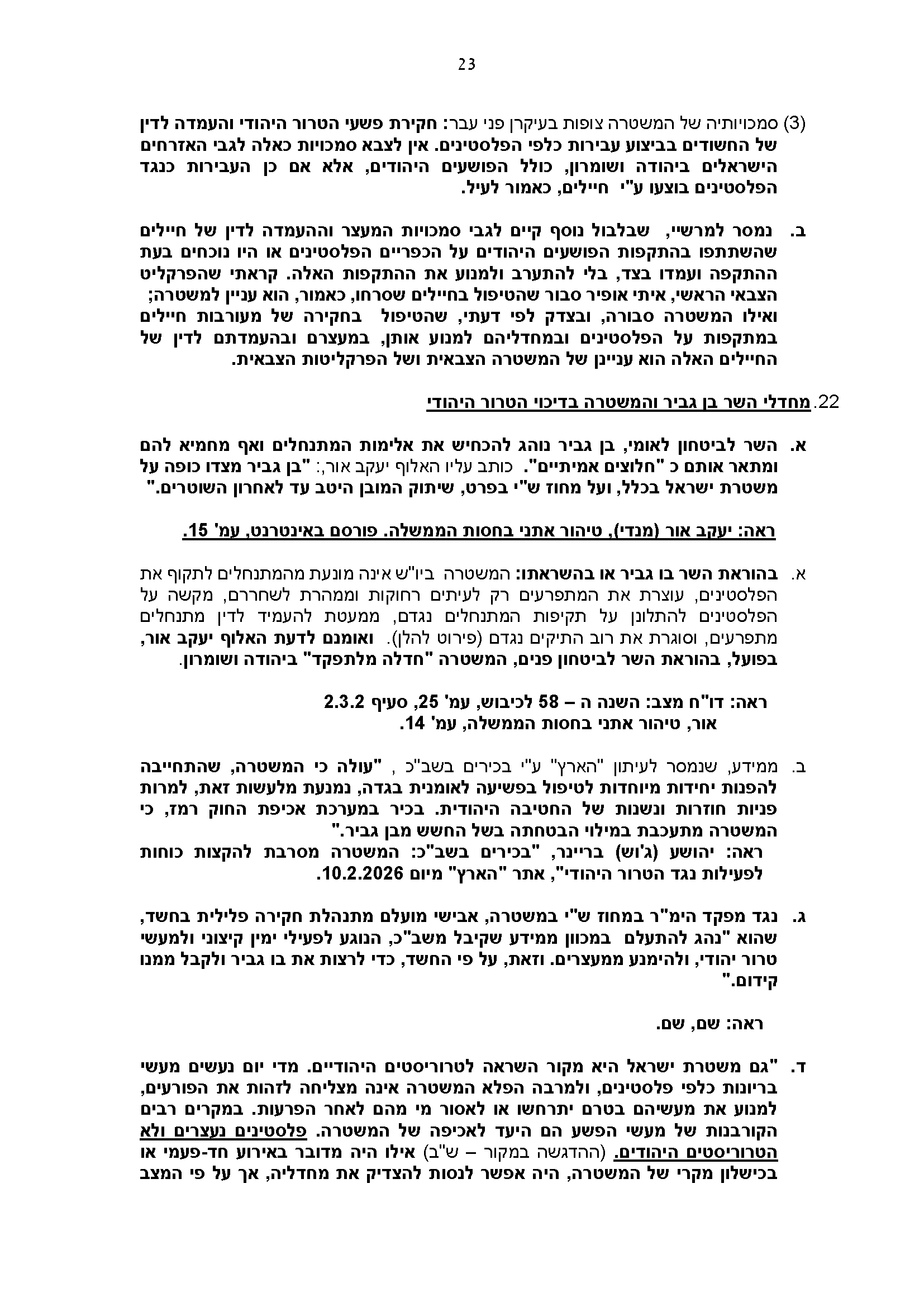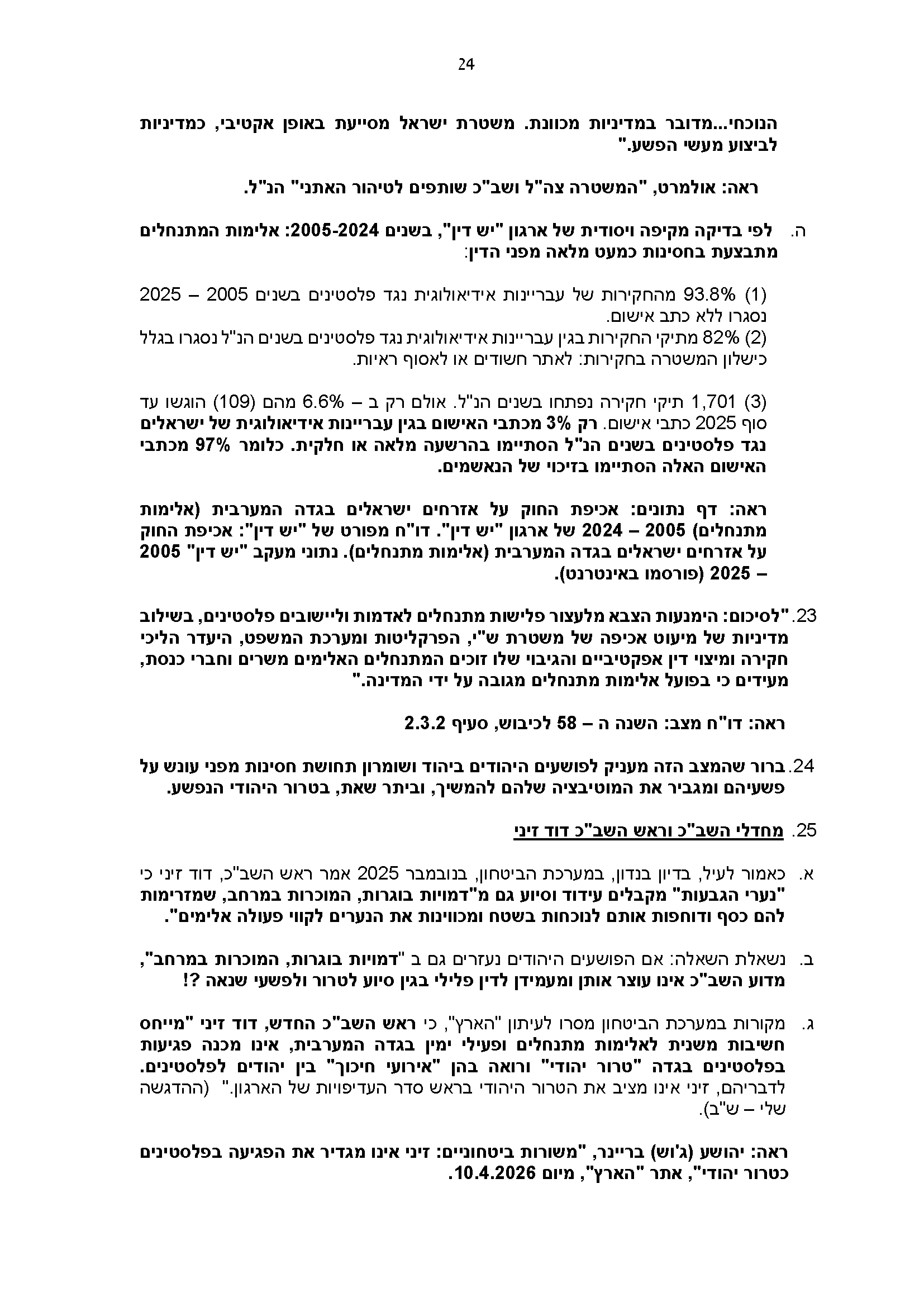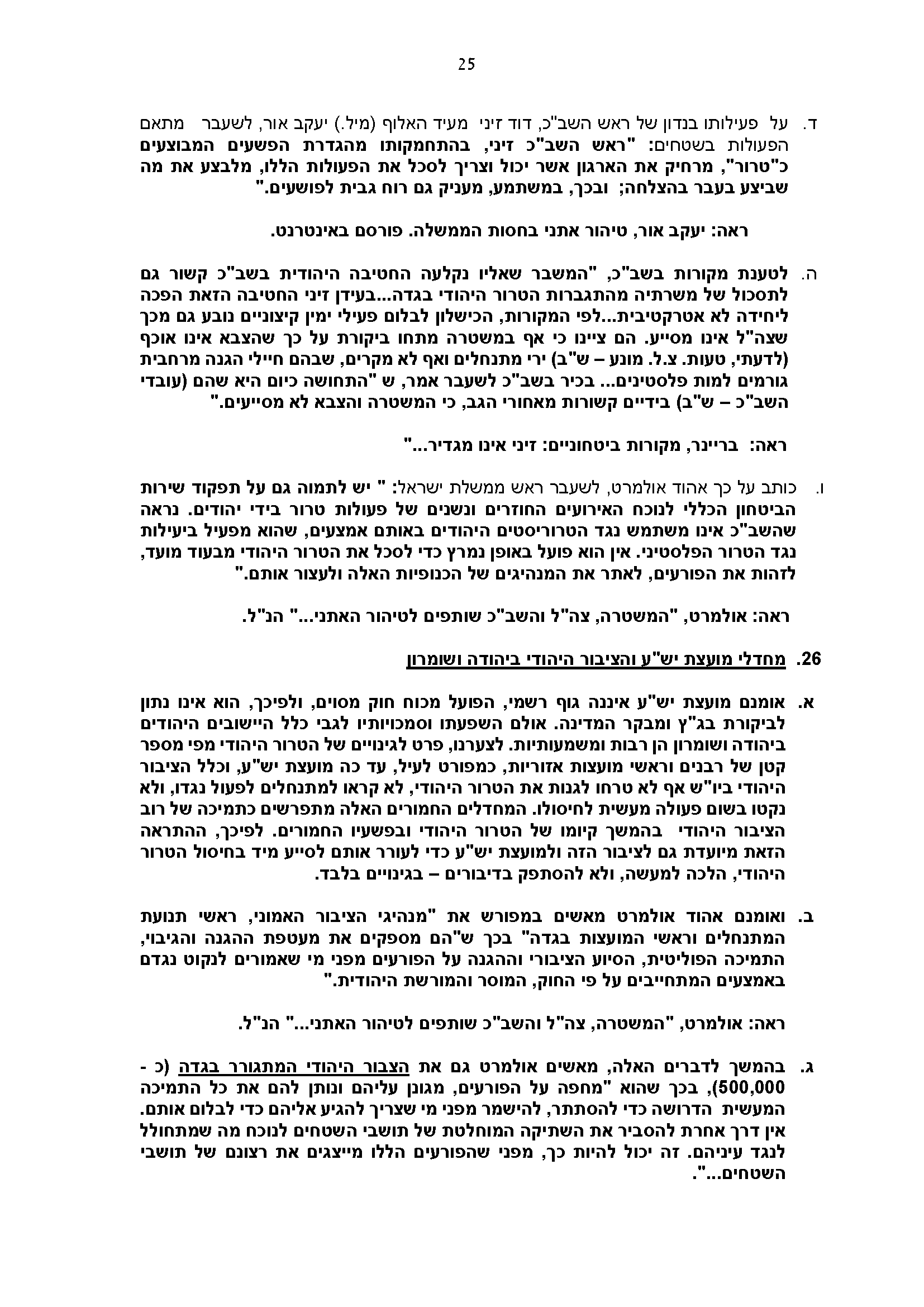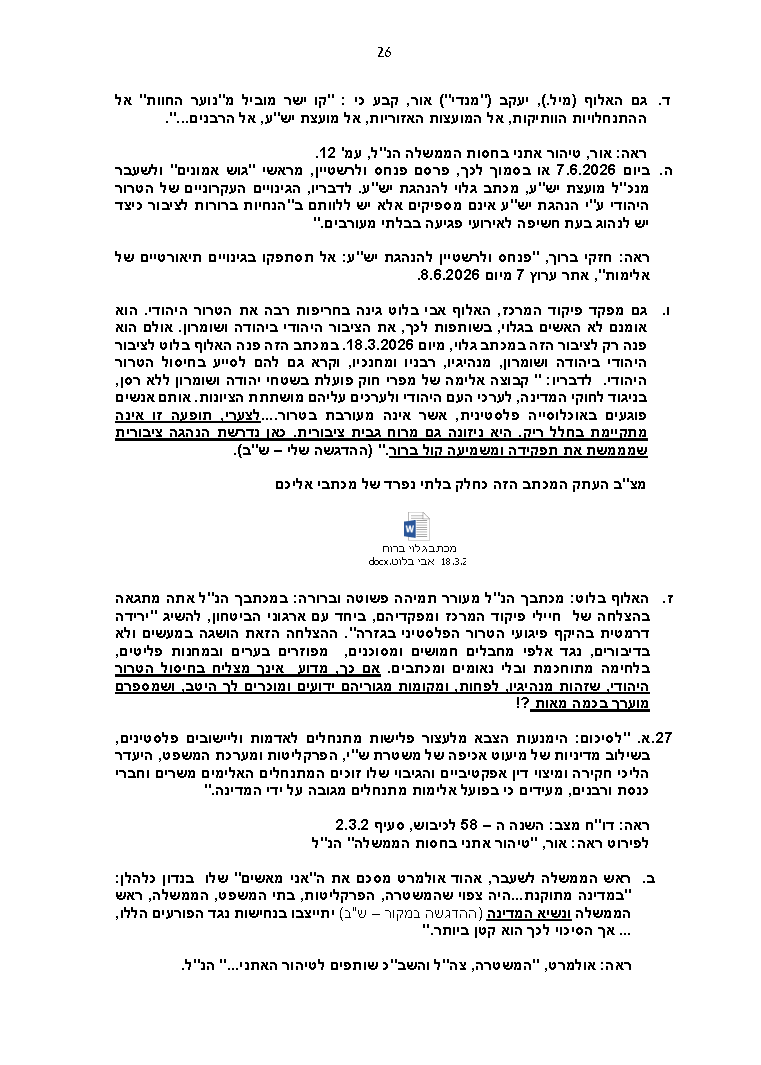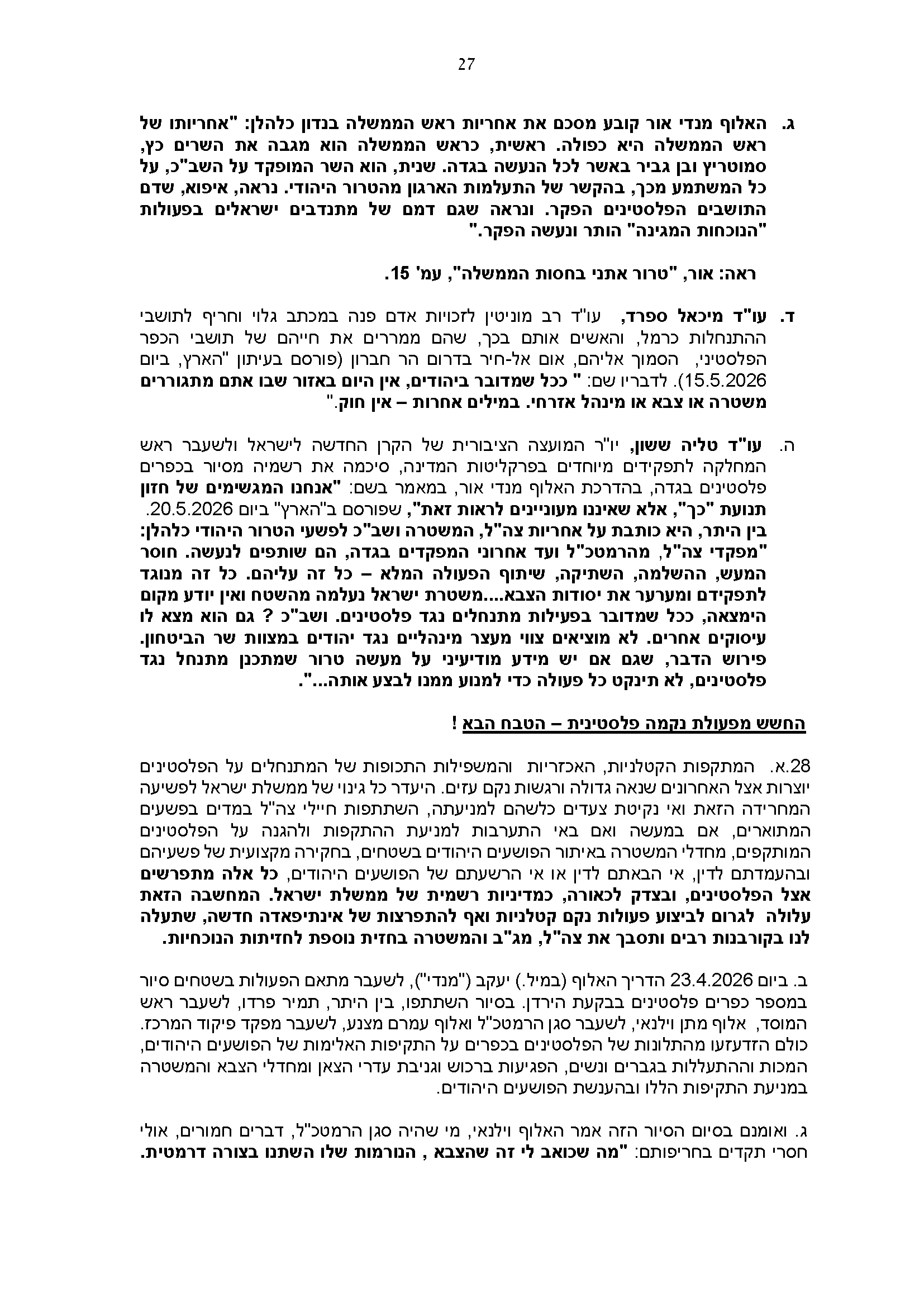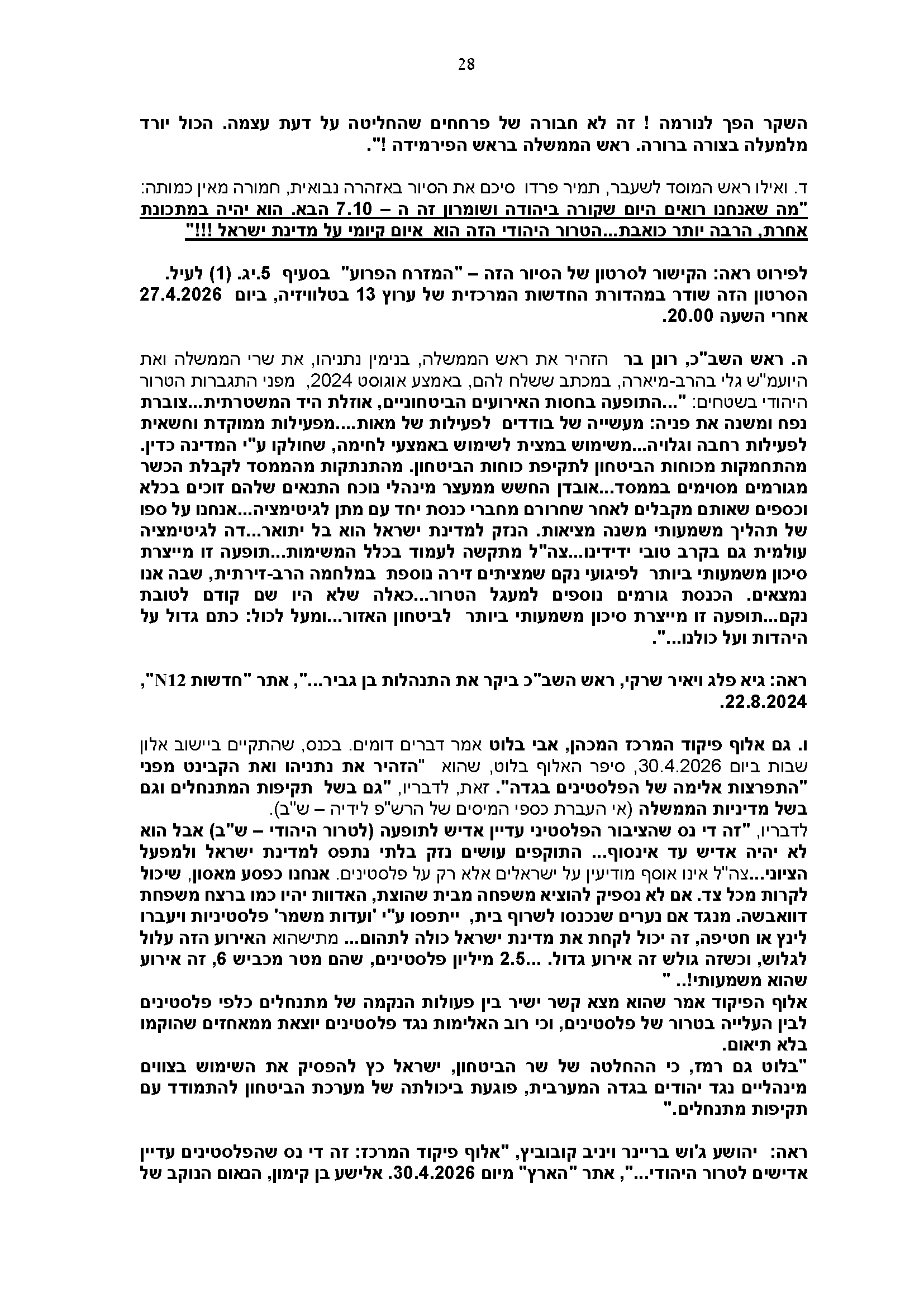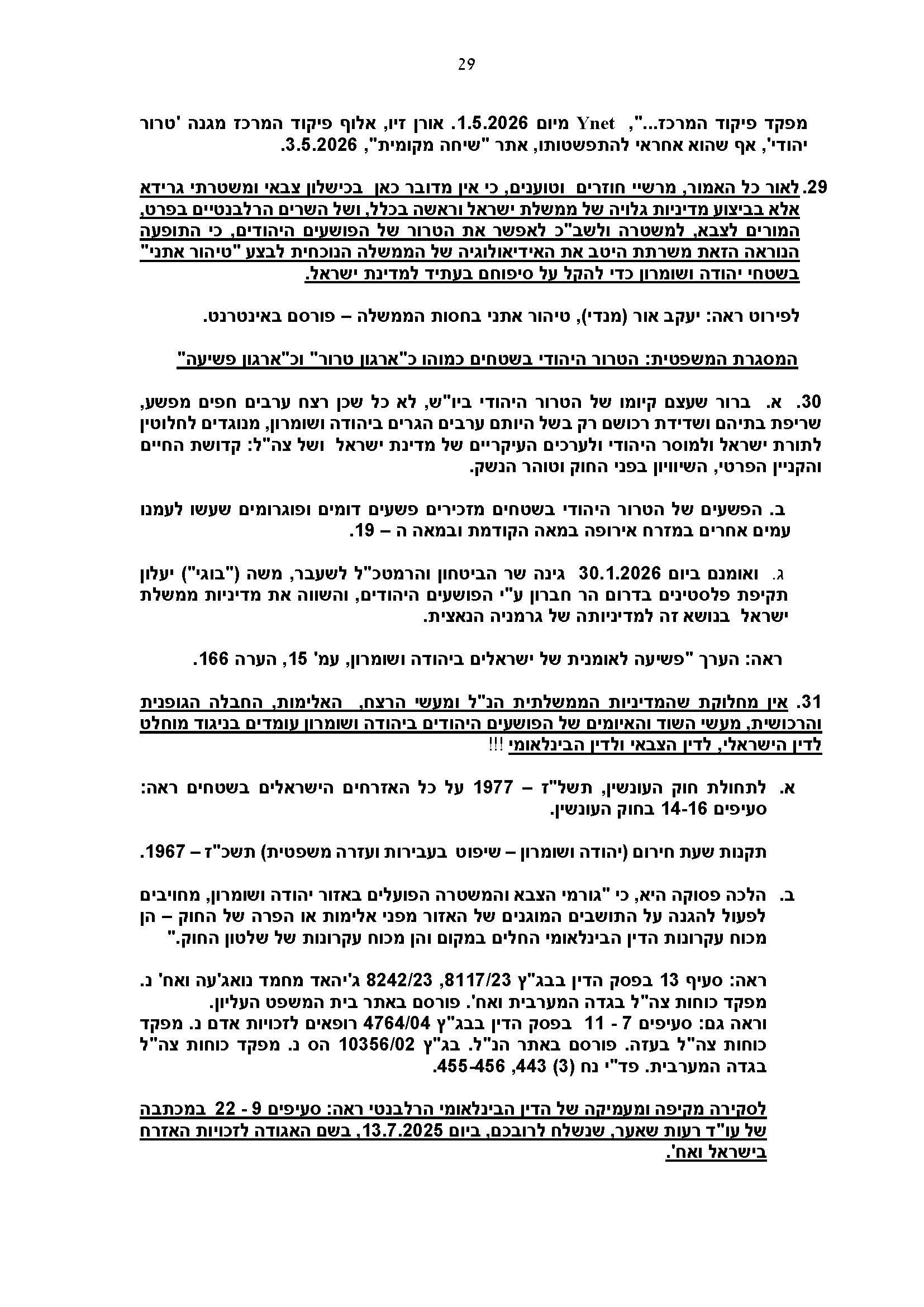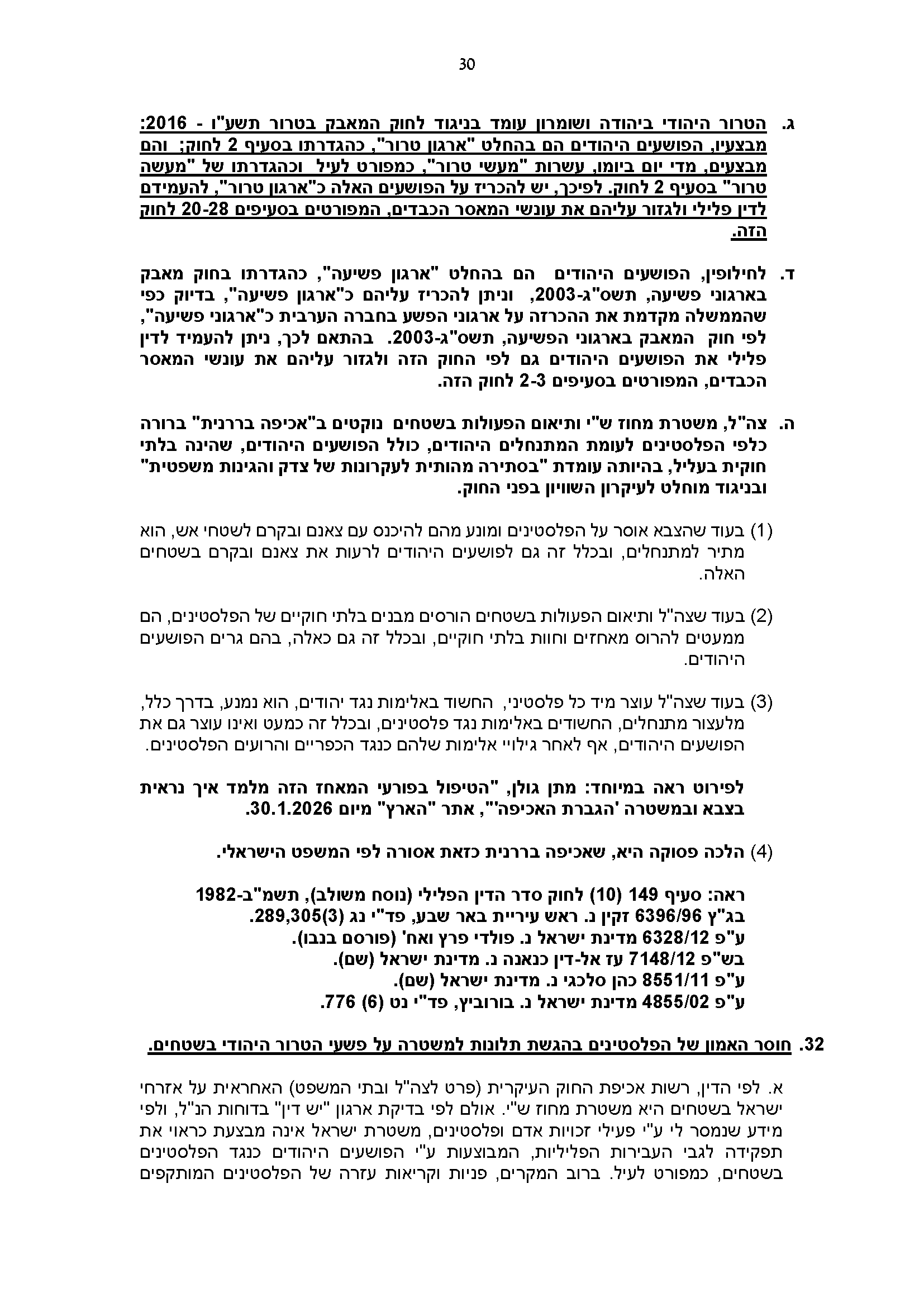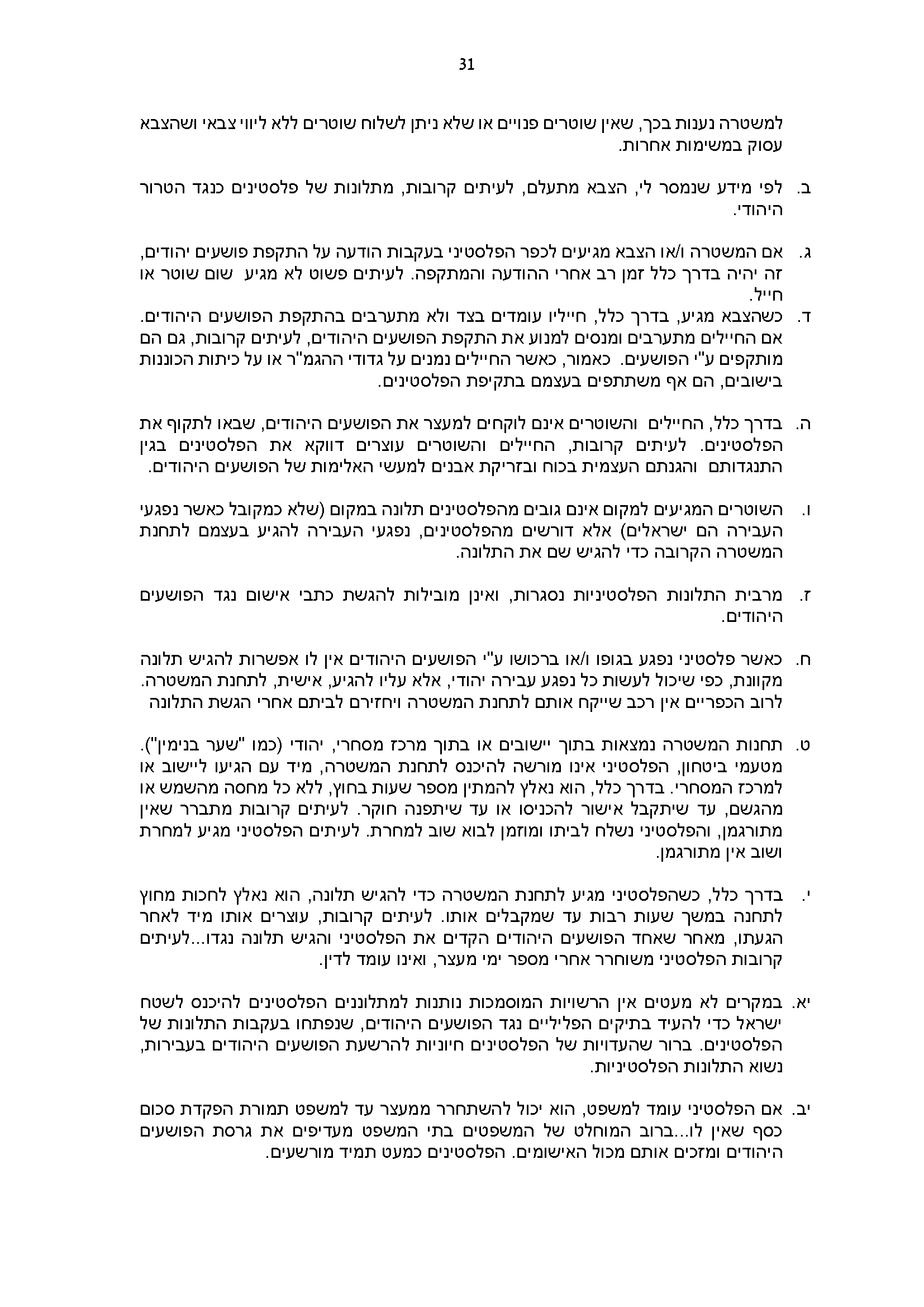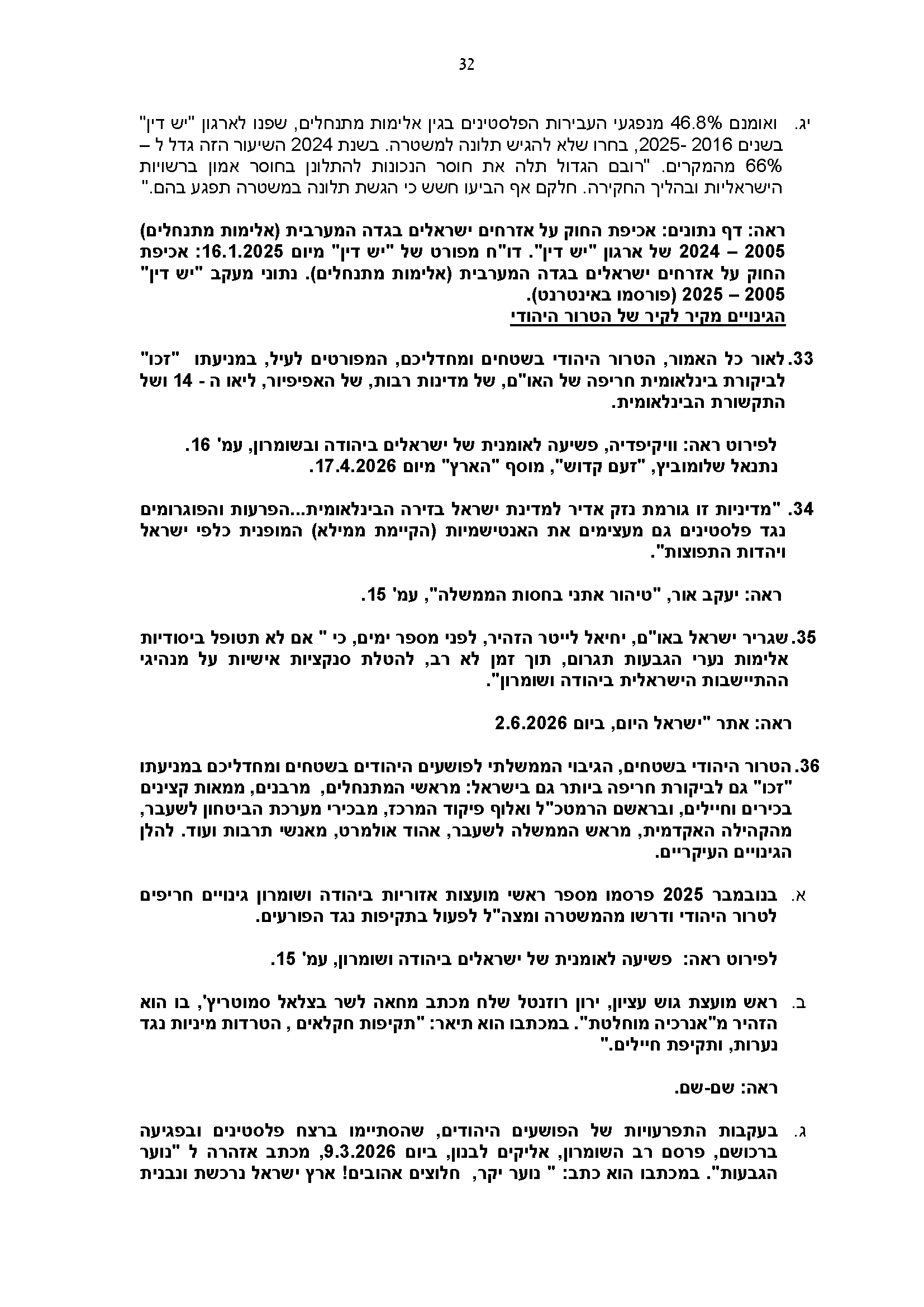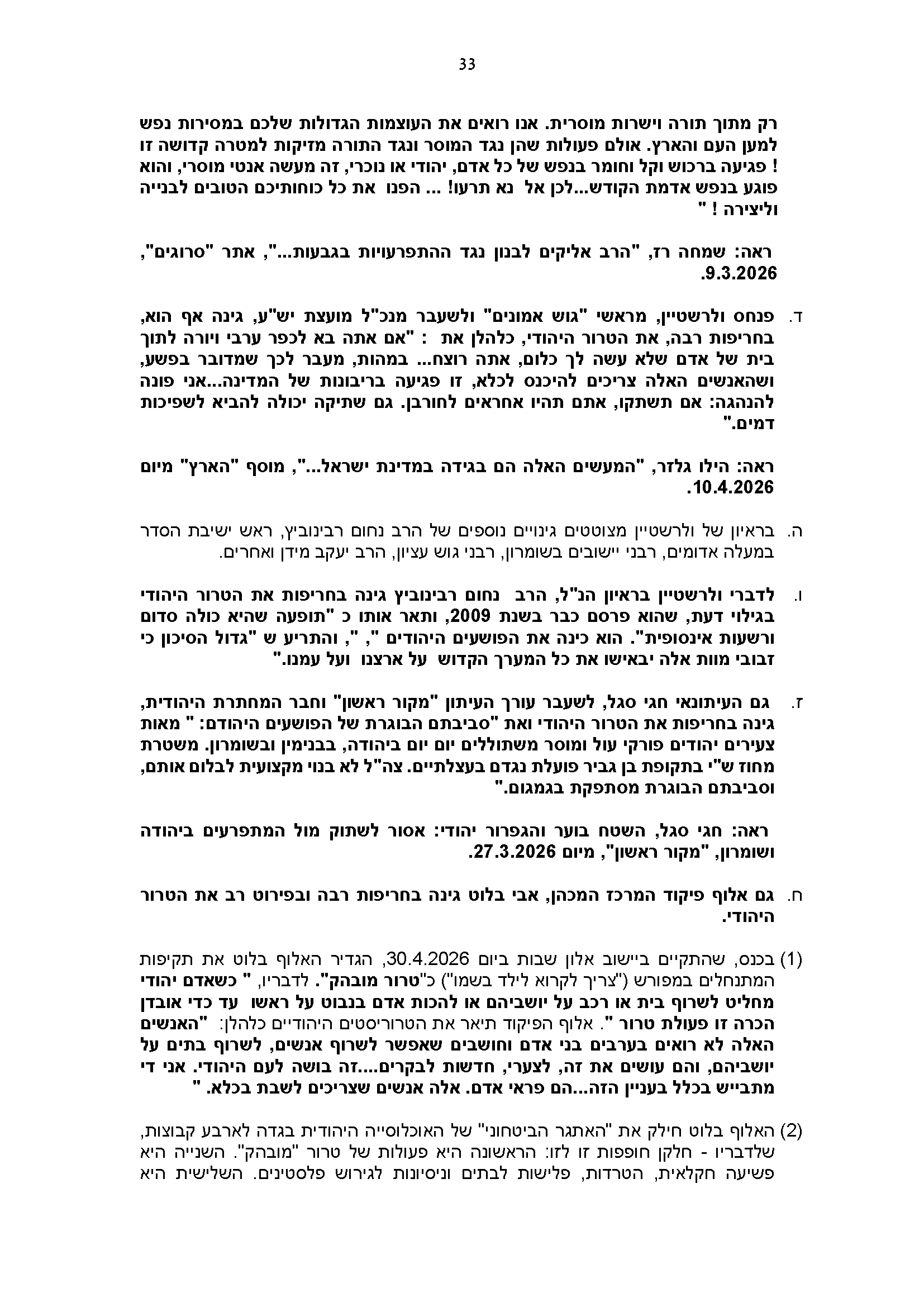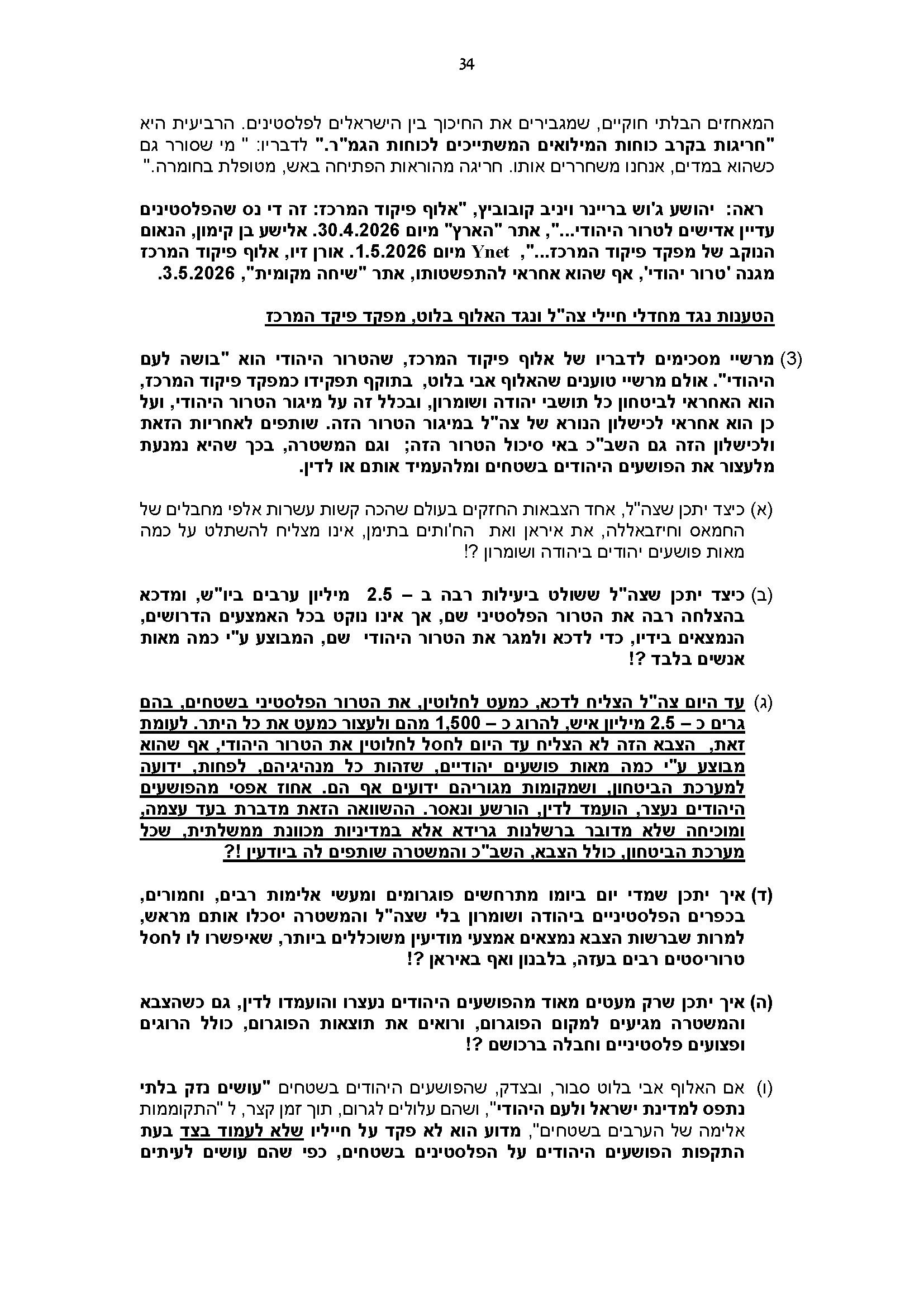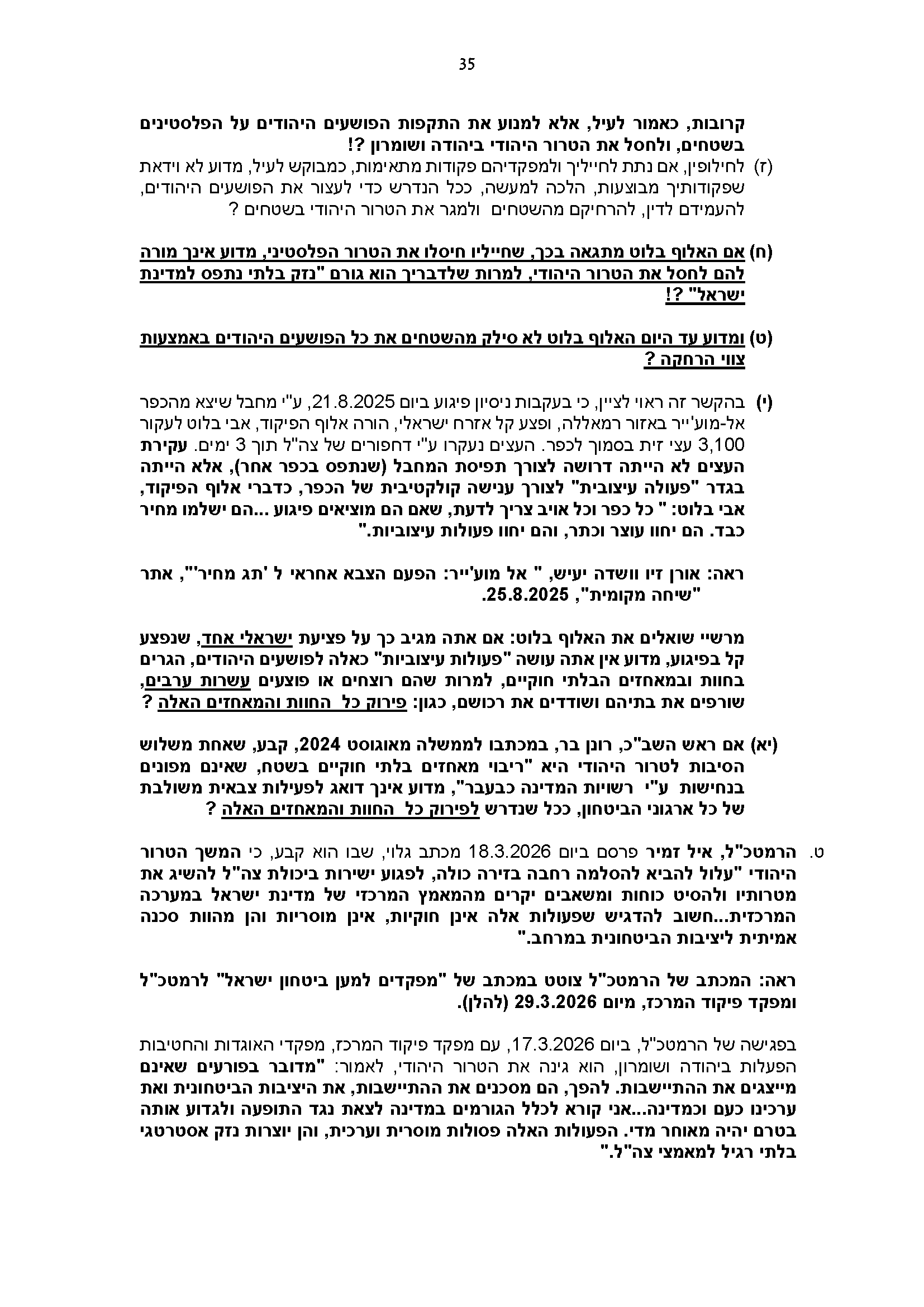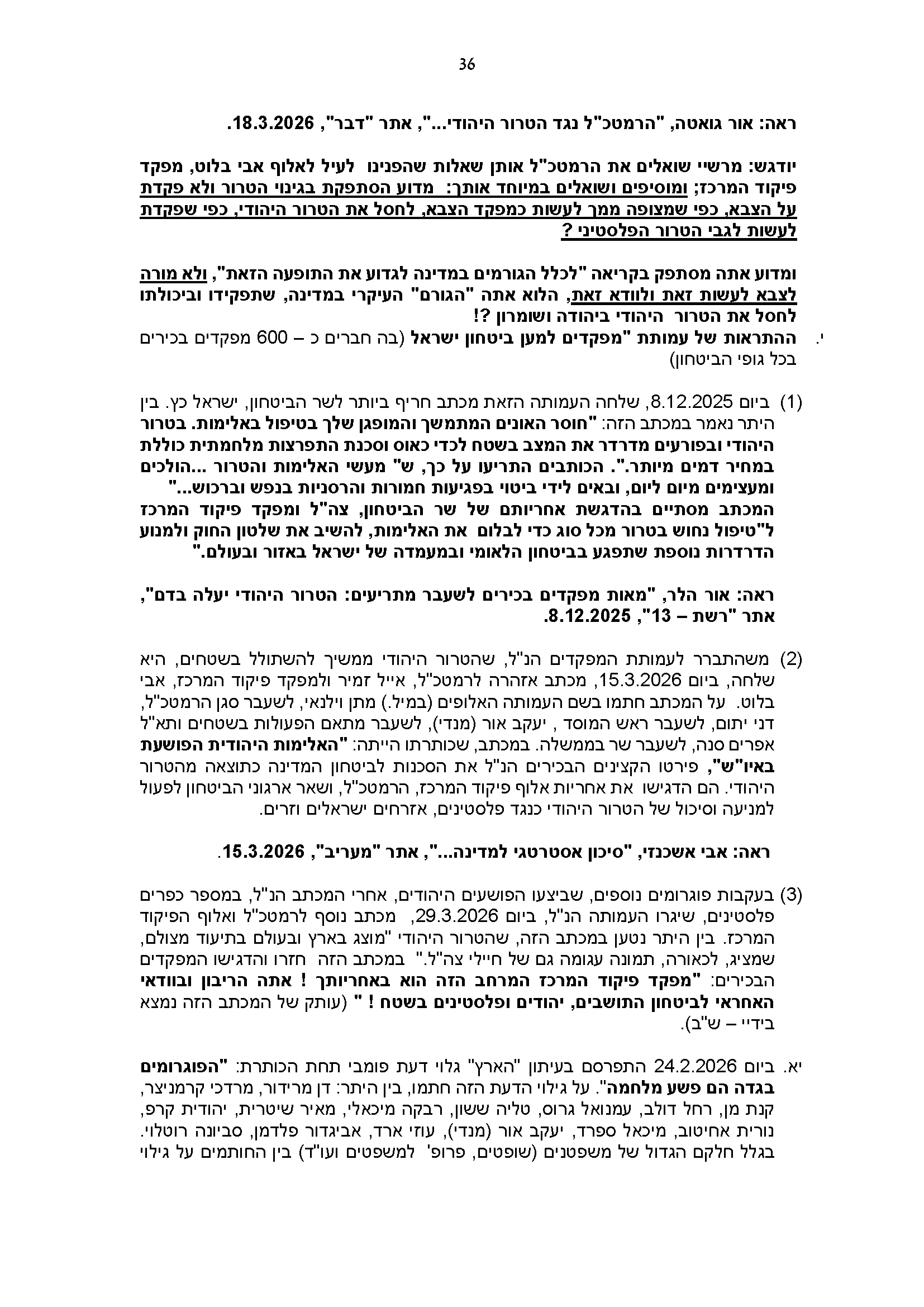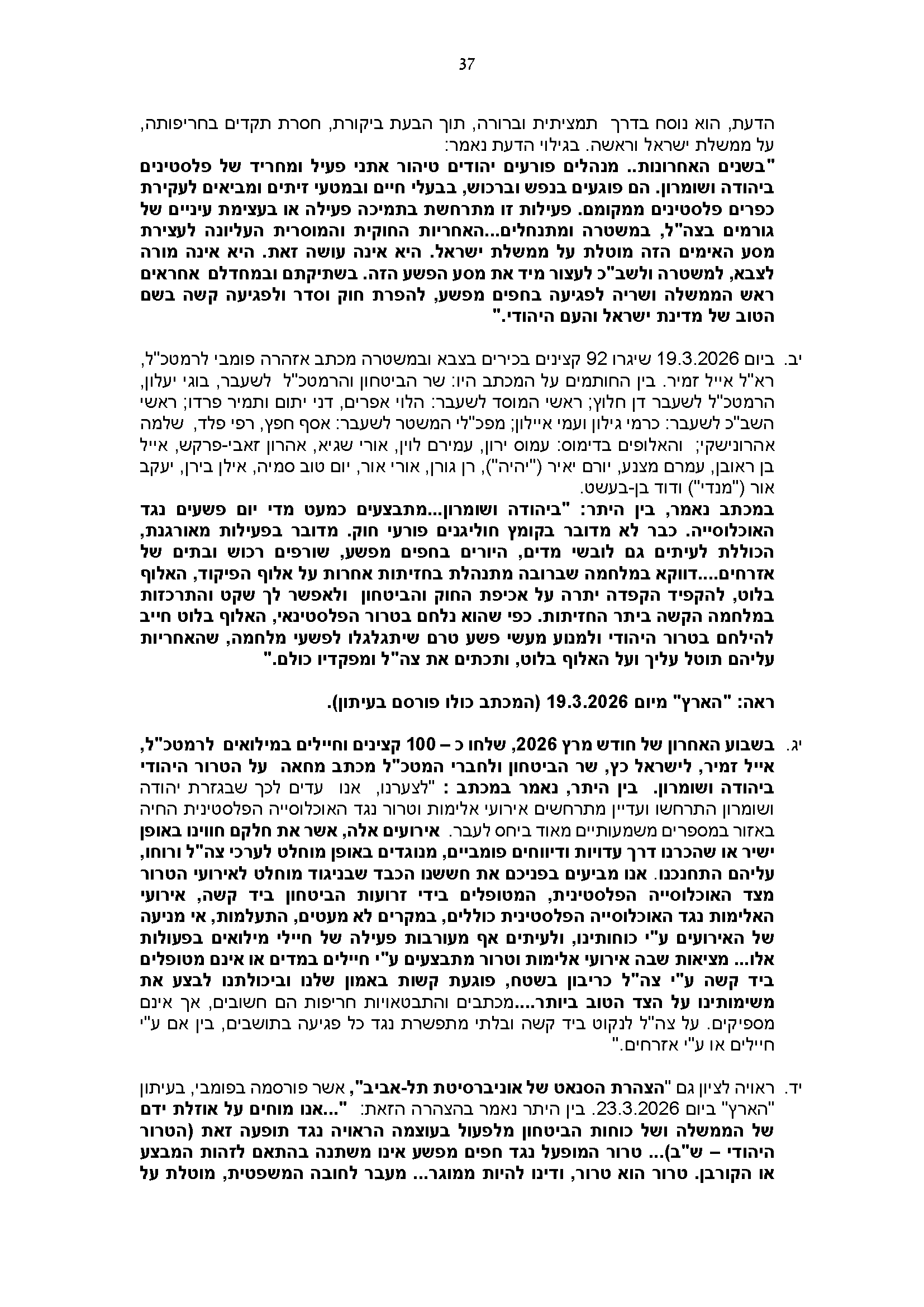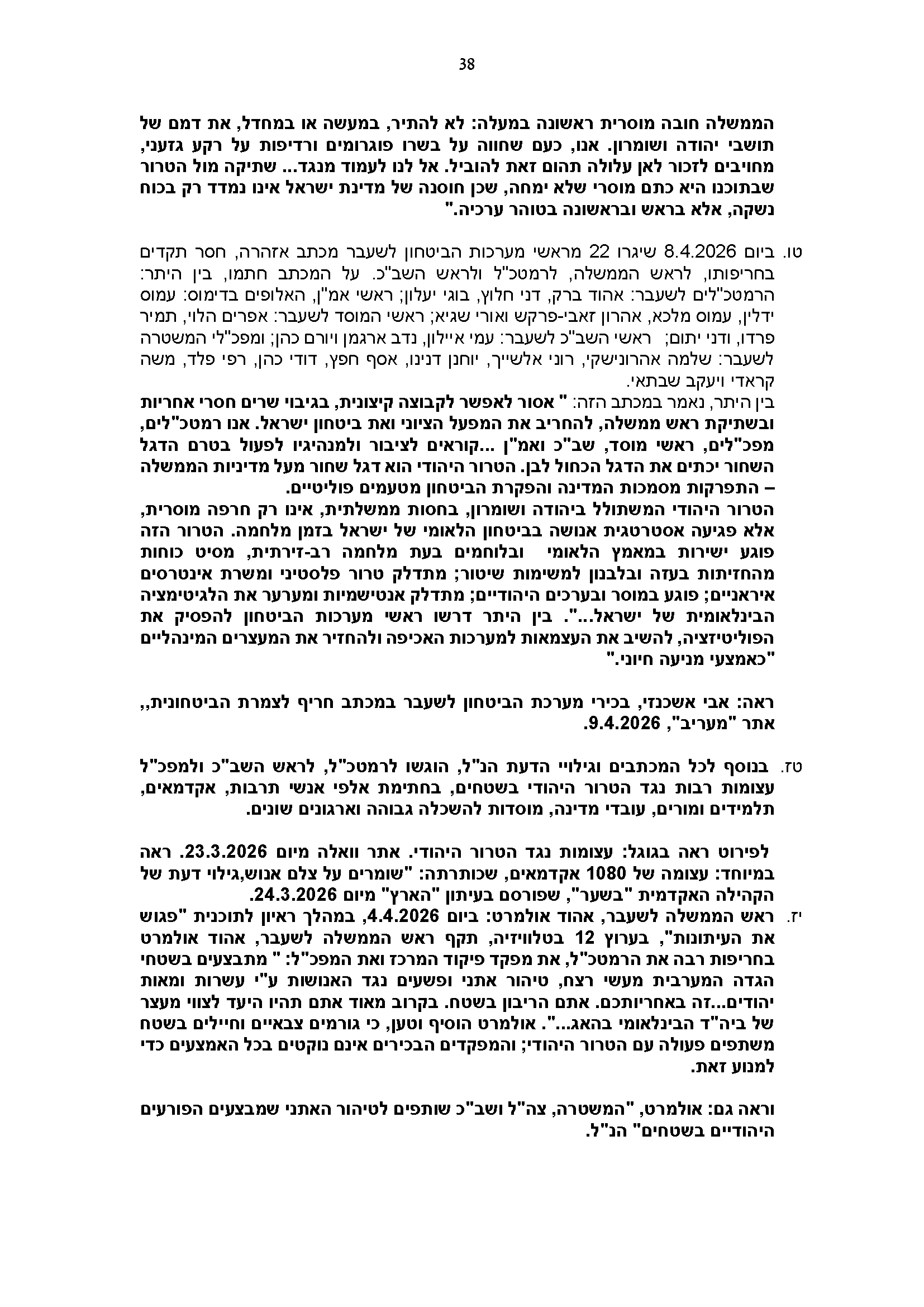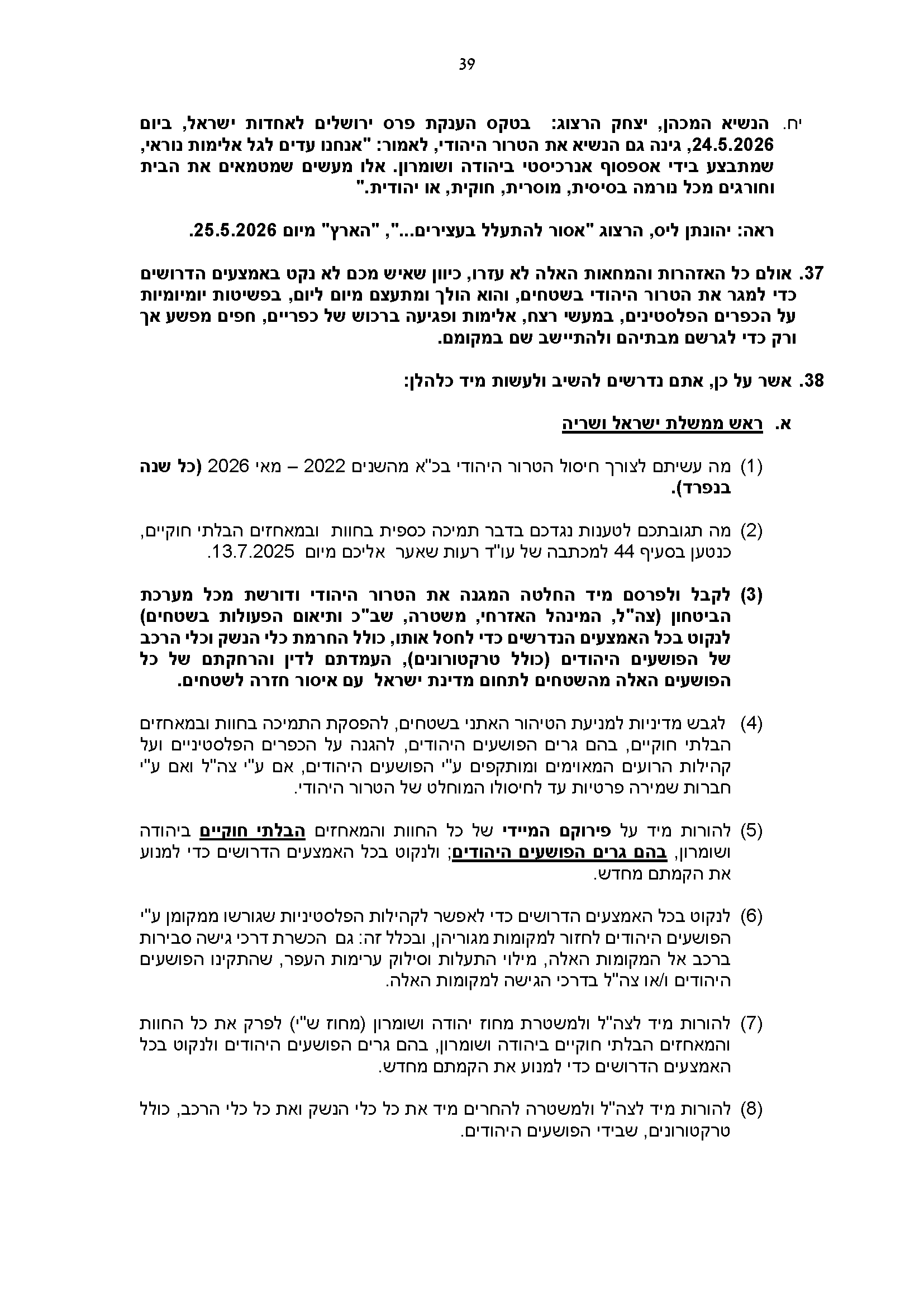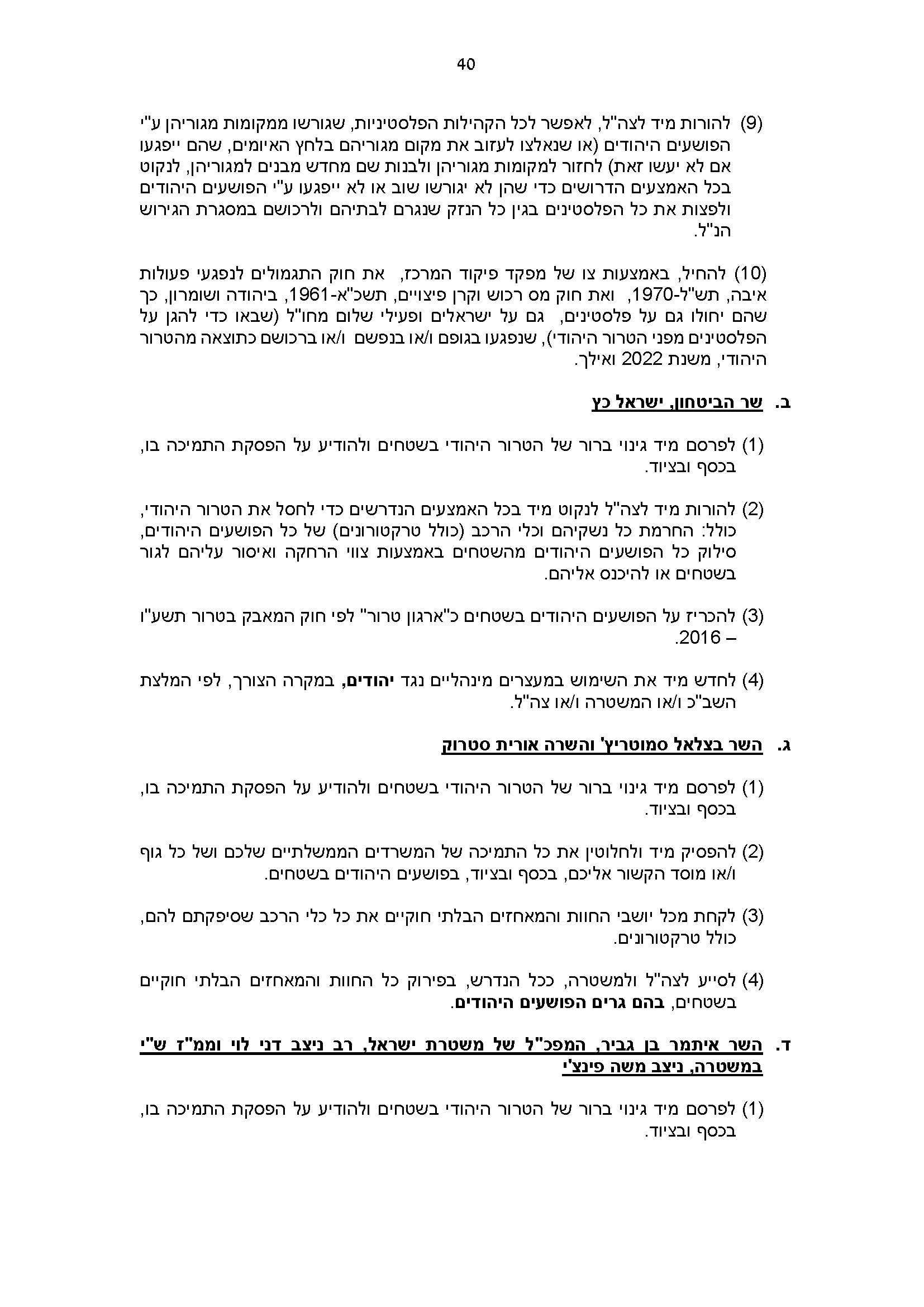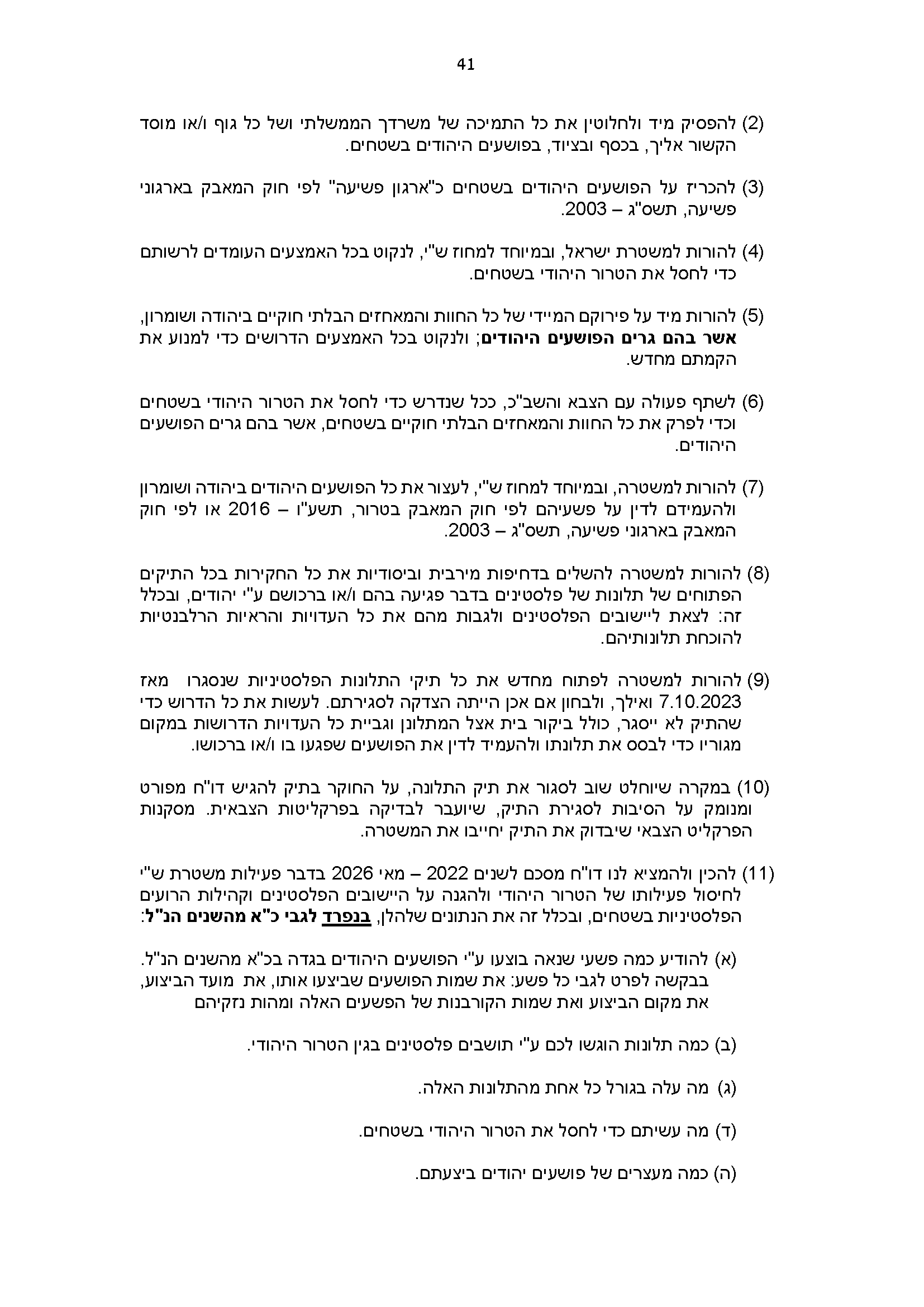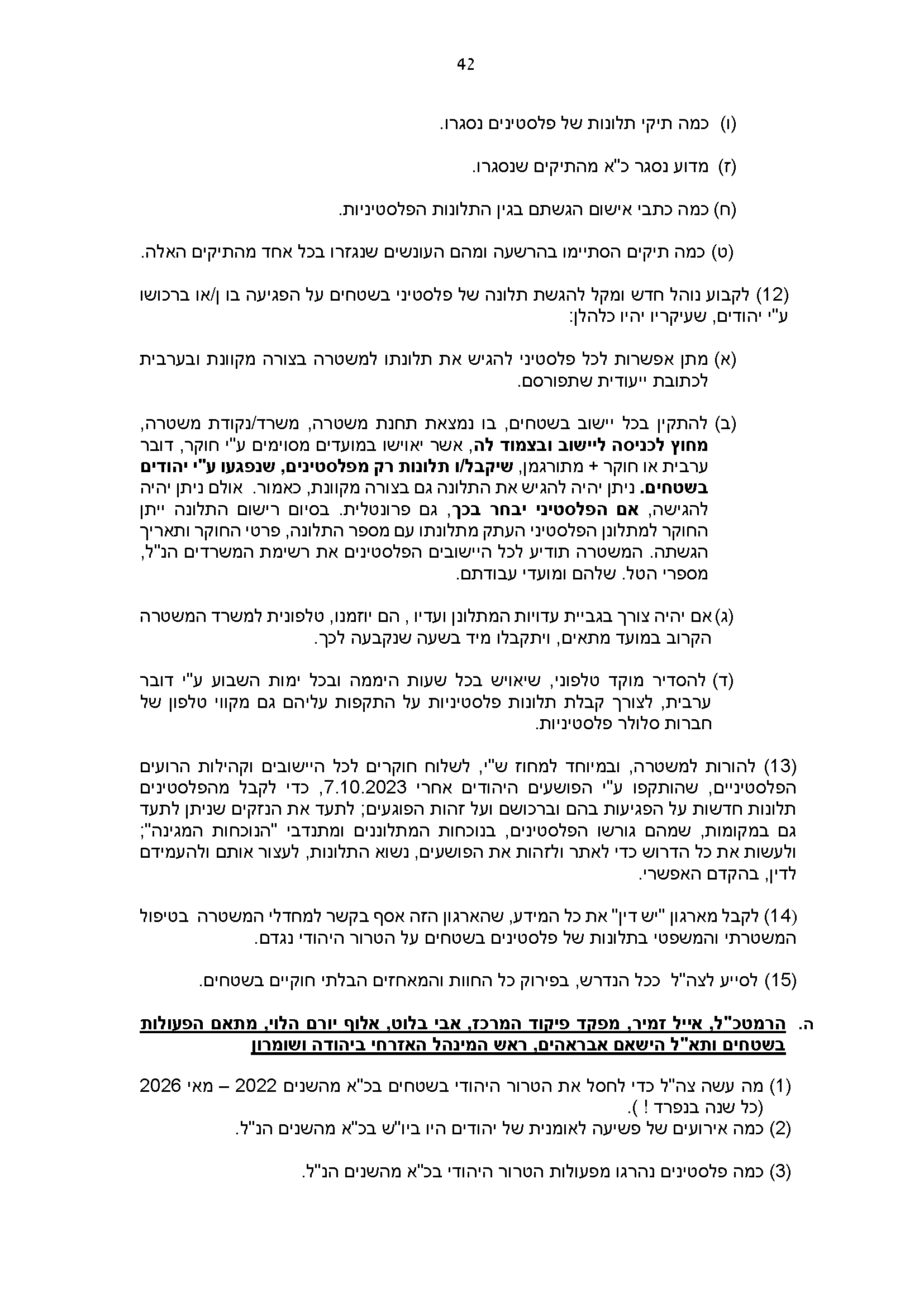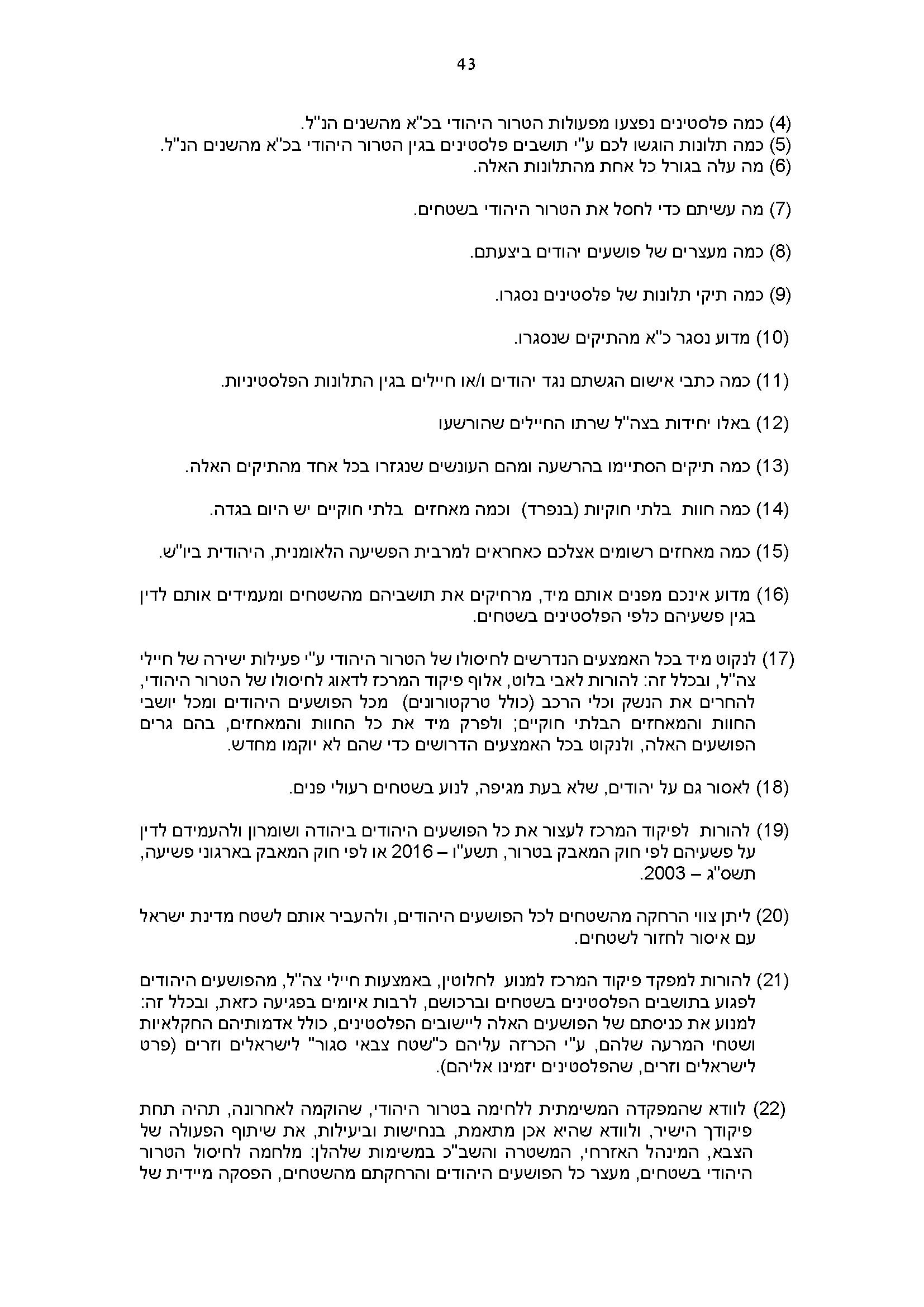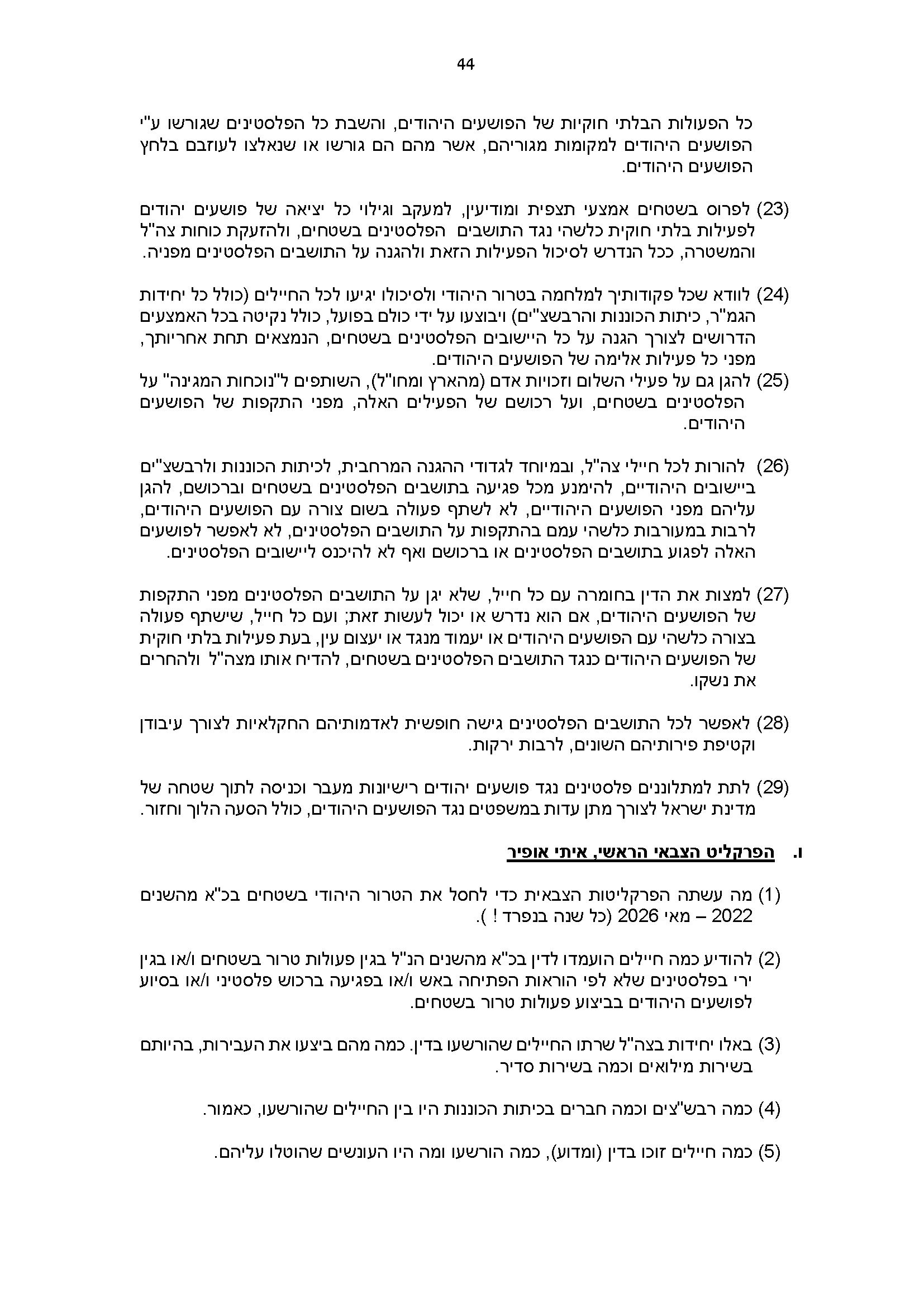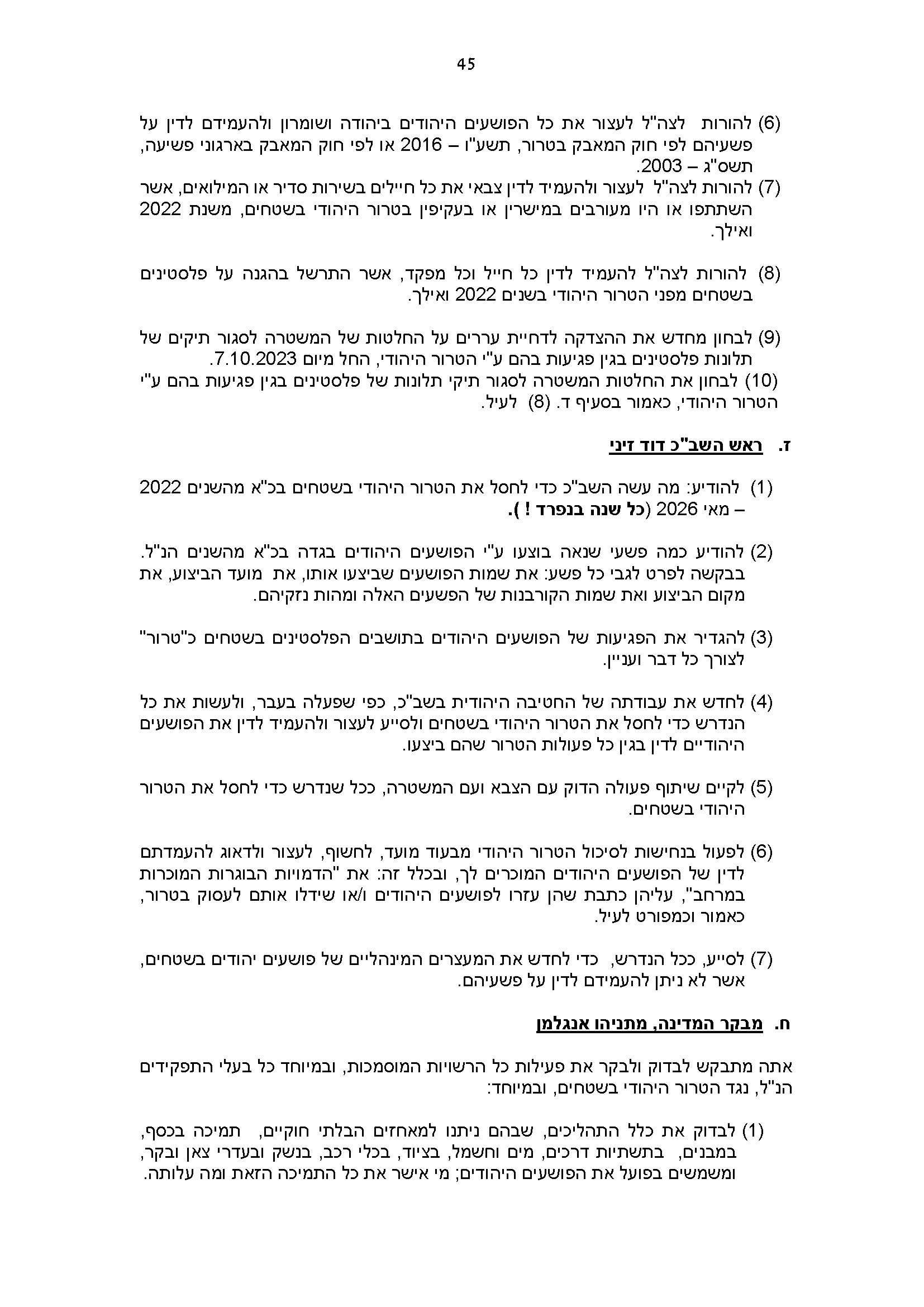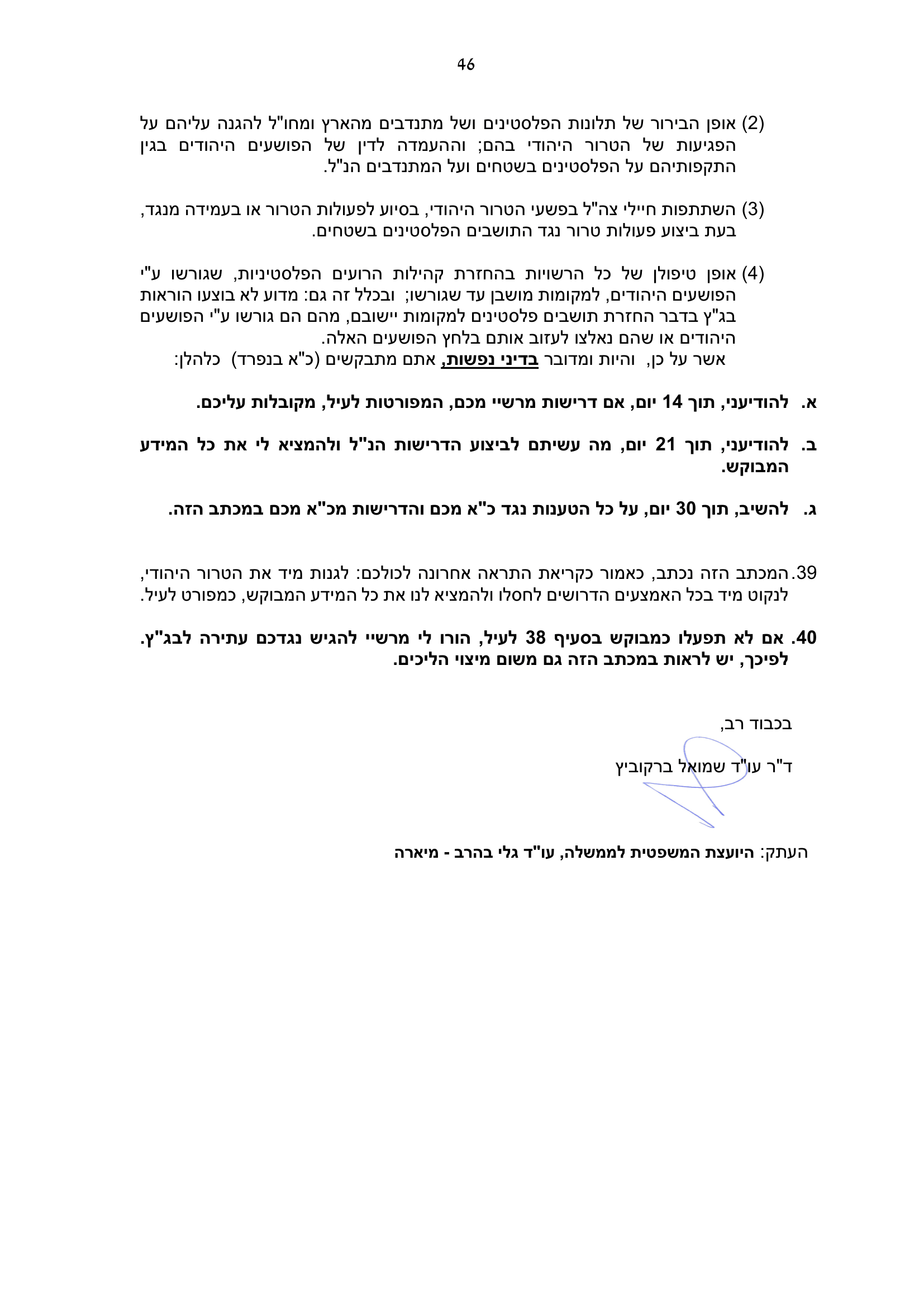


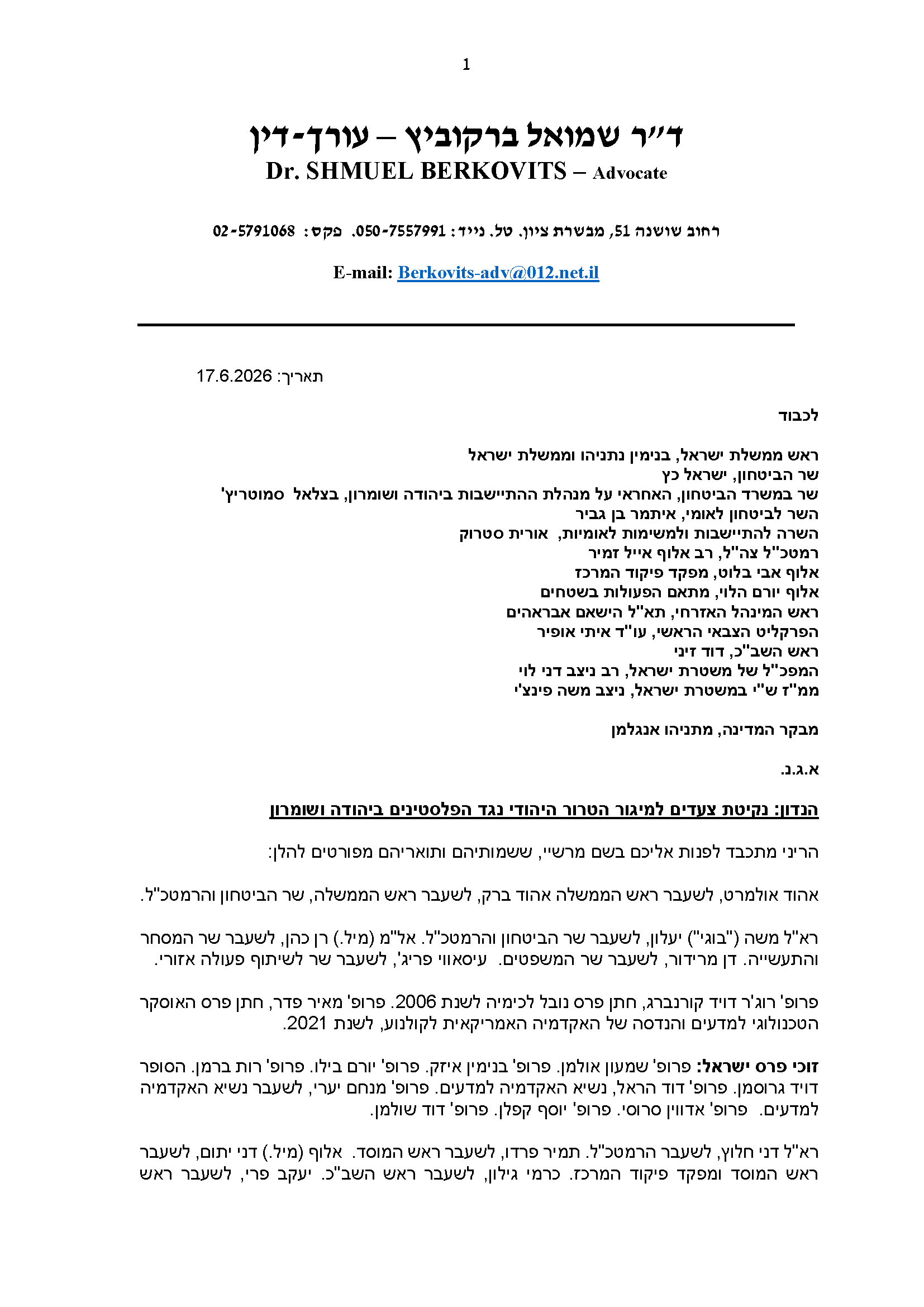
Former prime ministers Ehud Barak and Ehud Olmert, former IDF chiefs of staff Moshe Ya’alon and Dan Halutz, former Mossad director Tamir Pardo, along with dozens of former commanders from various security branches, scientists, retired judges, and other senior figures, signed a 46-page letter sent this week to the Prime Minister demanding decisive action against Jewish terrorism in the West Bank.
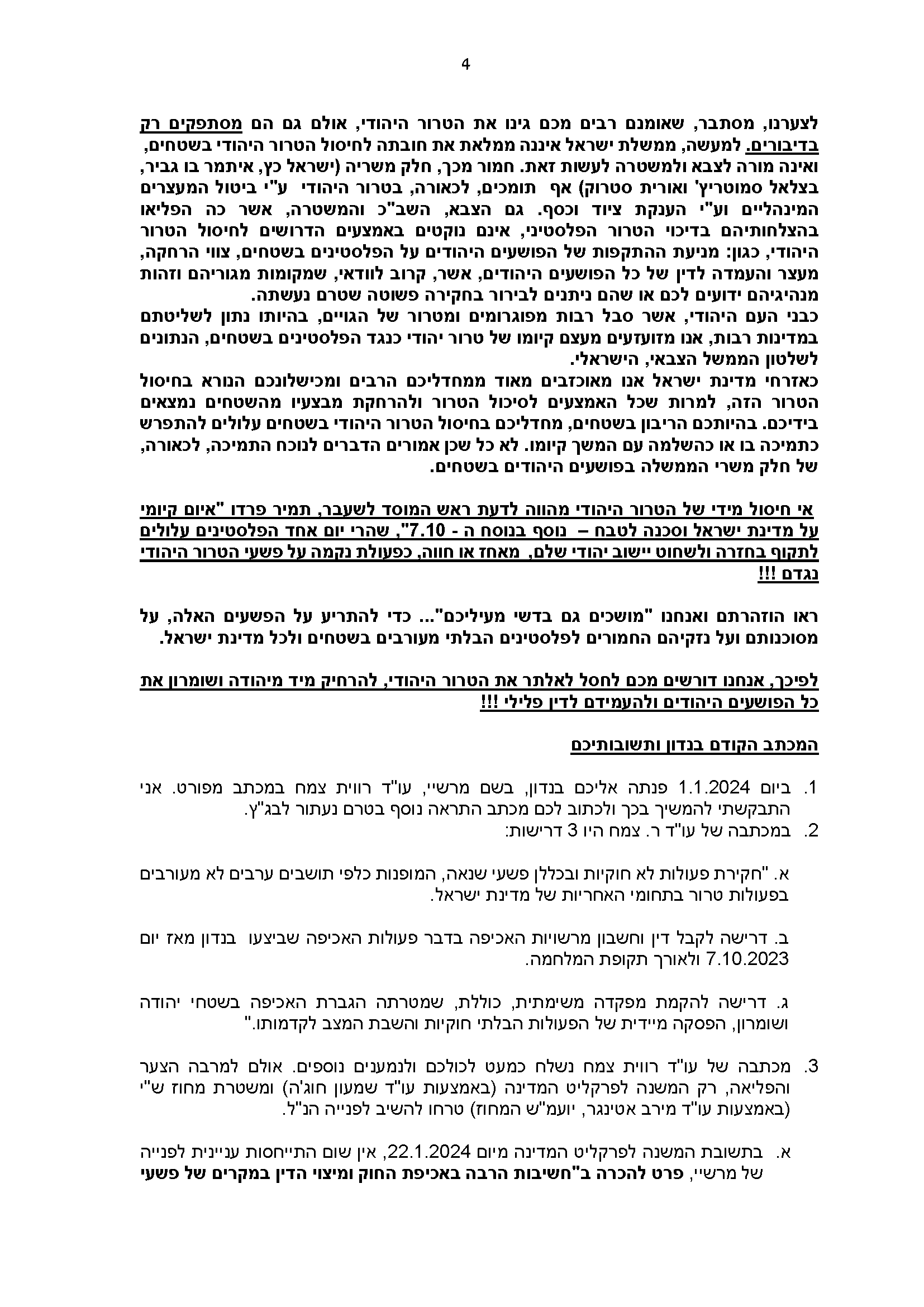
The appeal, drafted by attorney Shmuel Berkovitz, includes a detailed account of attacks carried out by Jewish extremists against Palestinians in recent years. The letter concludes with a warning that if, within 14 days, its recipients fail to condemn Jewish terrorism and act to eradicate it, a petition will be submitted to the High Court of Justice.
The demands directed at the government, the security establishment, and the judicial system include removing from the West Bank all Jews involved in acts of terrorism and prosecuting them criminally. The signatories also call on the authorities that enabled Jewish terrorism to dismantle illegal outposts and farms, end support for them, confiscate weapons and vehicles held by their residents, protect attacked Palestinian communities, and allow communities displaced during what the letter describes as ethnic cleansing to return to their homes. Separate demands were addressed to the Minister of Defense, the IDF Chief of Staff, the Minister of National Security and the police, the Military Advocate General, and the head of the Shin Bet, who was urged, among other things, to restore the activities of the agency’s Jewish Division dedicated to combating Jewish terrorism.
This appeal is unprecedented in both the scope of its demands and the quality and number of its signatories. In practice, there is little expectation that the demands outlined in the letter will be fulfilled. Its significance lies in bringing the issue into public view, in the hope that the media will amplify it among the wider public—including opposition leaders and opponents of the judicial overhaul—who until now have largely chosen to ignore the occupation and the price it exacts from Israel, a state that once claimed to regard itself as a democracy.
And this week as well:
As the principles of the proposed agreement between the United States and Iran become clearer, it appears that none of the Israeli government's declared war objectives have been achieved: the overthrow of the Iranian regime, the elimination of Iran’s nuclear program, or the removal of the missile threat.
Furthermore, Hezbollah has not been defeated and continues to threaten northern Israel. Since the beginning of the current round of fighting in the north, 36 Israeli soldiers have been killed.
Iran, whose previous leadership was eliminated, survived the confrontation with both the United States and Israel under a new, younger, more determined, and more hardline leadership, without relinquishing strategic assets. In fact, Iran obtained American concessions on a range of issues, including the release of billions of dollars and control over the Strait of Hormuz. The “Ring of Fire” that Iran built around Israel has not been dismantled, and Iran’s standing among its neighbors has strengthened.
Netanyahu bears responsibility for what may be considered the greatest strategic failure in Israel’s history, and it is expected that this reality will be reflected in election results, should elections take place. However, the establishment of an alternative government remains uncertain as long as Arab parties continue to be excluded. It is also worth noting that opposition leaders have not offered an alternative to ongoing wars.
There is, however, a small measure of consolation: France’s Foreign Minister stated earlier this week, “We always draw a very clear distinction between the State of Israel and the people of Israel on the one hand, and the current government and its policies on the other.”
Sunday
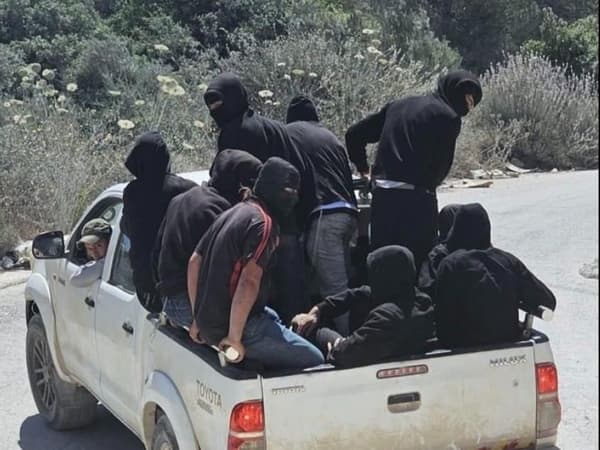
Approximately 40–50 settlers attacked Palestinians in Deir Dibwan, east of Ramallah. They arrived during prayers at the local mosque, set fire to the entrance door, and the resulting smoke spread into the prayer hall. Worshippers suffered from breathing difficulties. Five vehicles and the courtyards of two homes were also set ablaze. Six suspects were arrested.
Settlers diverted water previously used by Palestinian farmers and took control of an ancient pool near the settlement of Peza’el in the Jordan Valley. They filled it with water to create a tourist attraction. According to Haaretz, the settlers destroyed a pipeline that supplied irrigation water to Palestinian agricultural lands in Fasayil and redirected the flow to fill the pool. The Civil Administration’s archaeology officer attempted to intervene but failed. Hundreds of settlers visited the site over the weekend.
Monday
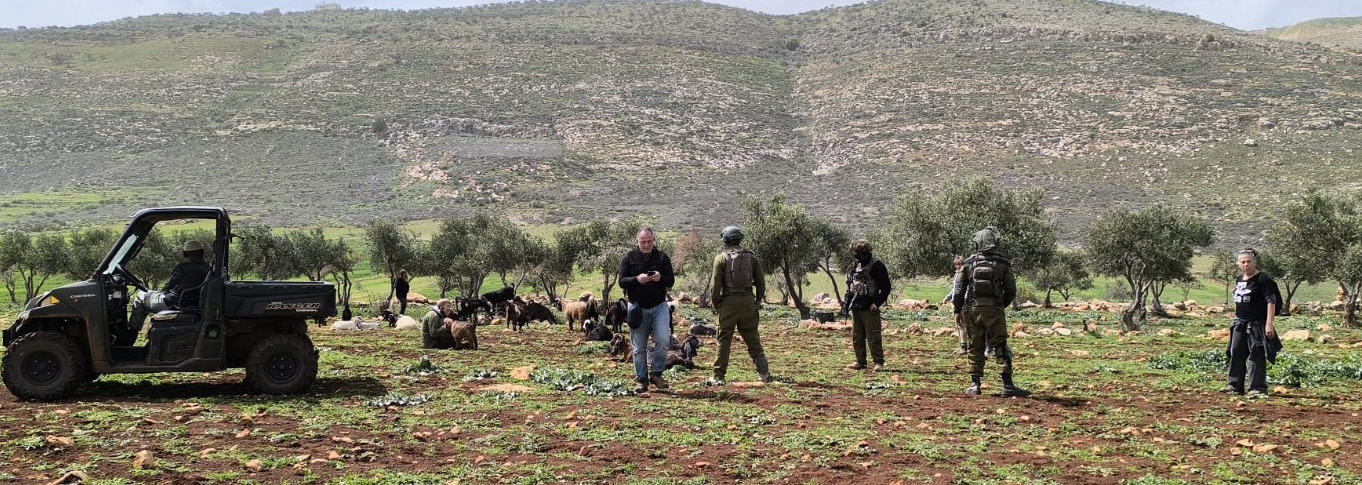
Two Palestinian farmers were arrested by the military in the village of Sha'ab al-Butum in Masafer Yatta after settlers entered privately owned cultivated fields with a flock of sheep. When Palestinian residents arrived, the settlers confronted and expelled them, then called the military and police claiming they had been attacked.
In Halhul, activists from “Bnei Avraham” and Palestinians who came to work in vineyards were threatened and attacked by settlers. The attackers vandalized vehicles, smashing windows and mirrors and slashing tires. Police stated that the matter fell under military jurisdiction. The military then declared the area a closed military zone. Complaints were filed.
Tuesday
Minister of National Security Itamar Ben-Gvir canceled a planned family vacation to the United States after being required to appear at the U.S. Embassy to provide fingerprints. Initially, the trip was to be funded by a friend living in Miami, but following comments from the State Comptroller’s Permit Committee, Ben-Gvir announced that he would pay for the trip himself.
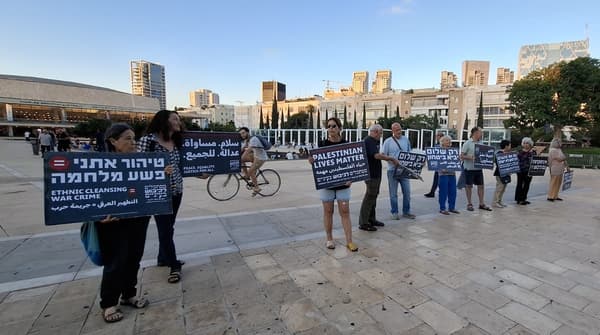
A demonstration aimed at drawing the attention of the European community took place outside EU offices. About 15 demonstrators were confronted by dozens of right-wing activists who shouted insults, tore signs, threw mud, and sprayed water and juice. The demonstrators were escorted away under police protection.
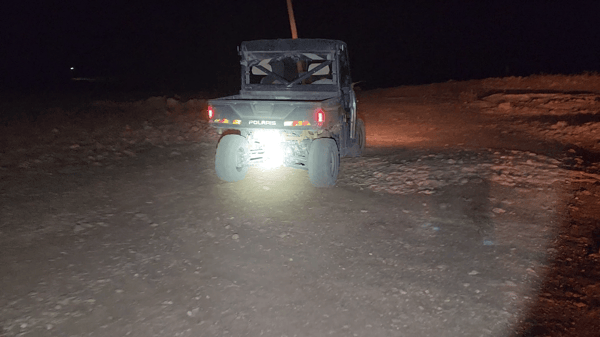
Settlers set fire during the night to a mosque in the village of Jiljilya near Ramallah. Graffiti reading “Revenge,” “Regards from the detainees,” and “Guys, wake up” was sprayed on the building.
Wednesday
Master Sergeant (Res.) Alexander Filin, 29, from Haifa, was killed by an explosive device in southern Lebanon. In the same incident, the deputy commander of the 36th Division and a reserve battalion commander were moderately wounded. Five additional soldiers sustained light injuries. In a separate drone attack, five more soldiers were wounded, one of them seriously.
Thursday
Four soldiers were killed overnight in southern Lebanon:
Lt. Col. Dor Gedalia Ben Shimon, 32, from Kibbutz Beit HaShita, commander of an Armored Corps battalion;
Staff Sgt. Liav Kvavia, 20, from Hod HaSharon;
Staff Sgt. Yoav Klein, 21, from Herzliya;
Staff Sgt. Naveh Havshush, 20, from Geva Binyamin.
The tank carrying the four soldiers was hit near the village of Tebnit. The IDF has not yet announced what caused the strike.
In a later incident at approximately 4:00 a.m., a reserve officer was seriously wounded by an explosive drone.
The IDF carried out overnight strikes against Hezbollah operatives and infrastructure in southern Lebanon.
Friday
Activists from “Looking the Occupation in the Eye,” who were holding their weekly silent protest against the occupation and in solidarity with Palestinians at the Za’atara (Tapuach) Junction, were attacked by right-wing extremists. Soldiers present at the scene, and later police officers, treated the attackers leniently and merely asked them to move aside. A police vehicle later arrived to take testimony from those attacked.
Negotiations between Iran and the United States, scheduled to take place in Lucerne, Switzerland, were canceled. It is believed that Iranian representatives chose not to attend because they sought an agreement that would also cover the Lebanese arena and prohibit Israeli military activity there.
Saturday
Sergeant First Class Nir Ben Ari, 21, from Kerem Maharal, a soldier in the Maglan unit, was killed by rocket fire and an explosive drone strike in the village of Tebnit in southern Lebanon. Two soldiers were seriously wounded, an officer was moderately wounded, and ten soldiers sustained light injuries. The same village was the site where four soldiers were killed on Thursday.
Since the beginning of the current round of fighting in northern Israel, 36 soldiers have been killed.
Despite the ceasefire announced on Friday afternoon, Israel continued strikes in southern Lebanon, particularly in the Nabatieh district. Lebanese news agencies reported casualties.
Three Palestinians were injured in the village of Iskaka near Ariel while participating in an olive harvest. Settlers assaulted them. In another incident, settlers attacked shepherds on the lands of Dkeika (Masafer Yatta) and attempted to steal their livestock. Soldiers arriving at the scene arrested three Palestinian shepherds.