



This week we learned that a deal between Netanyahu and the ultra-Orthodox parties is expected to move elections to the first half of September — a matter of six to eight weeks earlier, not crucial in itself, but the sooner the better. The election campaign is shifting into higher gear.
The polls do not predict a decisive outcome between the two blocs — pro- or anti-Netanyahu — because the leaders of the two main opposition lists, Bennett and Eisenkot, who together are projected to win around 40 seats (of 120), continue to insist they will not form a government with Arab parties.
If the September 2026 election results reflect the polling trends mentioned above, they will require a fundamental reassessment among opposition leaders. This is why the findings of a survey conducted among Arab citizens and presented in Haaretz by Dr. Shaul Arieli and Thaar Abu Ras are so significant.
The survey was conducted by Prof. Gilad Hirschberger and Prof. Sivan Hirsch-Hefler of the research group “Tamrur Politography.” Its key finding is that approximately 58% of respondents support the establishment of a center-left government that includes Arab parties. One can only hope this figure indicates that Arab citizens will “flock to the polls” — much to Netanyahu’s displeasure.
At the same time, it is unsurprising that 55.7% of respondents said they would “definitely not” vote for an Arab party that declared in advance it would refuse to join a coalition likely to include Zionist parties. Clearly, Arab voters are weary of Arab parties remaining confined to the opposition benches and expect them to act pragmatically.
It is also unsurprising that most Arab citizens believe a substantive liberal democracy cannot coexist with occupation (“there is no democracy with occupation”). The obvious alternative to occupation is peace, and support for a two-state solution exceeds 75% among respondents.
Another important finding: approximately 90% of Arab citizens do not support the October 7 massacre carried out by Hamas, but nearly 70% place the primary blame for the massacre on the occupation.
The results of this public opinion survey, together with current polling trends, clearly show that Arab parties should be viewed as legitimate partners in replacing the government — not merely as a “safety net” enabling the formation of a government (even if only a transitional one) led by Bennett or Eisenkot.
________________________________________
Sunday
Master Sgt. (res.) Alexander Globniov, 47, from Petah Tikva, was killed by an explosive drone inside Israeli territory near the Lebanese border.
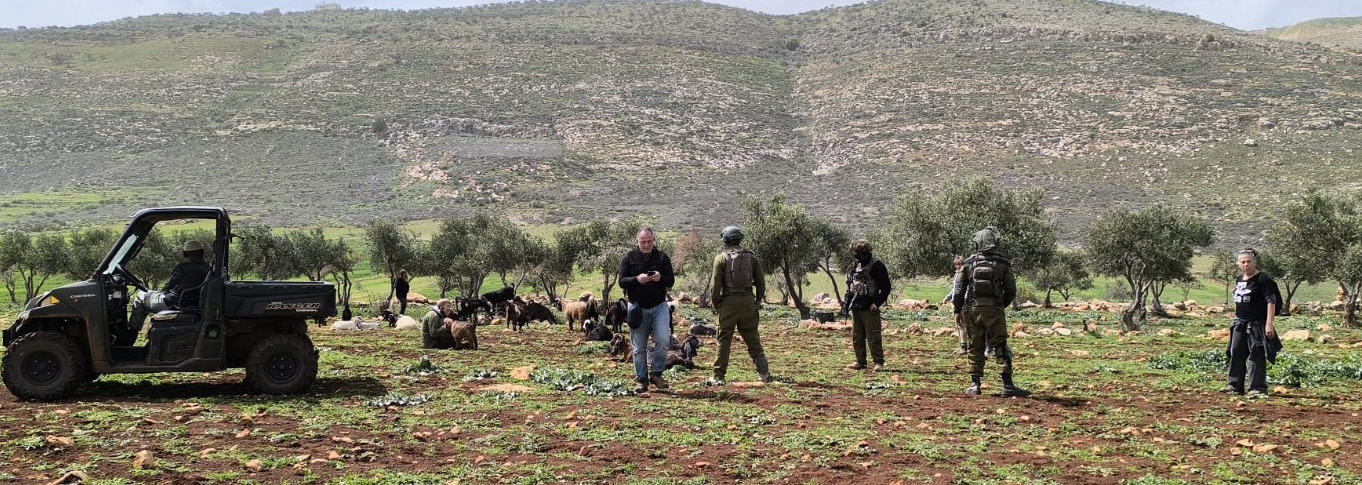
In the evening, young settlers sprayed pepper spray at protective-presence activists from “Looking the Occupation in the Eye” in Khirbet a-Tawil. The spray was directed into a vehicle carrying a driver and another activist.
Monday
News site N12 reported that the IDF would reduce local defense forces in West Bank settlements due to loss of control: soldiers recruited from the settlements into local defense units allegedly exploited their authority, military weapons, and uniforms to enable and participate in riots and revenge attacks against Palestinians.
Tuesday
The Knesset approved in first reading a proposal to establish a new antiquities authority in the occupied West Bank. According to the proposal, the “Judea and Samaria Heritage Authority” would have powers to purchase and expropriate land. The implication is that heritage and archaeology could be used to advance annexation of the West Bank.
A resident of Khirbet a-Tawil was assaulted by a settler who entered her family’s tent and attacked her.
Wednesday
An activist from “Looking the Occupation in the Eye” and four Palestinians traveled to Ariel police station to file complaints regarding theft and harassment. At the entrance to the city, the local security coordinator and a soldier stopped the Palestinians and took them away. From that point, their whereabouts were unknown.
The Judea and Samaria District Police initially claimed the Palestinians had arrived at the station and were filing complaints. Ariel police later said they had never arrived and that the army had taken them. Following intervention by Knesset members and journalists, the military eventually acknowledged that the four were being detained and interrogated. After several hours at a military base, they were released.
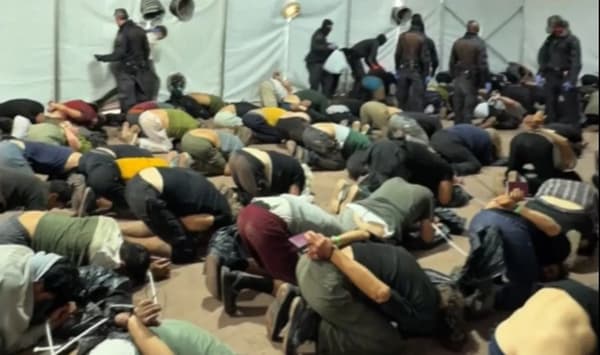
According to their testimony, they spent the entire time handcuffed and blindfolded, without anyone speaking to them. The IDF spokesperson stated: “IDF forces detained several Palestinians who attempted to enter the city of Ariel without coordination, in the vehicle of an Israeli civilian.” Later, police said an officer at Ariel station had confused them with other Palestinians. Needless to say, the four were unable to file their complaint.
The “Looking the Occupation in the Eye” movement stated:
“If in the past one could say that the police, army, and Shin Bet did nothing regarding settler violence, now it seems the situation has reversed: they act swiftly and decisively — but not against the attackers, rather against the victims. The detention of the four complainants near the police station is another move intended to suppress opposition to the occupation and ensure settler supremacy on the ground.”
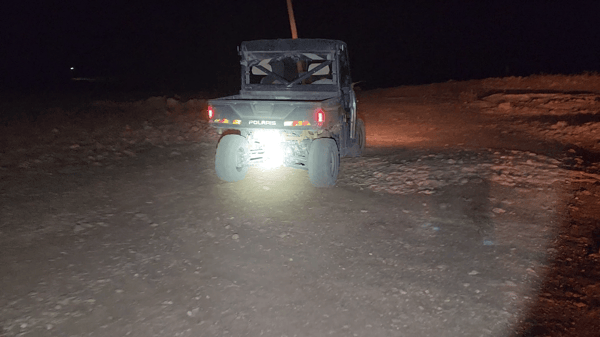
Settlers raided villages in the Ramallah area. According to Palestinian reports, the raids began in Sinjil and Jiljiliya. Assailants attacked families in their homes, stole agricultural equipment, water tanks, and hundreds of sheep. Soldiers were reportedly present alongside the settlers. Residents who resisted the raid and looting were injured and taken to hospital. Sixteen-year-old Yousef Ali Ka’abneh was shot dead in Sinjil. One video reportedly showed a masked man threatening a resident with a handgun for attempting to document the looting. The army arrested three Palestinian herd owners.
During Border Police operations near Jerusalem, Palestinians approaching the security fence were identified. Two who allegedly attempted to infiltrate Israel were shot; one later died of his wounds.
The Police Internal Investigations Department concluded its investigation into police gunfire that killed two parents and their two children in the village of Tammun near Nablus and recommended closing the case. Two months earlier, undercover Border Police officers opened fire at night on the car of the Odeh family returning from shopping. The parents and two children, aged 7 and 5, were killed; two other children were unharmed. The officers involved were not questioned. According to investigators, camera footage supported the officers’ claim that they felt threatened when the family’s car accelerated toward them.
Thursday
Staff Sgt. Negev Dagan, 20, a Golani Brigade soldier from Moshav Dekel in the Negev, was killed by mortar fire in southern Lebanon near the Litani River.
Tens of thousands marched through the Old City of Jerusalem during Jerusalem Day. Human rights activists maintained a protective presence but succeeded only partially in preventing vandalism, assaults, and racist chants. According to Haaretz journalist Nir Hasson, violence during this year’s Flag March was lower than in previous years, “but the message came through sharply.”
Roy Talmon, who participated in the protective presence, published a post:
“There is no holiness in an occupied city.
“I’ve returned from Jerusalem, from the fascist spectacle of religious Zionism in all its shades. The Muslim Quarter was sealed off. Police and Border Police stood at every corner, yet every Palestinian-owned shop remained vulnerable to vandalism, and every Palestinian walking the streets became a target for curses, spitting, threats, and violence.
“A group of youths attacked a Palestinian man. We tried to shield him. Another group assaulted an activist, and meanwhile someone stole another activist’s phone from his pocket. They spat at me, cursed me, and shoved me. Journalists became prey for Kahanist youth while police stood by and did nothing.
“Then an activist approached me and pointed to two children. They peeked fearfully from behind a metal door near one of the shuttered shops. Maybe 10 years old. Maybe 13. They wanted to return home but stood helpless and terrified before the flood of racism sweeping the street. We spoke to them in broken Arabic and explained that we would accompany them somewhere safe.
“At first they were afraid of us too. We started walking. A group of 15- or 16-year-olds approached us. Without hesitation, one slammed his elbow into the chest of one of the Palestinian boys, trying to knock him down. The boy clung to me and reached out his small hand. Frozen, he kept walking toward Damascus Gate while we surrounded him, trying to create a bubble of protection in a sea of endless violence.
“And that’s it. Another Palestinian child scarred — because of us. Two images from this terrible day will stay with me: the frightened child, and the thousands of boys and girls, youth movement members, marching arrogantly through the alleys of the Old City, cursing and chanting songs of revenge and blood. This is the image of the future for large parts of Israeli society — a religious, dark, racist, and violent society.”
"Peace Now" activists were attacked at Ein Samia (“Shepherds’ Spring”). Settlers accused them of “bringing Arabs” and demanded to see their IDs, which they refused. The activists’ vehicle was blocked, and "Peace Now" director Lior Amihai was beaten while trying to prevent a settler from entering the car. The army arrived and detained the activists on suspicion of assault. They were later released.
Settlers entered the village of Jibiya, where a vehicle was set on fire and a mosque vandalized. In Beit Iksa near Jerusalem, a video showed an armed Israeli civilian violently shaking an elderly blindfolded Palestinian detainee whose hands were tied. Soldiers present did not intervene. The civilian was also seen firing into the air and cursing.
Friday
Capt. Maoz Israel Rekanti, 24, from the settlement of Itamar, was killed by a drone explosion in southern Lebanon. Rekanti, a platoon commander in Battalion 12 of the Golani Brigade, was the 20th soldier killed in the current northern campaign.
Early in the morning, IDF soldiers shot and killed a 15-year-old Palestinian in al-Lubban al-Sharqiya near Za’atara Junction (Tapuach). According to the army, the teenager had been throwing stones at Israeli vehicles on Route 60 while masked. Later, settlers raided al-Lubban al-Sharqiya.
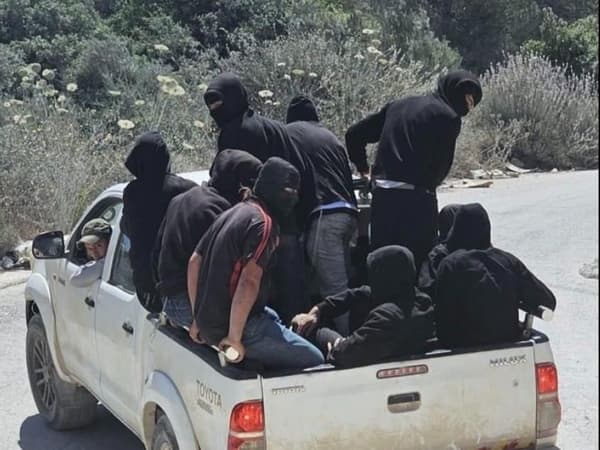
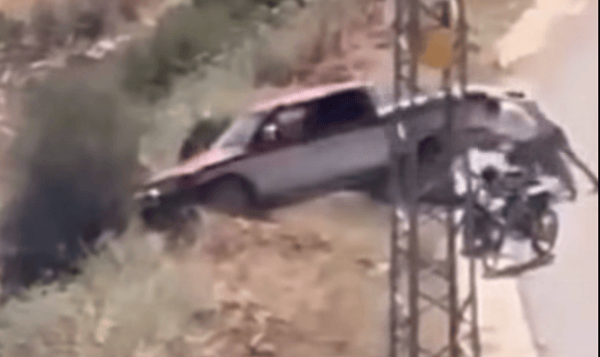
Five settlers, including a reservist soldier, were arrested on suspicion of torching vehicles in Shuqba northwest of Ramallah. In Turmus Ayya, settlers set fire to a residential home. Villagers who rushed to the scene reportedly drove the settlers away and extinguished the blaze.
A video circulated online showing a settler armed with a club repeatedly beating a dog chained to its kennel in the village of Atara. The video generated widespread anger and grief — reportedly more than videos showing assaults on people.
Saturday
Hadash selected its Knesset candidates. Dr. Yousef Jabareen, an expert in constitutional law and human rights, will head the list. Jaafar Farah, director of the Mossawa Center for Arab Citizens’ Rights, was elected second, and MK Ofer Cassif third. MKs Ayman Odeh and Aida Touma-Suleiman did not run in the primaries.
.png)